Begin of page section:
Page sections:

  • Go to contents (Accesskey 1)
  • Go to position marker (Accesskey 2)
  • Go to main navigation (Accesskey 3)
  • Go to sub navigation (Accesskey 4)
  • Go to additional information (Accesskey 5)
  • Go to page settings (user/language) (Accesskey 8)
  • Go to search (Accesskey 9)

End of this page section. Go to overview of page sections

Begin of page section:
Page settings:

English en
Deutsch de
Search
Login

End of this page section. Go to overview of page sections

Begin of page section:
Search:

Search for details about Uni Graz
Close

End of this page section. Go to overview of page sections


Search

Begin of page section:
Main navigation:

Page navigation:

  • University

    University
    • About the University
    • Organisation
    • Faculties
    • Library
    • Working at University of Graz
    • Campus
    Developing solutions for the world of tomorrow - that is our mission. Our students and our researchers take on the great challenges of society and carry the knowledge out.
  • Research Profile

    Research Profile
    • Our Expertise
    • Research Questions
    • Research Portal
    • Promoting Research
    • Research Transfer
    • Ethics in Research
    • Commission for Scientific Integrity
    Scientific excellence and the courage to break new ground. Research at the University of Graz creates the foundations for making the future worth living.
  • Studies

    Studies
    • Prospective Students
    • Students
    • Welcome Weeks for First Year Students
  • Community

    Community
    • International
    • Location
    • Research and Business
    • Alumni
    The University of Graz is a hub for international research and brings together scientists and business experts. Moreover, it fosters the exchange and cooperation in study and teaching.
Topics
  • Sustainable University
  • Researchers answer
  • Work for us
Close menu

End of this page section. Go to overview of page sections

Begin of page section:
You are here:

University of Graz News Coronavirus

End of this page section. Go to overview of page sections

Monday, 27 January 2020

Coronavirus

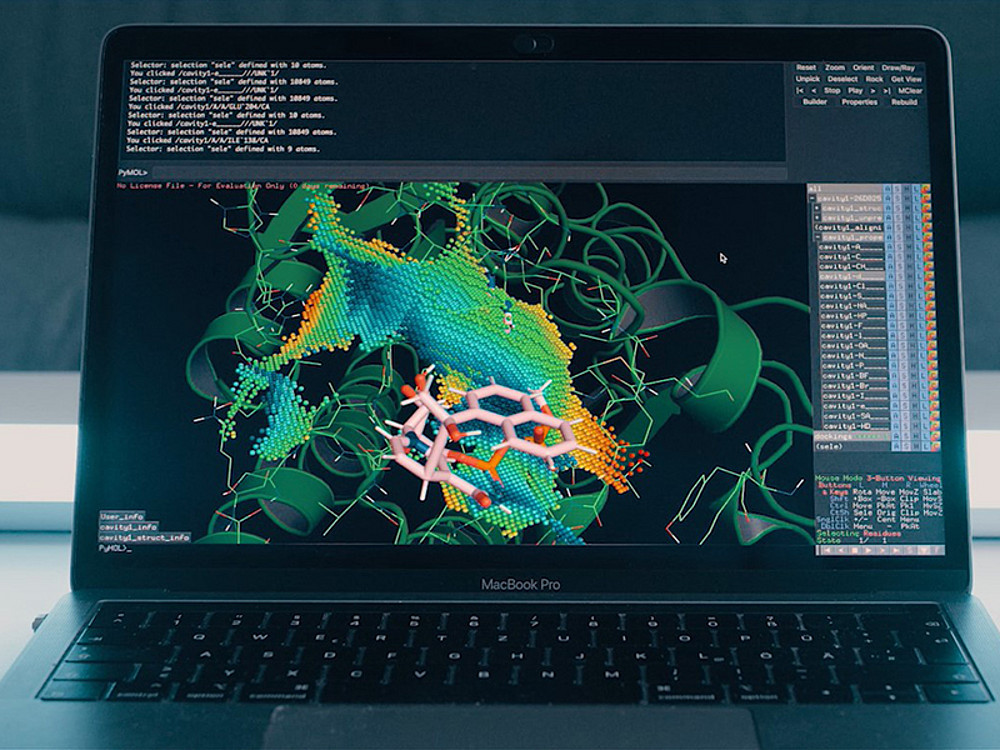
The Austrian start up company Innophore, a spin-off of the University of Graz, is searching for ways to fight the corona virus through bioinformatical processes. Photo credit: Andreas Schlesinger.

The Austrian start up company Innophore, a spin-off of the University of Graz, is searching for ways to fight the corona virus through bioinformatical processes. Photo credit: Andreas Schlesinger.

University of Graz spin-off company involved in the worldwide search for drug treatment

Innophore is a start-up based in Styria working on “Drug and Enzyme Discovery”, that has already attracted attention beyond the European region in recent years. Now Innophore has offered its expertise to the Chinese Center for Disease Control and Prevention, which is including the start-up as a research partner in the fight against the current coronavirus.

“Events have snowballed rapidly in the last three days,” explains Christian Gruber, managing director of the 11-person start-up. “A few hours after the genome of the coronavirus 2019-nCoV was published, we took the initiative and searched for a key enzyme for this class of viruses, which we managed to find. Based on this, we used our technology to identify known substances that are approved for use against other viruses, which should theoretically be able to combat the coronavirus.” In research circles this is known as Drug Repurposing or Drug Repositioning – finding new pharmaceutical uses for drugs that have already been approved. “After we published these research findings, things took off very quickly, and I was contacted by an executive from a large pharma company in Beijing,” says Gruber.

Computer algorithms save valuable research time

Since then the team has been working with a group of selected bioinformatics experts from a leading pharmaceutical company in Beijing, and the Chinese Center for Disease Control and Prevention, on proposals for possible medications to combat the virus. “Under normal circumstances this is done by extensive testing in chemical laboratories. That takes time – something we don’t have in the case of this virus. This is exactly where we can help: working with the Catalophore® platform we developed, we use computer algorithms to research new enzymes and active ingredients for drugs, and can do this much faster than is possible using traditional laboratory methods,” explains Gruber. In the next few weeks it will become clear whether or not the substance identified and recommended by Innophore is actually effective in combating the virus.

About Innophore

Innophore was founded by Christian Gruber, Georg Steinkeller and Karl Gruber in 2017, as a spin-off from the University of Graz and the Austrian Centre of Industrial Biotechnology (acib). The biotechnology start-up developed the Catalophore® platform – a search machine that uses artificial intelligence and big data to find enzymes and active ingredients for the pharmaceutical industry and industrial processes, quickly and cost-effectively. With strategic investment support from EOSS Industries, the company has built up an international client base which includes prominent major players such as Merck and Henkel.


created by Christopher Trummer/innophore & Gerhild Leljak

Related news

Jurassic Sounds: Biologist reconstructs insect songs from 165 million years ago

It was apparently not just the roars of the dinosaurs that made up the soundscape of the animal world during the Jurassic period. Crickets and grasshoppers communicated through a variety of songs and high-pitched sounds, as Thorin Jonsson from the Institute of Biology at the University of Graz discovered together with colleagues from the universities of Lincoln, Bristol (UK), Beijing (China) and Tempe (USA). The findings on what are so far the oldest traces of sound on Earth have just been published in the journal PNAS.

EU funding boosts international exchange between universities

The University of Graz is further expanding its international study opportunities through the European university alliance Arqus and is taking the lead in two key projects. In future, students will benefit from even more joint degree programmes and from simplified recognition of academic achievements through the Joint European Degree Label.

Rescue and risks: Researchers have surveyed public perceptions of AI

The use of artificial intelligence has had to be made transparent since 2 August 2026. The EU’s AI Act, which has been in force since then, also sets out how risky an application is and which security measures apply as a result. However, the assessment of risks by the legislation differs in some cases significantly from the perceptions of the Austrian public. This is the finding of a representative study carried out by data scientist Stefan Thalmann from the University of Graz and his team.

The Healing Sea: Researchers discover new approaches to treating chronic inflammation in sponges

Chronic inflammation plays a key role in many diseases, ranging from metabolic disorders and cardiovascular diseases to tissue damage following injuries or infections. “Normally, the body is able to resolve inflammation on its own. If this process becomes unbalanced, immune cells remain permanently active and continue to drive negative changes in the tissue,” explains Andreas Koeberle, a pharmacist at the University of Graz.

Begin of page section:
Additional information:

University of Graz
Universitaetsplatz 3
8010 Graz
Austria
  • Contact
  • Web Editors
  • Moodle
  • UNIGRAZonline
  • Imprint
  • Data Protection Declaration
  • Accessibility Declaration
Weatherstation
Uni Graz

End of this page section. Go to overview of page sections

End of this page section. Go to overview of page sections

Begin of page section:

End of this page section. Go to overview of page sections