Begin of page section:
Page sections:

  • Go to contents (Accesskey 1)
  • Go to position marker (Accesskey 2)
  • Go to main navigation (Accesskey 3)
  • Go to sub navigation (Accesskey 4)
  • Go to additional information (Accesskey 5)
  • Go to page settings (user/language) (Accesskey 8)
  • Go to search (Accesskey 9)

End of this page section. Go to overview of page sections

Begin of page section:
Page settings:

English en
Deutsch de
Search
Login

End of this page section. Go to overview of page sections

Begin of page section:
Search:

Search for details about Uni Graz
Close

End of this page section. Go to overview of page sections


Search

Begin of page section:
Main navigation:

Page navigation:

  • University

    University
    • About the University
    • Organisation
    • Faculties
    • Library
    • Working at University of Graz
    • Campus
    Developing solutions for the world of tomorrow - that is our mission. Our students and our researchers take on the great challenges of society and carry the knowledge out.
  • Research Profile

    Research Profile
    • Our Expertise
    • Research Questions
    • Research Portal
    • Promoting Research
    • Research Transfer
    • Ethics in Research
    Scientific excellence and the courage to break new ground. Research at the University of Graz creates the foundations for making the future worth living.
  • Studies

    Studies
    • Prospective Students
    • Students
  • Community

    Community
    • International
    • Location
    • Research and Business
    • Alumni
    The University of Graz is a hub for international research and brings together scientists and business experts. Moreover, it fosters the exchange and cooperation in study and teaching.
  • Spotlight
Topics
  • Our digital Advent calendar
  • Sustainable University
  • Researchers answer
  • Work for us
Close menu

End of this page section. Go to overview of page sections

Begin of page section:
You are here:

University of Graz News Coronavirus

End of this page section. Go to overview of page sections

Monday, 27 January 2020

Coronavirus

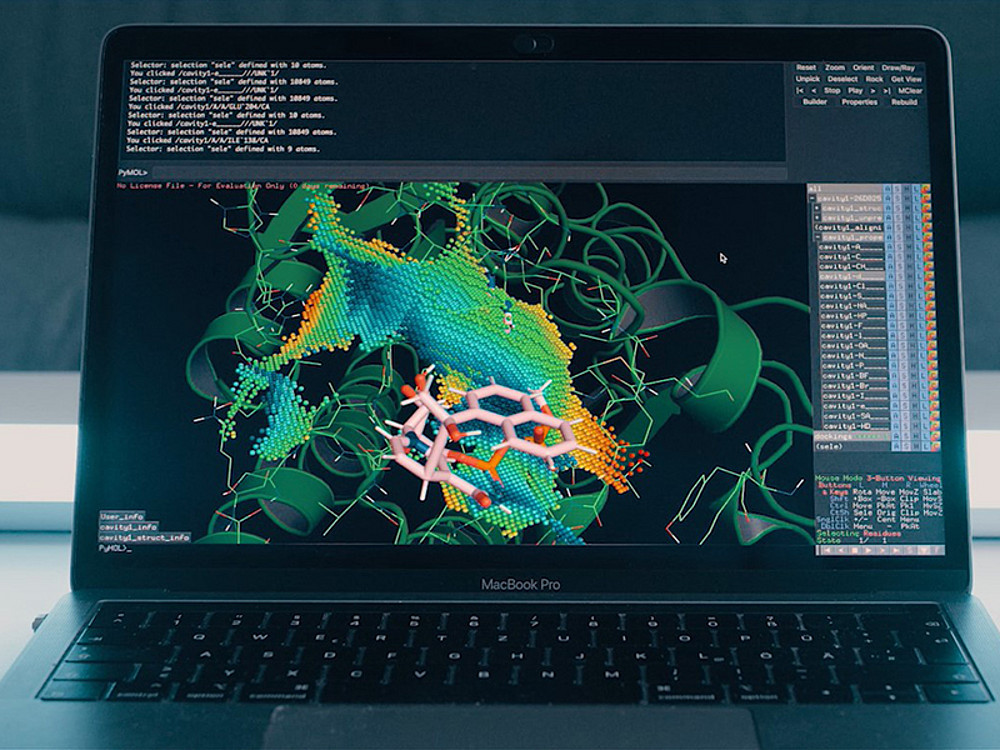
The Austrian start up company Innophore, a spin-off of the University of Graz, is searching for ways to fight the corona virus through bioinformatical processes. Photo credit: Andreas Schlesinger.

The Austrian start up company Innophore, a spin-off of the University of Graz, is searching for ways to fight the corona virus through bioinformatical processes. Photo credit: Andreas Schlesinger.

University of Graz spin-off company involved in the worldwide search for drug treatment

Innophore is a start-up based in Styria working on “Drug and Enzyme Discovery”, that has already attracted attention beyond the European region in recent years. Now Innophore has offered its expertise to the Chinese Center for Disease Control and Prevention, which is including the start-up as a research partner in the fight against the current coronavirus.

“Events have snowballed rapidly in the last three days,” explains Christian Gruber, managing director of the 11-person start-up. “A few hours after the genome of the coronavirus 2019-nCoV was published, we took the initiative and searched for a key enzyme for this class of viruses, which we managed to find. Based on this, we used our technology to identify known substances that are approved for use against other viruses, which should theoretically be able to combat the coronavirus.” In research circles this is known as Drug Repurposing or Drug Repositioning – finding new pharmaceutical uses for drugs that have already been approved. “After we published these research findings, things took off very quickly, and I was contacted by an executive from a large pharma company in Beijing,” says Gruber.

Computer algorithms save valuable research time

Since then the team has been working with a group of selected bioinformatics experts from a leading pharmaceutical company in Beijing, and the Chinese Center for Disease Control and Prevention, on proposals for possible medications to combat the virus. “Under normal circumstances this is done by extensive testing in chemical laboratories. That takes time – something we don’t have in the case of this virus. This is exactly where we can help: working with the Catalophore® platform we developed, we use computer algorithms to research new enzymes and active ingredients for drugs, and can do this much faster than is possible using traditional laboratory methods,” explains Gruber. In the next few weeks it will become clear whether or not the substance identified and recommended by Innophore is actually effective in combating the virus.

About Innophore

Innophore was founded by Christian Gruber, Georg Steinkeller and Karl Gruber in 2017, as a spin-off from the University of Graz and the Austrian Centre of Industrial Biotechnology (acib). The biotechnology start-up developed the Catalophore® platform – a search machine that uses artificial intelligence and big data to find enzymes and active ingredients for the pharmaceutical industry and industrial processes, quickly and cost-effectively. With strategic investment support from EOSS Industries, the company has built up an international client base which includes prominent major players such as Merck and Henkel.

created by Christopher Trummer/innophore & Gerhild Leljak

Related news

Semester abroad without barriers: University of Graz wins award for promoting inclusion

The University of Graz has been awarded the Internationalization Award for its new inclusion initiative. Students with fewer opportunities now also receive financial support for their semester abroad outside Europe.

Fair distribution: Researchers determine just greenhouse gas budgets for all EU regions

Ten years ago, on 12 December 2015, the Paris Climate Agreement was signed at the UN Climate Conference. In order to limit global warming to well below two degrees, only a certain amount of CO2 may be emitted worldwide. While the focus was originally on national emission targets, more than 200 subnational regions and almost 300 cities have now adopted their own targets. But how many emissions are they fairly entitled to? Researchers at the University of Graz have now developed transparent criteria for fair distribution at the subnational level for the first time and determined corresponding greenhouse gas budgets for all European regions. The paper was published today in the scientific journal Nature Communications.

Chemical Christmas show at the University of Graz: An explosive evening at the Schauspielh

At the beginning of December, the University of Graz transformed the theater into a laboratory: as part of “Chemical Life,” teacher training students staged a chemical Christmas show for Styrian school classes—complete with ethanol rockets, nitrogen snow, and glowing effects. An evening designed to inspire interest in studying chemistry.

Train by train: Koralm railway accelerates exchange between the Universities

Lectures at the University of Klagenfurt in the morning, seminars at the University of Graz in the afternoon: Austria's longest tunnel and a journey time of around 45 minutes make it easy. The Koralm railway increases the speed of networking between the two university locations. The collaboration builds on existing cooperation - for example in the areas of teacher training, Slavic studies and as employers, the universities are well coordinated.

Begin of page section:
Additional information:

University of Graz
Universitaetsplatz 3
8010 Graz
Austria
  • Contact
  • Web Editors
  • Moodle
  • UNIGRAZonline
  • Imprint
  • Data Protection Declaration
  • Accessibility Declaration
Weatherstation
Uni Graz

End of this page section. Go to overview of page sections

End of this page section. Go to overview of page sections

Begin of page section:

End of this page section. Go to overview of page sections