Begin of page section:
Page sections:

  • Go to contents (Accesskey 1)
  • Go to position marker (Accesskey 2)
  • Go to main navigation (Accesskey 3)
  • Go to sub navigation (Accesskey 4)
  • Go to additional information (Accesskey 5)
  • Go to page settings (user/language) (Accesskey 8)
  • Go to search (Accesskey 9)

End of this page section. Go to overview of page sections

Begin of page section:
Page settings:

English en
Deutsch de
Search
Login

End of this page section. Go to overview of page sections

Begin of page section:
Search:

Search for details about Uni Graz
Close

End of this page section. Go to overview of page sections


Search

Begin of page section:
Main navigation:

Page navigation:

  • University

    University
    • About the University
    • Organisation
    • Faculties
    • Library
    • Working at University of Graz
    • Campus
    Developing solutions for the world of tomorrow - that is our mission. Our students and our researchers take on the great challenges of society and carry the knowledge out.
  • Research Profile

    Research Profile
    • Our Expertise
    • Research Questions
    • Research Portal
    • Promoting Research
    • Research Transfer
    • Ethics in Research
    Scientific excellence and the courage to break new ground. Research at the University of Graz creates the foundations for making the future worth living.
  • Studies

    Studies
    • Prospective Students
    • Students
  • Community

    Community
    • International
    • Location
    • Research and Business
    • Alumni
    The University of Graz is a hub for international research and brings together scientists and business experts. Moreover, it fosters the exchange and cooperation in study and teaching.
  • Spotlight
Topics
  • Our digital Advent calendar
  • Sustainable University
  • Researchers answer
  • Work for us
Close menu

End of this page section. Go to overview of page sections

Begin of page section:
You are here:

University of Graz News They work for tomorrow

End of this page section. Go to overview of page sections

Thursday, 08 November 2018

They work for tomorrow

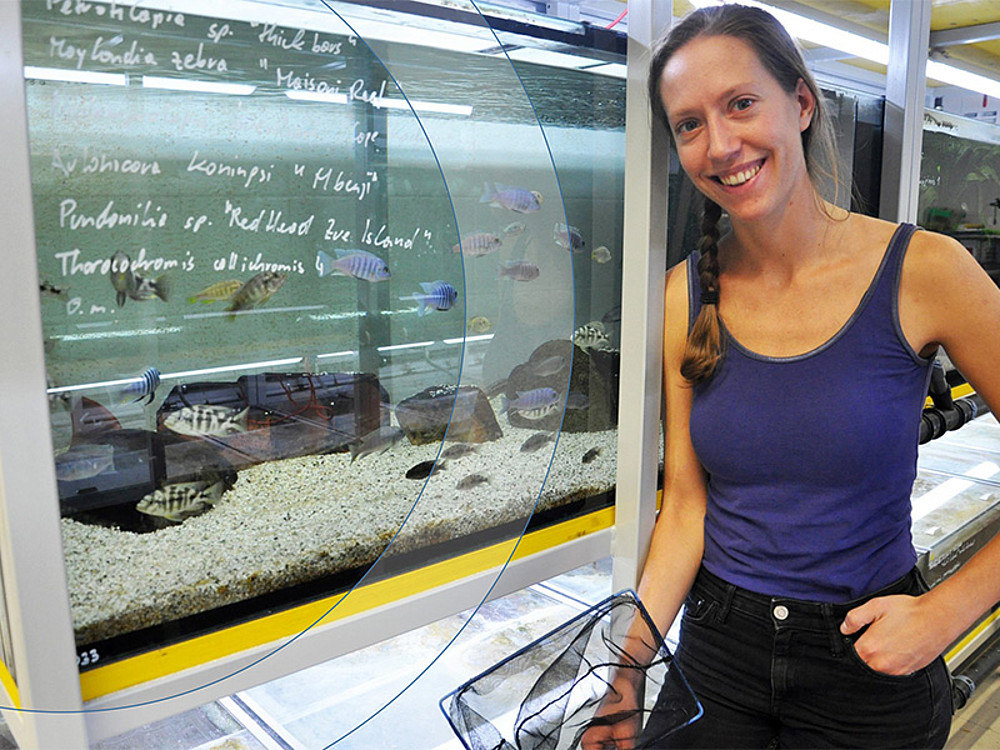
Evolutionsbiologin Angelika Ziegelbecker ist vom Nutzen einer strukturierten Doktoratsausbildung überzeugt. Beim Doctoral Academy Day gibt sie Einblicke in ihre Forschung. Foto: Uni Graz/Schweiger

Evolutionsbiologin Angelika Ziegelbecker ist vom Nutzen einer strukturierten Doktoratsausbildung überzeugt. Beim Doctoral Academy Day gibt sie Einblicke in ihre Forschung. Foto: Uni Graz/Schweiger

Wo die Zukunft zum Beruf wird: Doctoral Academy Day am 9. November

Sie haben die Zukunft im Blick – mit ihrer Forschungsarbeit am Beginn einer wissenschaftlichen Karriere: DoktorandInnen der Universität Graz. Um die NachwuchswissenschafterInnen zu fördern, baut die Universität Graz die strukturierte Doktoratsausbildung aus. Das heißt, DissertantInnen forschen in einem Team zu einem Schwerpunkt, sind mit der Scientific Community gut vernetzt und an der Universität angestellt. Die Doctoral Academy, die exzellente Doktoratsprogramme der Universität Graz bündelt, hat sich zu einem Erfolgsmodell entwickelt.

Beim Doctoral Academy Day am 9. November 2018 geben junge WissenschafterInnen einen Einblick in ihre Arbeiten. So auch Angelika Ziegelbecker. Sie erforscht im Konsortium „Ökologie, Evolution und Umweltwandel“ evolutionäre Mechanismen, die der Diversität von Buntbarschen zugrunde liegen. Sie hat herausgefunden, dass die Angleichung der sozialen Rollen von Weibchen und Männchen, zum Beispiel bei der Konkurrenz um Futter-Reviere, dazu führte, dass weibliche und männliche Fische einander äußerlich ähnlich wurden. Erst kürzlich ist dazu eine Publikation der Universität Graz erschienen, die sie mitverfasst hat. >> mehr erfahren

https://on.uni-graz.at/de/detail/article/wenn-fisch-frauen-hosen-anziehen/Die „Freude am Wissen“ treibt die Evolutionsbiologin an. „Ganz generell bin ich vom Leben fasziniert. Was wir um uns haben, ist durch unglaublich komplexe und zugleich einfache Prozesse entstanden. In diese kann ich als Wissenschafterin hineinschnuppern.“

Ziegelbecker ist vom Nutzen einer strukturierten Doktoratsausbildung voll überzeugt: „Ich kann mich inhaltlich auf meine Arbeit konzentrieren, ohne mich um strukturelle Rahmenbedingungen, vor allem in finanzieller Hinsicht, kümmern zu müssen.“ Die ergänzenden interdisziplinären Angebote, wie zum Beispiel „wie publiziere ich wissenschaftlich“, sowie Forschungswerkstätten stärken sowohl die fachliche Ausbildung als auch das Miteinander. „Alleine im stillen Kämmerlein zu schreiben, hat in allen Wissenschaftszweigen ausgedient“, betont die Doktorandin.
Dazu ist heute neben dem Fachwissen viel mehr gefragt. Das bestätigt auch Ziegelbecker: „Es braucht Eigeninitiative und Teamgeist.“ Offenheit und Flexibilität seien ebenso notwendig, wie Durchhaltevermögen und Kritikfähigkeit. Und: „Der Wille, die eigene Arbeit nach außen an die Öffentlichkeit zu tragen.“

Noch mehr Einblicke und Möglichkeiten zum Austausch bietet der Doctoral Academy Day am kommenden Freitag, den 9. November. Etwa bei Career Talks erfolgreicher DoktoratsabsolventInnen sowie bei einer Public Lecture zu akademischem Netzwerken mit Linda Greve von der Aarhus University.

>> das Programm im Detail

created by Andreas Schweiger

Related news

Semester abroad without barriers: University of Graz wins award for promoting inclusion

The University of Graz has been awarded the Internationalization Award for its new inclusion initiative. Students with fewer opportunities now also receive financial support for their semester abroad outside Europe.

Fair distribution: Researchers determine just greenhouse gas budgets for all EU regions

Ten years ago, on 12 December 2015, the Paris Climate Agreement was signed at the UN Climate Conference. In order to limit global warming to well below two degrees, only a certain amount of CO2 may be emitted worldwide. While the focus was originally on national emission targets, more than 200 subnational regions and almost 300 cities have now adopted their own targets. But how many emissions are they fairly entitled to? Researchers at the University of Graz have now developed transparent criteria for fair distribution at the subnational level for the first time and determined corresponding greenhouse gas budgets for all European regions. The paper was published today in the scientific journal Nature Communications.

Chemical Christmas show at the University of Graz: An explosive evening at the Schauspielh

At the beginning of December, the University of Graz transformed the theater into a laboratory: as part of “Chemical Life,” teacher training students staged a chemical Christmas show for Styrian school classes—complete with ethanol rockets, nitrogen snow, and glowing effects. An evening designed to inspire interest in studying chemistry.

Train by train: Koralm railway accelerates exchange between the Universities

Lectures at the University of Klagenfurt in the morning, seminars at the University of Graz in the afternoon: Austria's longest tunnel and a journey time of around 45 minutes make it easy. The Koralm railway increases the speed of networking between the two university locations. The collaboration builds on existing cooperation - for example in the areas of teacher training, Slavic studies and as employers, the universities are well coordinated.

Begin of page section:
Additional information:

University of Graz
Universitaetsplatz 3
8010 Graz
Austria
  • Contact
  • Web Editors
  • Moodle
  • UNIGRAZonline
  • Imprint
  • Data Protection Declaration
  • Accessibility Declaration
Weatherstation
Uni Graz

End of this page section. Go to overview of page sections

End of this page section. Go to overview of page sections

Begin of page section:

End of this page section. Go to overview of page sections