Begin of page section:
Page sections:

  • Go to contents (Accesskey 1)
  • Go to position marker (Accesskey 2)
  • Go to main navigation (Accesskey 3)
  • Go to sub navigation (Accesskey 4)
  • Go to additional information (Accesskey 5)
  • Go to page settings (user/language) (Accesskey 8)
  • Go to search (Accesskey 9)

End of this page section. Go to overview of page sections

Begin of page section:
Page settings:

English en
Deutsch de
Search
Login

End of this page section. Go to overview of page sections

Begin of page section:
Search:

Search for details about Uni Graz
Close

End of this page section. Go to overview of page sections


Search

Begin of page section:
Main navigation:

Page navigation:

  • University

    University
    • About the University
    • Organisation
    • Faculties
    • Library
    • Working at University of Graz
    • Campus
    Developing solutions for the world of tomorrow - that is our mission. Our students and our researchers take on the great challenges of society and carry the knowledge out.
  • Research Profile

    Research Profile
    • Our Expertise
    • Research Questions
    • Research Portal
    • Promoting Research
    • Research Transfer
    • Ethics in Research
    • Commission for Scientific Integrity
    Scientific excellence and the courage to break new ground. Research at the University of Graz creates the foundations for making the future worth living.
  • Studies

    Studies
    • Prospective Students
    • Students
  • Community

    Community
    • International
    • Location
    • Research and Business
    • Alumni
    The University of Graz is a hub for international research and brings together scientists and business experts. Moreover, it fosters the exchange and cooperation in study and teaching.
  • Spotlight
Topics
  • Sustainable University
  • Researchers answer
  • Work for us
Close menu

End of this page section. Go to overview of page sections

Begin of page section:
You are here:

University of Graz News Theologe mit Pioniergeist

End of this page section. Go to overview of page sections

Friday, 27 June 2014

Theologe mit Pioniergeist

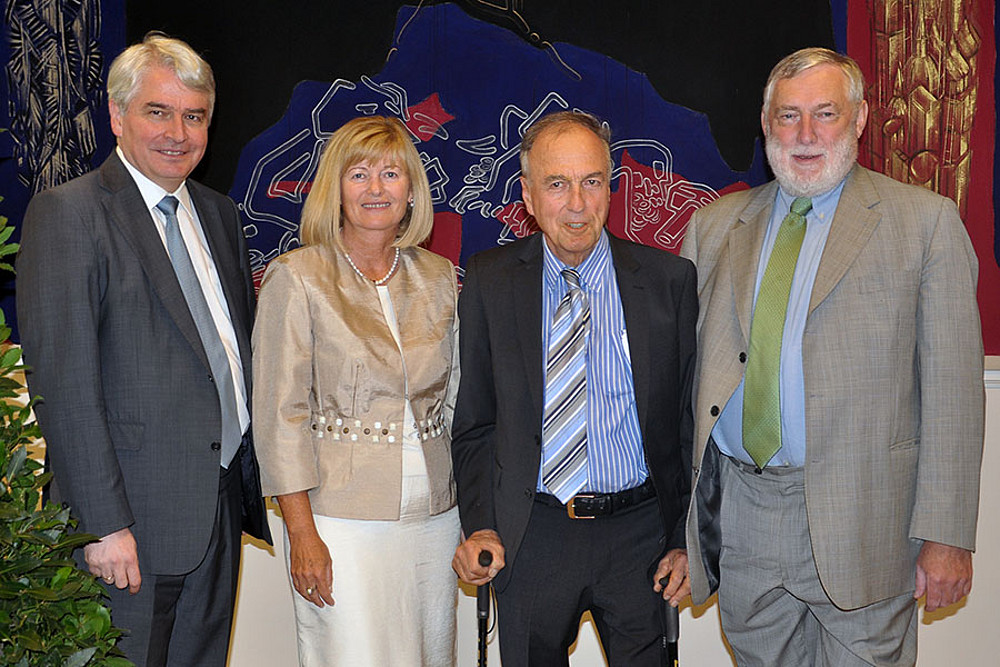
Heinrich Schmidinger, Christa Neuper, Gerhard Larcher und Franz Fischler (v.l.)

Heinrich Schmidinger, Christa Neuper, Gerhard Larcher und Franz Fischler (v.l.)

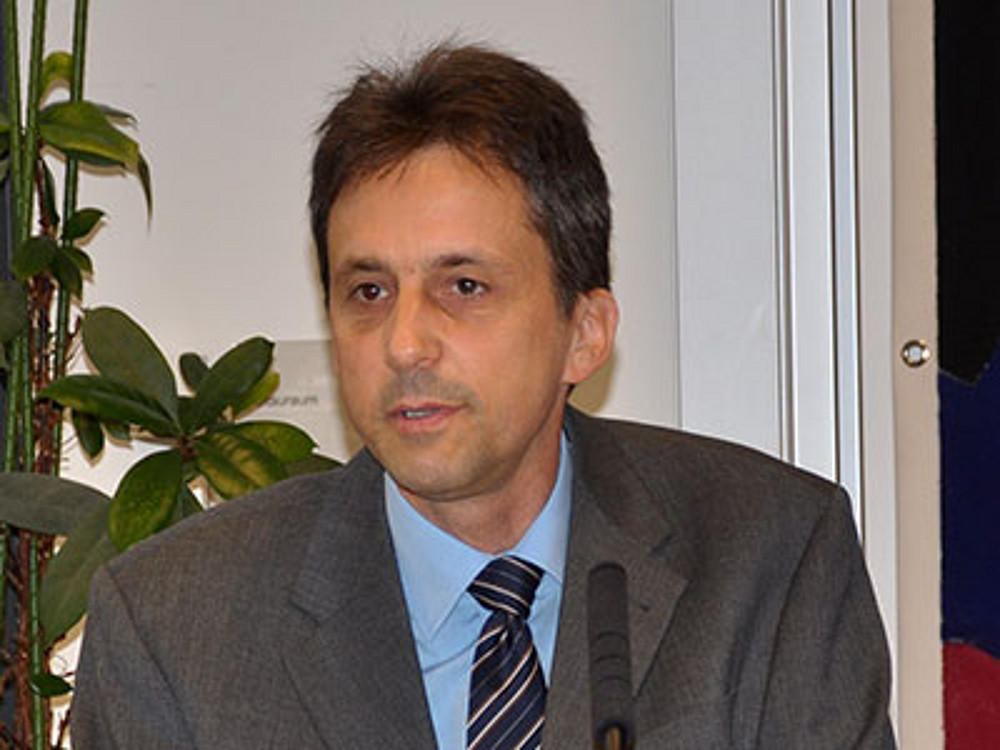
Dekan Reinhold Esterbauer

Dekan Reinhold Esterbauer

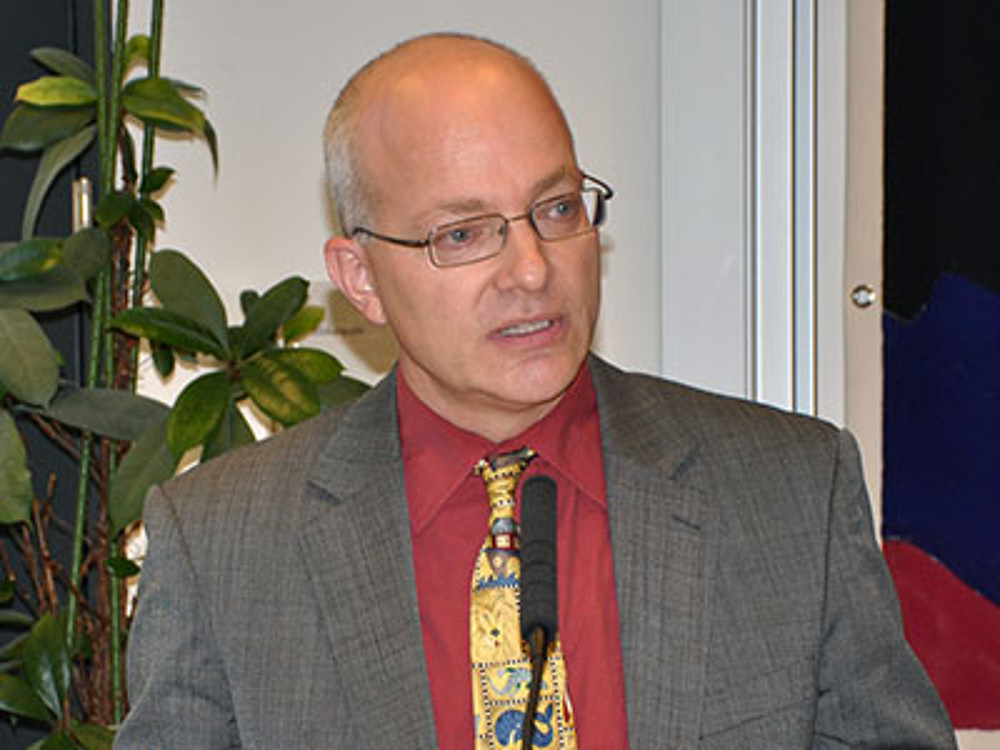
Larcher-Schüler Christian Wessely

Larcher-Schüler Christian Wessely

Symposium für Gerhard Larcher anlässlich seiner Emeritierung

Zu einem prominent besetzten Symposium lud die Katholisch-Theologische Fakultät der Uni Graz am 27. Juni 2014 anlässlich der Emeritierung von O.Univ.-Prof. Dr. Gerhard Larcher. Persönlichkeiten aus Politik, Gesellschaft und Wissenschaft, unter ihnen Dr. Franz Fischler, Präsident des Europäischen Forums Alpbach, und der Vorsitzende der Österreichischen Universitätenkonferenz, Univ.-Prof. Dr. Heinrich Schmidinger, beleuchteten die Bedeutung von Religion und Theologie in der Gegenwart.


Mit dem Aufbau des Schwerpunkts „Theologie – Kultur – Ästhetik“ hat Gerhard Larcher seit seiner Berufung zum Professor für Fundamentaltheologie 1990 Neuland betreten. Vor allem indem er Film und Theologie in Dialog miteinander gebracht hat, leistete er international beachtete Pionierarbeit. Über 20 Jahre hat Larcher dabei mit dem Regisseur und Drehbuchautor Michael Haneke zusammengearbeitet. Diese Kooperation fand 2013 einen besonderen Höhepunkt, als der Oscar-Preisträger Haneke das Ehrendoktorat der Katholisch-Theologischen Fakultät erhielt. „Damit hat die Fakultät ein Zeichen der Weltoffenheit gesetzt und das wollen wir uns als Universität auch bewahren“, unterstrich Rektorin Christa Neuper und lobte die Fakultät als „Ort kritischer Reflexion“.

„Der Dialog zwischen Wissenschaft und Gesellschaft ist der Universität Graz ein zentrales Anliegen. Sie haben mit Ihrer Forschung und Lehre vorgezeigt und -gelebt, wie die Kommunikation zwischen Theologie, Kunst und Gesellschaft fruchtbar werden kann“, dankte Neuper Prof. Larcher und überreichte ihm als sichtbares Zeichen eine Dankesurkunde der Universität gemeinsam mit dem Buch über die Geschichte der Uni Graz.


Dekan Reinhold Esterbauer konnte beim Symposium mit dem Titel „Fundamentaltheologie at the crossroads“ im Universitätszentrum Theologie zahlreiche prominente Gäste, KollegInnen sowie ehemalige Studierende von Gerhard Larcher begrüßen, unter ihnen Hochschulseelsorger MMag. Alois Kölbl und Dr. Johannes Rauchenberger, Leiter des Kulturzentrums bei den Minoriten. Larcher-Schüler und Kollege am Institut für Fundamentaltheologie der Uni Graz, Ao.Univ.-Prof. Dr. Christian Wessely, gab in seiner Laudatio einen Überblick über die herausragenden wissenschaftlichen Leistungen seines Lehrers.


Gerhard Larcher, geboren 1946 in Innsbruck, ist seit 1990 Ordentlicher Universitätsprofessor für Fundamentaltheologie der Karl-Franzens-Universität Graz. Von 1999 bis 2004 war er Dekan der Katholisch-Theologischen Fakultät.

Seine Arbeitsschwerpunkte sind neben Ästhetik und Theologie, Film und Theologie sowie dem Verhältnis von Kunst, Religion und Gesellschaft auch die Religionsphilosophie des 19. und 20. Jahrhunderts, Theologische Symbol-, Mythen- und Sprachtheorien, Christentum und Kirche in der Moderne sowie Interreligiöser Dialog.

Auch außerhalb der Universität ist Gerhard Larcher in zahlreichen Funktionen tätig, unter anderem

  • seit 1991 als Sprecher des Arbeitskreises „Kunstraum Kirche“ im AKV (Arbeitsgemeinschaft Katholischer Verbände)
  • seit 1992 als Mitglied der Europäischen Gesellschaft für Katholische Theologie und deren Präsident von 1998 bis 2001
  • seit 1998 als Mitglied der Europäischen Akademie der Wissenschaften

created by Gudrun Pichler

Related news

Career Booster: How the Research Careers Campus supports researchers

They are innovative, creative and productive – researchers who have not yet been appointed to a professorship make a massive contribution to a university’s research output. To provide them with even better support on their career path, the University of Graz has established the Research Careers Campus. The official launch took place on 22 April 2026 with a ‘festival’.

Greenery on the rise: over 500 new flowers, perennials and shrubs on campus

Bright blooms and fresh greenery make our hearts beat faster in spring. But it is not just us humans who delight in this colourful growth. For many animals, this splendour provides, above all, food and habitat. There has recently been an increase in this on the University of Graz campus. More than 500 native flowers, perennials and shrubs have been planted on strips of fallow land around Universitätsplatz 2.

Around the world in eight stops: the Long Night of Research at the University of Graz

On 24 April from 5 pm, you can take a short trip around the globe at the University of Graz, discovering pecularities of foreign countries or new local features in the entrance hall of the University Library. The itinerary takes you through introduced animal species, political attitudes and the omnipotence of algorithms. There will also be a programme in the historic reading hall, as well as at the UniGraz@Museum and the University Archive.

Building biological bridges: Chemist discovers an ecological tool for the pharmaceutical industry

Building a relationship on a solid foundation is also important in chemistry. To produce medicines, disinfectants or plant protection products, stable bonds between carbon atoms must be formed. Conventional chemical methods rely on environmentally harmful reagents and solvents to carry out the desired reaction. This process also produces unusable by-products. Chemist Lilla Gal has discovered an enzyme that enables the same process to take place efficiently and sustainably. The results of her research were recently published in the prestigious journal Angewandte Chemie.

Begin of page section:
Additional information:

University of Graz
Universitaetsplatz 3
8010 Graz
Austria
  • Contact
  • Web Editors
  • Moodle
  • UNIGRAZonline
  • Imprint
  • Data Protection Declaration
  • Accessibility Declaration
Weatherstation
Uni Graz

End of this page section. Go to overview of page sections

End of this page section. Go to overview of page sections

Begin of page section:

End of this page section. Go to overview of page sections