Begin of page section:
Page sections:

  • Go to contents (Accesskey 1)
  • Go to position marker (Accesskey 2)
  • Go to main navigation (Accesskey 3)
  • Go to sub navigation (Accesskey 4)
  • Go to additional information (Accesskey 5)
  • Go to page settings (user/language) (Accesskey 8)
  • Go to search (Accesskey 9)

End of this page section. Go to overview of page sections

Begin of page section:
Page settings:

English en
Deutsch de
Search
Login

End of this page section. Go to overview of page sections

Begin of page section:
Search:

Search for details about Uni Graz
Close

End of this page section. Go to overview of page sections


Search

Begin of page section:
Main navigation:

Page navigation:

  • University

    University
    • About the University
    • Organisation
    • Faculties
    • Library
    • Working at University of Graz
    • Campus
    Developing solutions for the world of tomorrow - that is our mission. Our students and our researchers take on the great challenges of society and carry the knowledge out.
  • Research Profile

    Research Profile
    • Our Expertise
    • Research Questions
    • Research Portal
    • Promoting Research
    • Research Transfer
    • Ethics in Research
    • Commission for Scientific Integrity
    Scientific excellence and the courage to break new ground. Research at the University of Graz creates the foundations for making the future worth living.
  • Studies

    Studies
    • Prospective Students
    • Students
  • Community

    Community
    • International
    • Location
    • Research and Business
    • Alumni
    The University of Graz is a hub for international research and brings together scientists and business experts. Moreover, it fosters the exchange and cooperation in study and teaching.
  • Spotlight
Topics
  • Sustainable University
  • Researchers answer
  • Work for us
Close menu

End of this page section. Go to overview of page sections

Begin of page section:
You are here:

University of Graz News Students in search of traces of students: What enrolment 125 years ago reveals today

End of this page section. Go to overview of page sections

Thursday, 23 January 2025

Students in search of traces of students: What enrolment 125 years ago reveals today

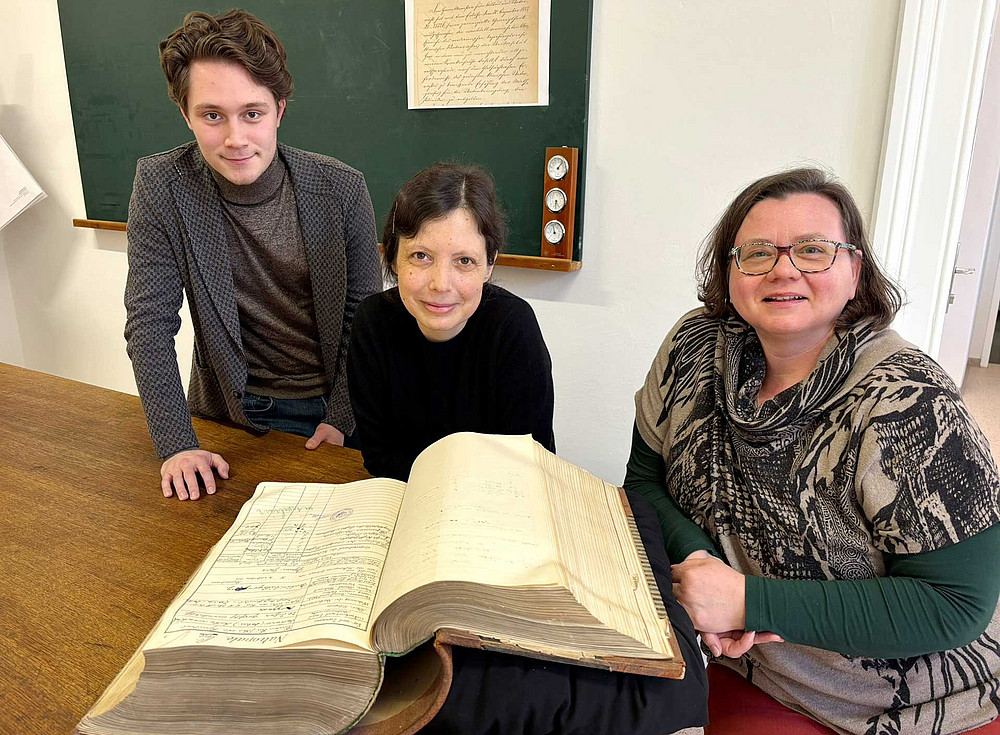
Lukas Mayr, Evelyn Knappitsch and Petra Greeff (from left)

Research project with students: Lukas Mayr, Evelyn Knappitsch and Petra Greeff (from left) Photo: Uni Graz/Schweiger

"Some manuscripts are really difficult to decipher," admits Lukas Mayr. The history student transcribed 125-year-old enrolment forms from former colleagues - and some female colleagues - in the proseminar organised by historian Evelyn Knappitsch. Women had only been admitted to the University of Graz a few years earlier. The documents are the so-called "Nationals", in which students at the time handwrote their origin, age, home address, mother tongue and courses attended. The University Archive, which digitises these forms and other documents, has made them available.

"It's easy to see where the students were born or where they lived in Graz," explains Mayr, who is already able to work as a researcher as part of his bachelor's degree in history thanks to the course. Source work is an important aspect for Evelyn Knappitsch: "Students should familiarise themselves with academic work at an early stage and without any fear of thresholds." Over the past two semesters, a total of 100 participants in the proseminar on modern times have worked on around 1,000 data sets from the 1900 winter semester and brought new findings to light.

"It shows that despite being taught in German, multilingualism was something quite normal back then," says Knapptisch. "In addition to Styria, the catchment area included many other crown lands." For example, almost half of the law students stated that they were not native German speakers. Many students from other disciplines also came from the regions of Trieste, Pula, Dalmatia and what is now Slovenia. 
"The project does not do away with the narrative of the 'German' University of Graz around 1900 that dominates today, but it does add an additional aspect," says Knappitsch. "We recognise that the everyday university life of people in the Habsburg Monarchy was often more linguistically diverse." 
Lukas Mayr adds another finding: "The information about fathers shows that education was often inherited. In combination with the daily newspapers, in which guest lists of Graz hotels were once printed, further social conclusions can be drawn - for example, when prominent parents came to visit. "It reads like early social media," smiles Mayr.

According to Knappitsch, the aim is to make the forms from the 1900 winter semester fully digitally accessible in collaboration with the university archives and to extend the research to other semesters. There is plenty of data available, confirms Petra Greeff, a researcher at the archive: "From the mid-1880s to the late 1960s, these forms were kept per person and semester, and we have preserved them."

⇒ Map showing the places of origin of students in the 1900 winter semester
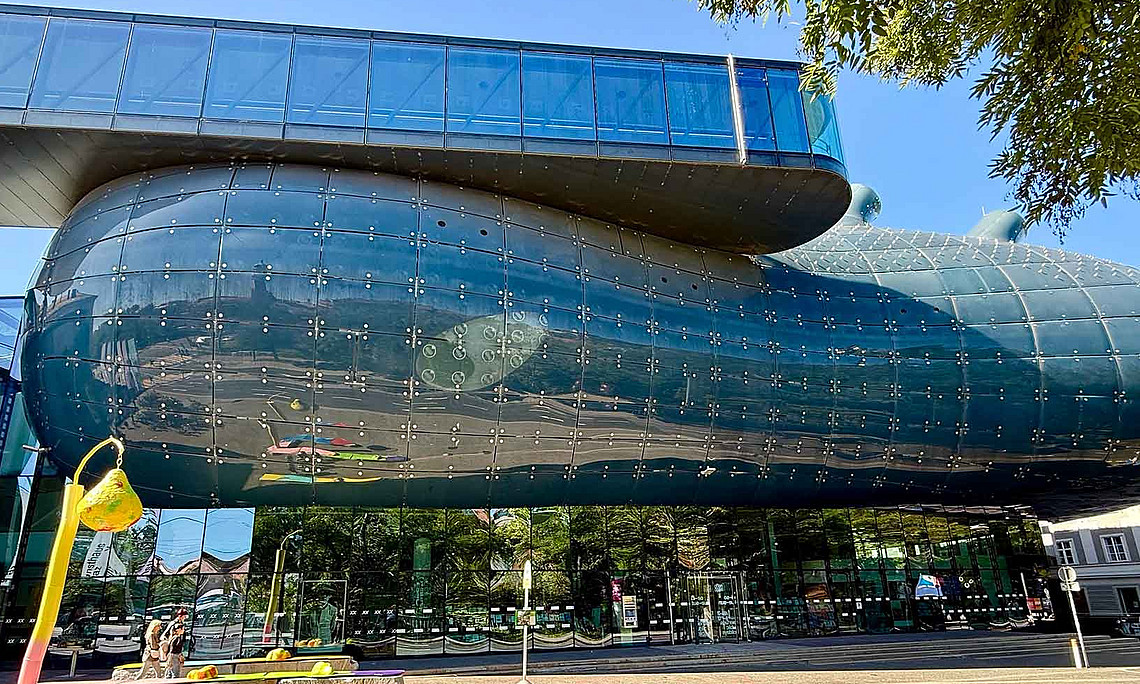
created by Andreas Schweiger

Related news

Around the world in eight stops: the Long Night of Research at the University of Graz

On 24 April from 5 pm, you can take a short trip around the globe at the University of Graz, discovering pecularities of foreign countries or new local features in the entrance hall of the University Library. The itinerary takes you through introduced animal species, political attitudes and the omnipotence of algorithms. There will also be a programme in the historic reading hall, as well as at the UniGraz@Museum and the University Archive.

Studying at the University of Graz: How to enrol

Ready for a new chapter in your life with the start of your studies at the University of Graz in the winter semester 2026/27? Here you will find information on deadlines, admission procedures, registration, and everything else you need to successfully start your studies in the fall.

Interpreting data: Why studies sometimes get it wrong

Hilmar Brohmer and Ziva Korda from the Institute of Psychology, together with 500 international colleagues, have re-evaluated a hundred scientific publications and have often come to different conclusions.

Crystal-clear: AI method revolutionises solar observation

The Sun makes life on Earth possible. However, its magnetic fields can also cause massive disruption. This makes it all the more important to gain a better understanding of the processes taking place on our nearest star. A research team from the University of Graz and the High Altitude Observatory in Boulder (USA) has succeeded in doing just that. The astrophysicists have developed an AI-supported method that makes even the smallest structures on the Sun visible. The scientists are convinced that this will bring about a lasting change in solar observation and that the new method can be used for the planned European Solar Telescope.

Begin of page section:
Additional information:

University of Graz
Universitaetsplatz 3
8010 Graz
Austria
  • Contact
  • Web Editors
  • Moodle
  • UNIGRAZonline
  • Imprint
  • Data Protection Declaration
  • Accessibility Declaration
Weatherstation
Uni Graz

End of this page section. Go to overview of page sections

End of this page section. Go to overview of page sections

Begin of page section:

End of this page section. Go to overview of page sections