Begin of page section:
Page sections:

  • Go to contents (Accesskey 1)
  • Go to position marker (Accesskey 2)
  • Go to main navigation (Accesskey 3)
  • Go to sub navigation (Accesskey 4)
  • Go to additional information (Accesskey 5)
  • Go to page settings (user/language) (Accesskey 8)
  • Go to search (Accesskey 9)

End of this page section. Go to overview of page sections

Begin of page section:
Page settings:

English en
Deutsch de
Search
Login

End of this page section. Go to overview of page sections

Begin of page section:
Search:

Search for details about Uni Graz
Close

End of this page section. Go to overview of page sections


Search

Begin of page section:
Main navigation:

Page navigation:

  • University

    University
    • About the University
    • Organisation
    • Faculties
    • Library
    • Working at University of Graz
    • Campus
    Developing solutions for the world of tomorrow - that is our mission. Our students and our researchers take on the great challenges of society and carry the knowledge out.
  • Research Profile

    Research Profile
    • Our Expertise
    • Research Questions
    • Research Portal
    • Promoting Research
    • Research Transfer
    • Ethics in Research
    Scientific excellence and the courage to break new ground. Research at the University of Graz creates the foundations for making the future worth living.
  • Studies

    Studies
    • Prospective Students
    • Students
  • Community

    Community
    • International
    • Location
    • Research and Business
    • Alumni
    The University of Graz is a hub for international research and brings together scientists and business experts. Moreover, it fosters the exchange and cooperation in study and teaching.
  • Spotlight
Topics
  • Our digital Advent calendar
  • Sustainable University
  • Researchers answer
  • Work for us
Close menu

End of this page section. Go to overview of page sections

Begin of page section:
You are here:

University of Graz News Studentin mit Migrationshintergrund: Wie sich Anđela Karać Unterstützung an der Uni Graz holte

End of this page section. Go to overview of page sections

Wednesday, 14 June 2023

Studentin mit Migrationshintergrund: Wie sich Anđela Karać Unterstützung an der Uni Graz holte

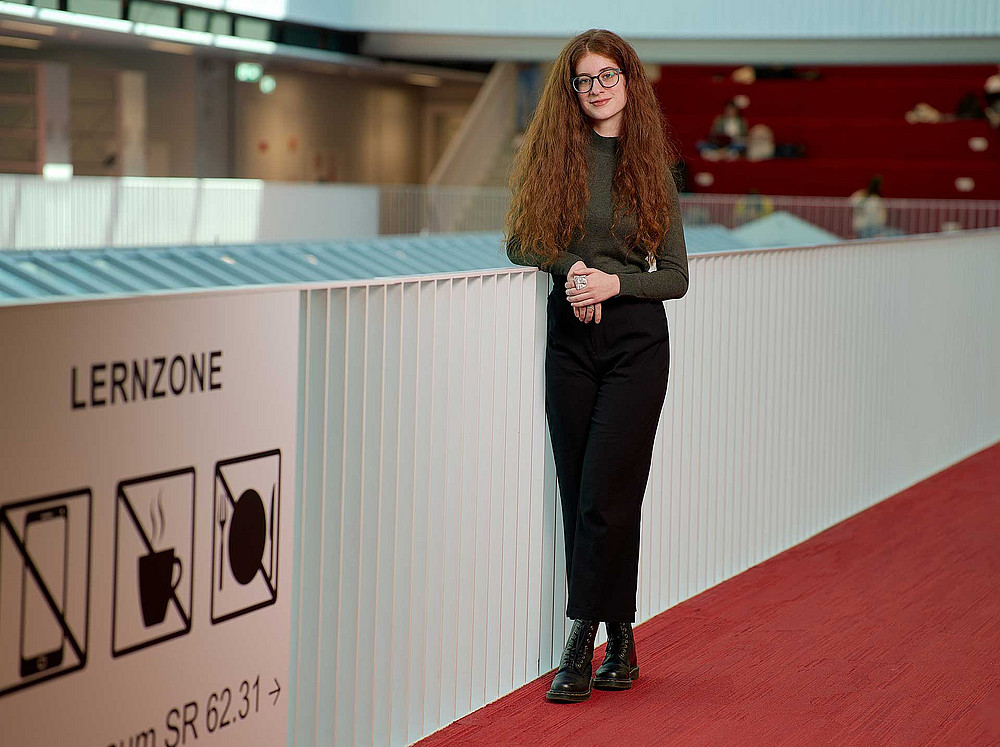
Anđela Karać studiert Erziehungs- und Bildungswissenschaft. Foto: Uni Graz/wildundwunderbar

Anđela Karać studiert Erziehungs- und Bildungswissenschaft. Foto: Uni Graz/wildundwunderbar

Anđela Karać kam aus Bosnien nach Graz, um Erziehungs- und Bildungswissenschaft zu studieren. Wenn sie nach ihrem Abschluss in Österreich bleibt, wird sie hier eine von relativ wenigen Akademiker:innen mit Migrationshintergrund sein. Warum ist das so? Und warum machen Kinder von Eltern ohne Matura nicht einmal vierzig Prozent aller Studierenden im Land aus? Offenbar mangelt es an Chancengleichheit. Mit gezielten Unterstützungsangeboten will die Uni Graz diese erhöhen.

„Meine Eltern haben mich immer ermutigt, an die Universität zu gehen. Ohne mir Druck zu machen. Sie wollten einfach, dass ich die Möglichkeiten nutze, die sie nicht hatten“, sagt Anđela Karać. Viele First Generation Students machen da auch andere Erfahrungen, weiß Lukas Georg Hartleb. Der Soziologe hat in seiner Masterarbeit untersucht, mit welchen besonderen Herausforderungen Studierende aus nicht-akademischen Familien konfrontiert sind. „Oft fehlt es ihnen an Unterstützung von zuhause. Das kann sein, dass sie mit Unverständnis oder mangelnder Wertschätzung von Seiten ihrer Eltern und Geschwister zu kämpfen haben: Was tust du den ganzen Tag? Schläfst lange, feierst Partys, lässt es dir gut gehen, während andere arbeiten müssen?“, nennt Hartleb Beispiele für stereotype Vorurteile.

Unsicherheit
Solche Vorwürfe können etwaige eigene Unsicherheiten und Zweifel an der Entscheidung für ein Studium verstärken: Schaffe ich das überhaupt? Bin ich klug genug dafür? „Kommen dann noch ökonomische Schwierigkeiten dazu – häufig haben First Generation Students einen schwächeren finanziellen Background –, überlegt man eher, das Studium abzubrechen“, berichtet Hartleb.

Schreibhilfe
Anđela Karać denkt nicht ans Aufhören. Sie ist mittlerweile gut an der Uni angekommen. Aber die Erfahrung, mit einigen Herausforderungen alleine gelassen zu sein, kennt sie auch. Die größte ist für sie das wissenschaftliche Schreiben: „Nicht nur wegen der Sprache, in der mir manchmal der Wortschatz fehlt. Es fällt mir einfach schwer, weil ich es noch nie gemacht habe, bevor ich an die Uni kam. Und meine Familie oder auch meine Freund:innen in Bosnien können mich dabei nicht unterstützen.“
Dieses Problem teilt Karać – vielleicht ohne es zu wissen – mit vielen anderen Studierenden. Daher hat die Uni Graz vor einigen Jahren das Schreibzentrum eingerichtet, wo auch Lukas Georg Hartleb tätig ist. Hier werden Beratungen und Workshops angeboten, die helfen, individuelle Arbeitstechniken zu entwickeln.

>> über Anđela Karać und Chancengleichheit im Magazin UNIZEIT mehr erfahren


created by Gudrun Pichler

Related news

Chemical Christmas show at the University of Graz: An explosive evening at the Schauspielh

At the beginning of December, the University of Graz transformed the theater into a laboratory: as part of “Chemical Life,” teacher training students staged a chemical Christmas show for Styrian school classes—complete with ethanol rockets, nitrogen snow, and glowing effects. An evening designed to inspire interest in studying chemistry.

Train by train: Koralm railway accelerates exchange between the Universities

Lectures at the University of Klagenfurt in the morning, seminars at the University of Graz in the afternoon: Austria's longest tunnel and a journey time of around 45 minutes make it easy. The Koralm railway increases the speed of networking between the two university locations. The collaboration builds on existing cooperation - for example in the areas of teacher training, Slavic studies and as employers, the universities are well coordinated.

On the trail of the Big Bang: University of Graz receives 1.5 million euros for doctoral programmes

The Austrian Science Fund FWF has selected the Doctoral Programme in Theoretical Particle Physics at the University of Graz for funding from the Doc.funds. Six young scientists will be funded for 3.5 years. They will gain fundamentally new insights into the origins of the world.

From trans women and knee prostheses: sports science prizes awarded

Walking better with a prosthesis, successfully getting rid of excess weight, training more effectively, more fairness for trans people in sport: these were the topics addressed by the students at the University of Graz who were awarded the sports science prizes for their Master's theses on 3 December 2025.

Begin of page section:
Additional information:

University of Graz
Universitaetsplatz 3
8010 Graz
Austria
  • Contact
  • Web Editors
  • Moodle
  • UNIGRAZonline
  • Imprint
  • Data Protection Declaration
  • Accessibility Declaration
Weatherstation
Uni Graz

End of this page section. Go to overview of page sections

End of this page section. Go to overview of page sections

Begin of page section:

End of this page section. Go to overview of page sections