Begin of page section:
Page sections:

  • Go to contents (Accesskey 1)
  • Go to position marker (Accesskey 2)
  • Go to main navigation (Accesskey 3)
  • Go to sub navigation (Accesskey 4)
  • Go to additional information (Accesskey 5)
  • Go to page settings (user/language) (Accesskey 8)
  • Go to search (Accesskey 9)

End of this page section. Go to overview of page sections

Begin of page section:
Page settings:

English en
Deutsch de
Search
Login

End of this page section. Go to overview of page sections

Begin of page section:
Search:

Search for details about Uni Graz
Close

End of this page section. Go to overview of page sections


Search

Begin of page section:
Main navigation:

Page navigation:

  • University

    University
    • About the University
    • Organisation
    • Faculties
    • Library
    • Working at University of Graz
    • Campus
    Developing solutions for the world of tomorrow - that is our mission. Our students and our researchers take on the great challenges of society and carry the knowledge out.
  • Research Profile

    Research Profile
    • Our Expertise
    • Research Questions
    • Research Portal
    • Promoting Research
    • Research Transfer
    • Ethics in Research
    • Commission for Scientific Integrity
    Scientific excellence and the courage to break new ground. Research at the University of Graz creates the foundations for making the future worth living.
  • Studies

    Studies
    • Prospective Students
    • Students
    • Registration for Study Programme (Winter semester 2026/27)
  • Community

    Community
    • International
    • Location
    • Research and Business
    • Alumni
    The University of Graz is a hub for international research and brings together scientists and business experts. Moreover, it fosters the exchange and cooperation in study and teaching.
Topics
  • Sustainable University
  • Researchers answer
  • Work for us
Close menu

End of this page section. Go to overview of page sections

Begin of page section:
You are here:

University of Graz News Sprachgefühl

End of this page section. Go to overview of page sections

Wednesday, 18 November 2015

Sprachgefühl

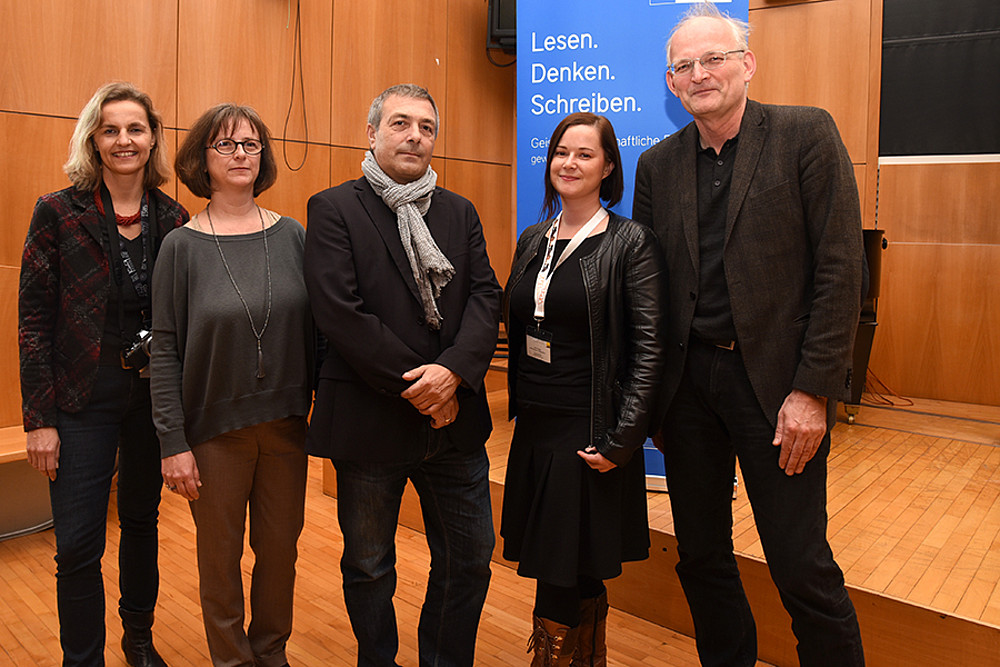
Sprachgewandt beim Tag der Sprachen: Organisatorin Katharina Deman, Nadia Grbic, Institut für Angewandte und Theoretische Translationswissenschaft, Vizedekan Arne Ziegler, Organisatorin Ulrike Freitag und Dekan Lukas Meyer (v.l.) Foto: Uni Graz/Schweiger

Sprachgewandt beim Tag der Sprachen: Organisatorin Katharina Deman, Nadia Grbic, Institut für Angewandte und Theoretische Translationswissenschaft, Vizedekan Arne Ziegler, Organisatorin Ulrike Freitag und Dekan Lukas Meyer (v.l.) Foto: Uni Graz/Schweiger

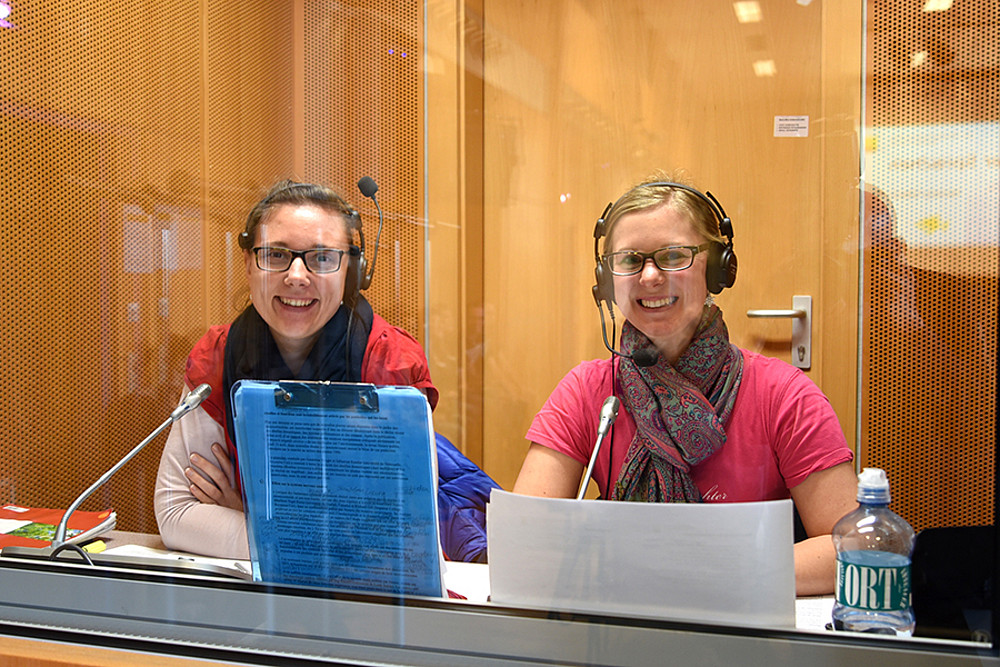
Dolmetsch-Studierende nutzten die Veranstaltung, sich Praxis anzueignen.

Dolmetsch-Studierende nutzten die Veranstaltung, sich Praxis anzueignen.

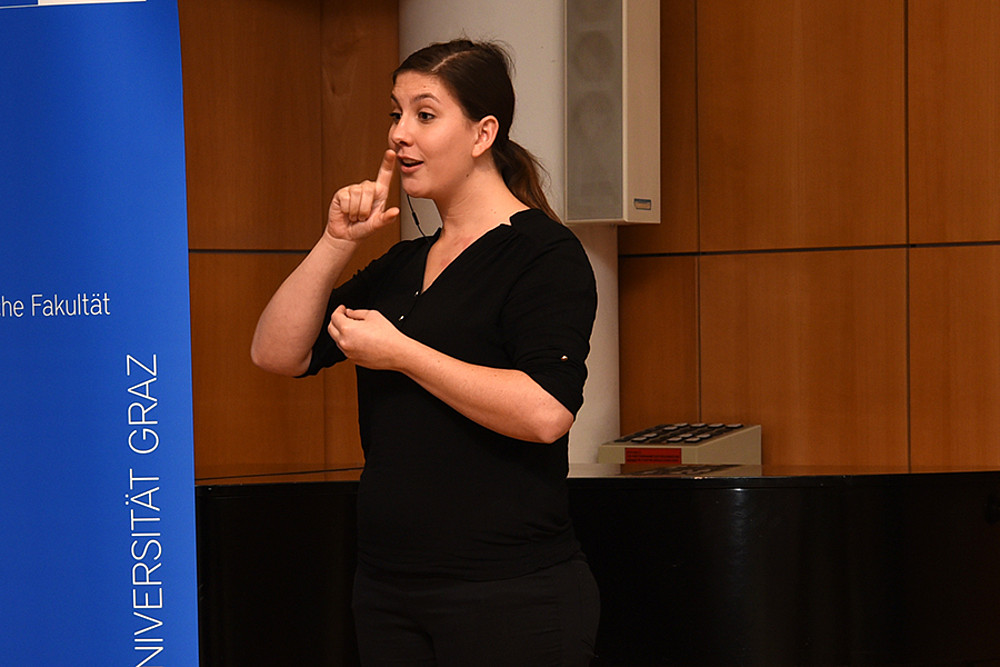
Die Uni Graz bietet als erste österreichische Universität eine Ausbildung zur/zum GebärdensprachdolmetscherIn an.

Die Uni Graz bietet als erste österreichische Universität eine Ausbildung zur/zum GebärdensprachdolmetscherIn an.

Italienisch im Kino, Schimpfen auf Lateinisch, Witze in Kroatisch: Uni Graz lud zum Tag der Sprachen

Von lateinischen Schimpfwörtern über Humor in Osteuropa bis hin zum Sprachgebrauch von Jugendlichen – Sprache hat viele Facetten. Buchstäblich zur Sprache gebracht wurden diese beim Tag der Sprachen der Karl-Franzens-Universität Graz am 17. November 2015. Die Geisteswissenschaftliche Fakultät, die mehr als 20 Sprachen-Studien anbietet, hatte SchülerInnen und Studierende zum abwechslungsreichen Informationstag ins Wall-Zentrum eingeladen.
„Das Erlernen einer Sprache ist mehr als Aneignen von Vokabeln. Es bedeutet auch, sich auf eine andere Kultur einzulassen“, begrüßte Studien-Vizerektor Martin Polaschek die Interessierten im randvollen Mehrzwecksaal. Der Dekan der Geisteswissenschaftlichen Fakultät, Lukas Meyer, verwies auf das vielfältige Angebot und den Mehrwert des Sprachenerwerbs: „Man lernt dabei, sich als Person neu zu erfahren.“
Vizedekan Arne Ziegler hielt den Eröffnungsvortrag unter dem thematisch passenden Titel „Richtig schlechtes Deutsch“.
Dolmetsch-Studierende nutzten die Veranstaltung, sich Praxis anzueignen, und übersetzten die Reden in an der Uni Graz angebotene Sprachen, darunter Arabisch, Italienisch, Englisch sowie Österreichische Gebärdensprache.

Wer sich für ein Sprachen-Studium oder ein Wahlfach entscheiden will, findet auch abseits des Tages der Sprachen Orientierungshilfe auf unigate: https://gewi.uni-graz.at/de/studieren/unigate/

Reinhören ins Webradio

created by Andreas Schweiger

Related news

"Mathematics explains the world"

How can life be quantified? And what can science reveal that remains hidden from the naked eye? The 14th European Conference on Mathematical and Theoretical Biology at the University of Graz is dedicated to these questions. From 13 to 17 July, around 1,300 researchers from all over the world will gather on campus to discuss models, biological processes and the future of data-driven medicine. Klemens Fellner, Dean of the Faculty of Natural Sciences and Mathematics and a mathematician, talks about the language that explains the world

Internationally up-to-date: University of Graz offers new degree programmes in art studies

From the Old Masters to AI art – three newly designed degree programmes offer students at the University of Graz fresh perspectives on artistic production. In addition to historical art, the programmes place a greater emphasis on contemporary and global developments. The registration period is open.

The Nazi elite school Napola: Historian seeks memories and personal documents

They were to be brought up to become the future elite of National Socialism: boys and girls aged ten and over who, following the ‘Anschluss’ of Austria to the German Reich, attended a so-called Napola (short for Nationalpolitische Lehranstalt; also known as NPEA, Nationalpolitische Erziehungsanstalt). There were nine such institutions in what is now Austria between 1939 and 1945.

Heat-resistant: Eva Preinfalk explains how cities can protect their residents

Certain demographic and some occupational groups are particularly vulnerable to high temperatures. A range of measures is needed to provide relief for everyone, explains climate economist Eva Preinfalk.

Begin of page section:
Additional information:

University of Graz
Universitaetsplatz 3
8010 Graz
Austria
  • Contact
  • Web Editors
  • Moodle
  • UNIGRAZonline
  • Imprint
  • Data Protection Declaration
  • Accessibility Declaration
Weatherstation
Uni Graz

End of this page section. Go to overview of page sections

End of this page section. Go to overview of page sections

Begin of page section:

End of this page section. Go to overview of page sections