Learning accompanies us throughout our lives – from our first steps to graduation and beyond. What happens in the brain during this process? Which techniques support the learning process? And what role does the family or social environment play? Teaching and learning research deals with these and many other questions.
Experts on this topic have been meeting for 40 years at major conferences organized by the European Association for Research on Learning and Instruction (EARLI). The organization will celebrate its anniversary in August at a conference at the University of Graz. “We are expecting around 2,500 participants,” says Lucia Mason, president of EARLI. The program includes numerous presentations of current research results from a wide range of areas in teaching and learning research.
Focus on the brain
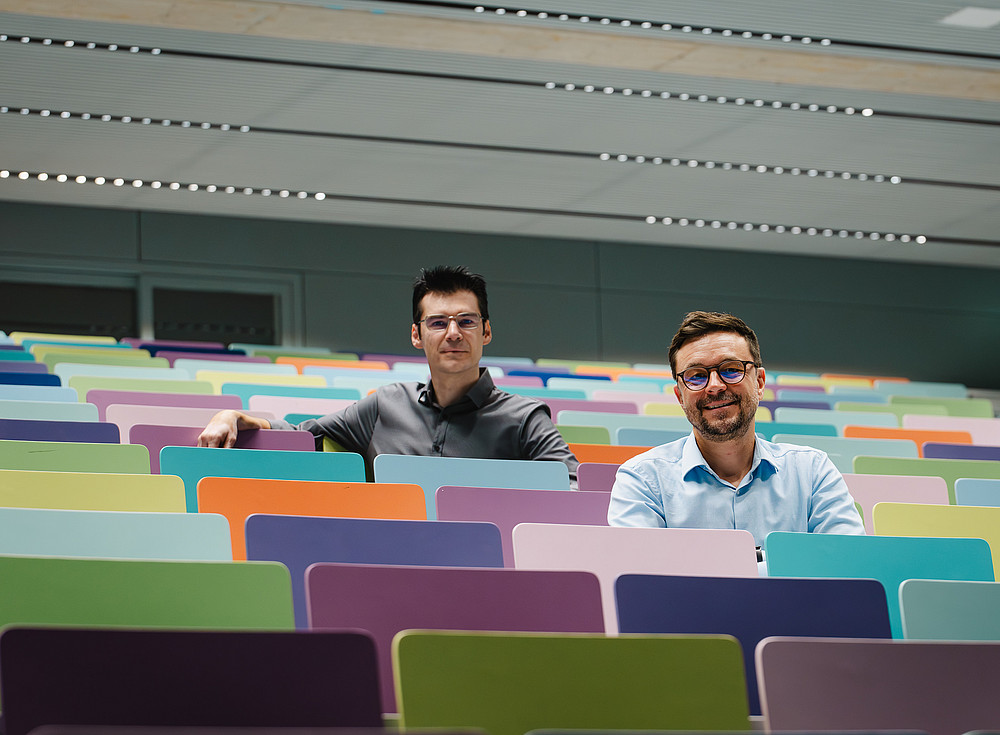
Scientists from the University of Graz will present their work in the field of neuroscientific learning research, among other things. Stephan Vogel, for example, uses EEG and MRI to investigate what happens in our brains when we perceive numbers or quantities. “This process is crucial for understanding mathematical concepts,” explains the psychologist and neuroscientist. His knowledge is being incorporated into a joint project with the University of Education Styria: The aim is to digitally record the numerical comprehension of preschool children and develop targeted support measures.
His colleague Roland Grabner, on the other hand, is researching how talents develop from aptitudes. To this end, he studies people who excel at chess and mathematics, among other things, and explores questions such as: What skills and personality traits are required for this, and how do the brains of experts work? Another focus is on bilingual learning. Grabner wants to find out: "What cognitive challenges arise when you don't learn mathematics in your native language? And how much additional learning is necessary to achieve the same level of performance?“
From research to the classroom
International networking among scientists not only promotes the exchange of knowledge, but also helps to bring research results into the classroom more quickly. ”Our experts play an active role in curriculum development in their home countries," says EARLI President Mason. “Their knowledge has been crucial to the development of digital learning tools such as those used in many schools today.” Researchers are also increasingly focusing on the social aspects of learning. “How important are relationships for success in education? Whether it's family, friends, or bonds with teachers, all of these factors influence learning outcomes,” explains Mason.
What can education researchers expect at the conference in Graz? “We maintain close contacts with colleagues from neighboring disciplines here,” says Stephan Vogel. “The EARLI conference at the University of Graz is a unique opportunity to raise the international profile of the diverse and high-quality education research conducted at our university,” adds Roland Grabner. That is why the university research network FUTURE EDUCATION will be represented several times in the conference program.
Do you want to not only learn, but also understand how people learn? Would you like to help shape the education of tomorrow? Then study psychology, education, or teaching at the University of Graz.