



Begin of page section:
Page sections:

  • Go to contents (Accesskey 1)
  • Go to position marker (Accesskey 2)
  • Go to main navigation (Accesskey 3)
  • Go to sub navigation (Accesskey 4)
  • Go to additional information (Accesskey 5)
  • Go to page settings (user/language) (Accesskey 8)
  • Go to search (Accesskey 9)

End of this page section. Go to overview of page sections

Begin of page section:
Page settings:

English en
Deutsch de
Search
Login

End of this page section. Go to overview of page sections

Begin of page section:
Search:

Search for details about Uni Graz
Close

End of this page section. Go to overview of page sections


Search

Begin of page section:
Main navigation:

Page navigation:

  • University

    University
    • About the University
    • Organisation
    • Faculties
    • Library
    • Working at University of Graz
    • Campus
    Developing solutions for the world of tomorrow - that is our mission. Our students and our researchers take on the great challenges of society and carry the knowledge out.
  • Research Profile

    Research Profile
    • Our Expertise
    • Research Questions
    • Research Portal
    • Promoting Research
    • Research Transfer
    • Ethics in Research
    • Commission for Scientific Integrity
    Scientific excellence and the courage to break new ground. Research at the University of Graz creates the foundations for making the future worth living.
  • Studies

    Studies
    • Prospective Students
    • Students
    • Welcome Weeks for First Year Students
  • Community

    Community
    • International
    • Location
    • Research and Business
    • Alumni
    The University of Graz is a hub for international research and brings together scientists and business experts. Moreover, it fosters the exchange and cooperation in study and teaching.
Topics
  • Sustainable University
  • Researchers answer
  • Work for us
Close menu

End of this page section. Go to overview of page sections

Begin of page section:
You are here:

University of Graz News Smart kicks

End of this page section. Go to overview of page sections

Tuesday, 08 June 2021

Smart kicks

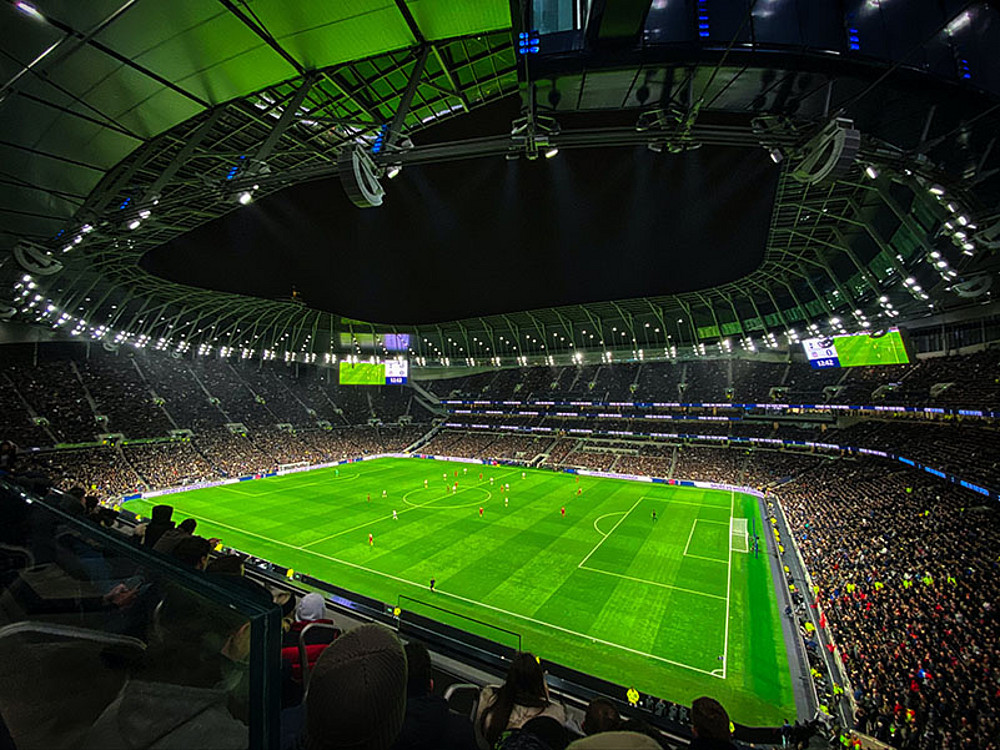
This Friday, the 2021 European Football Championship will kick off in Rome with the first match between Turkey and Italy. Andreas Fink from the Institute of Psychology at the University of Graz knows that it is not only physical fitness that matters when it comes to scoring goals, but that creativity also goes a long way. Photo: pexels.com/Dom Le Roy.

This Friday, the 2021 European Football Championship will kick off in Rome with the first match between Turkey and Italy. Andreas Fink from the Institute of Psychology at the University of Graz knows that it is not only physical fitness that matters when it comes to scoring goals, but that creativity also goes a long way. Photo: pexels.com/Dom Le Roy.

Psychologists at the University of Graz prove creative excellence on the football pitch

This Friday, the 2021 European Football Championship will kick off in Rome with the first match between Turkey and Italy. Andreas Fink from the Institute of Psychology at the University of Graz knows that it is not only physical fitness that matters when it comes to scoring goals, but that creativity also goes a long way: “We understand creativity to be the combination of several characteristics: players who are imaginative, surprising and effective, and all at the same time, can influence the final score.” 

In a recent study, Fink and his team saw that creativity in football can be predicted by the activity of many networks in the brain. Particularly important are the brain areas involved in movement perception, memory, visual attention and the integration of information from different sensory perceptions. And it all happens surprisingly quickly: because creative players often only need a quick glance at the situation for their next pass to be spot on.

These results complement new findings at the interface of psychology, sport and brain research, which increasingly demonstrate how important thinking skills are in the field of sport, explains the psychologist. The studies are conducted in cooperation with researchers from the German Sport University Cologne. “In the longer term, our results could help to develop a balanced training programme that incorporates both physical and psychological performance in order to optimise player success,” says Fink. 

In a new episode of the University of Graz science podcast “Hör-Saal: 15 Minuten Forschung,” Andreas Fink discusses whether footballers – and also amateur athletes – can use their creativity just as successfully off the pitch. >> to the episode  

Listen to the episode on:

Spotify
Apple Podcasts
Google Podcasts


>> Listen to the podcast on UniTube (German only) 


Publication: 
Rominger, C., Koschutnig, K., Memmert, D., Papousek, I., Perchtold-Stefan, C., Benedek, M., Schwerdtfeger, A., & Fink, A. (2021). Brain activation during the observation of real soccer game situations predict creative goalscoring. Social Cognitive and Affective Neuroscience, nsab035. https://doi.org/10.1093/scan/nsab035

 

>> ORF Video Wissenswert

created by Gerhild Leljak

Related news

Electrifying: Researchers film the first moments on the way from light to electricity

Physicists at the University of Graz (Austria), in collaboration with colleagues from Marburg University and Forschungszentrum Jülich (Germany), have achieved a scientific breakthrough. For the first time, the generation of electrical energy from light has been filmed and described theoretically. This work is of far-reaching significance, not least for optimising sustainable energy production from photovoltaics. This is because it provides fundamental building blocks for understanding the physical processes that take place, for example, in organic solar cells. The paper was published in the journal Physical Review X, one of the world’s most prestigious physics journals.

University of Graz: Working together to make Styria a sustainable centre of learning

Round table calls for sustainable funding for the 2028–2030 performance agreement period between the five Styrian universities and the federal government.

How can we teach using YouTube and AI? The University of Graz is strengthening media education in schools

A journey through the blood vessels using VR headsets brings biology lessons to life. An interactive quiz brings physics to life. The YouTube video explains the First World War. Whilst mobile phones are increasingly being banned from the classroom, social media platforms, apps and AI are playing an ever-greater role in knowledge transfer at school. But how can teaching with media be made even more effective? What are the challenges in media-based teaching? At the University of Graz, researchers are discussing these issues at a conference being held in Austria for the first time.

Jurassic Sounds: Biologist reconstructs insect songs from 165 million years ago

It was apparently not just the roars of the dinosaurs that made up the soundscape of the animal world during the Jurassic period. Crickets and grasshoppers communicated through a variety of songs and high-pitched sounds, as Thorin Jonsson from the Institute of Biology at the University of Graz discovered together with colleagues from the universities of Lincoln, Bristol (UK), Beijing (China) and Tempe (USA). The findings on what are so far the oldest traces of sound on Earth have just been published in the journal PNAS.

Begin of page section:
Additional information:

University of Graz
Universitaetsplatz 3
8010 Graz
Austria
  • Contact
  • Web Editors
  • Moodle
  • UNIGRAZonline
  • Imprint
  • Data Protection Declaration
  • Accessibility Declaration
Weatherstation
Uni Graz

End of this page section. Go to overview of page sections

End of this page section. Go to overview of page sections

Begin of page section:

End of this page section. Go to overview of page sections

