Begin of page section:
Page sections:

  • Go to contents (Accesskey 1)
  • Go to position marker (Accesskey 2)
  • Go to main navigation (Accesskey 3)
  • Go to sub navigation (Accesskey 4)
  • Go to additional information (Accesskey 5)
  • Go to page settings (user/language) (Accesskey 8)
  • Go to search (Accesskey 9)

End of this page section. Go to overview of page sections

Begin of page section:
Page settings:

English en
Deutsch de
Search
Login

End of this page section. Go to overview of page sections

Begin of page section:
Search:

Search for details about Uni Graz
Close

End of this page section. Go to overview of page sections


Search

Begin of page section:
Main navigation:

Page navigation:

  • University

    University
    • About the University
    • Organisation
    • Faculties
    • Library
    • Working at University of Graz
    • Campus
    Developing solutions for the world of tomorrow - that is our mission. Our students and our researchers take on the great challenges of society and carry the knowledge out.
  • Research Profile

    Research Profile
    • Our Expertise
    • Research Questions
    • Research Portal
    • Promoting Research
    • Research Transfer
    • Ethics in Research
    Scientific excellence and the courage to break new ground. Research at the University of Graz creates the foundations for making the future worth living.
  • Studies

    Studies
    • Prospective Students
    • Students
  • Community

    Community
    • International
    • Location
    • Research and Business
    • Alumni
    The University of Graz is a hub for international research and brings together scientists and business experts. Moreover, it fosters the exchange and cooperation in study and teaching.
  • Spotlight
Topics
  • Sustainable University
  • Researchers answer
  • Work for us
Close menu

End of this page section. Go to overview of page sections

Begin of page section:
You are here:

University of Graz News Samson, Jago & Aufschneider

End of this page section. Go to overview of page sections

Tuesday, 28 May 2013

Samson, Jago & Aufschneider

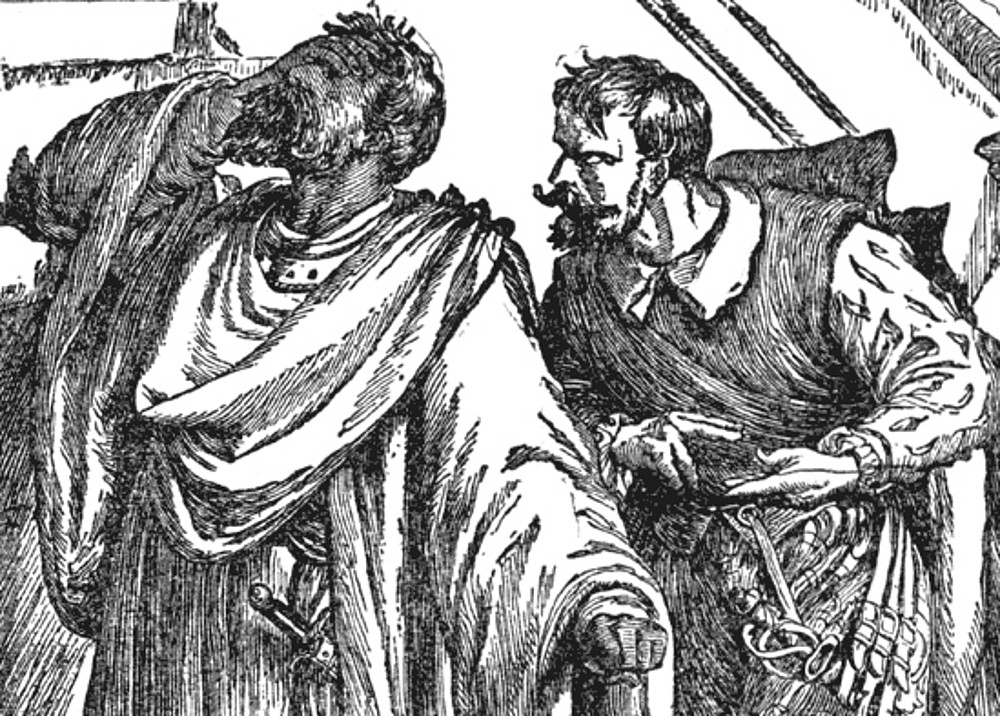
Jago (rechts), brillianter und eitler Intrigant aus Shakespeares OTHELLO, ist ein vielzitierter Typus in der Literatur. Foto: Wikimedia Commons.

Jago (rechts), brillianter und eitler Intrigant aus Shakespeares OTHELLO, ist ein vielzitierter Typus in der Literatur. Foto: Wikimedia Commons.

Tagung zu Typen in Theater und Film mit Josef Haslinger an der Uni Graz

Vom biblischen Helden Samson, der seine Kraft durch einen unfreiwilligen Haarschnitt verliert, über den eifersüchtigen Jago, der Shakespeares Othello in die Paranoia treibt, bis hin zum verqueren, problemversessene Dr. Fuhrmann aus dem Hader/Schalko-Film „Aufschneider“: Fiktive Figuren funktionieren nach bestimmten sozialen Rollenmustern. „Typen“ geben nicht nur Literatur, Bühne und Film ein charakteristisches Gesicht. Auch Graphic Novels oder Strategiespiele wie „Warhammer Fantasy“ leben von der Inszenierung bestimmter Wesenszüge charismatischer Persönlichkeiten.


Eine Tagung an der Karl-Franzens-Universität Graz heftet sich von 31. Mai bis 1. Juni 2013 an ihre Fersen und beleuchtet kulturwissenschaftliche und kultursoziologische Zusammenhänge. Höhepunkt ist eine Lesung des Autors Josef Haslinger am 1. Juni um 11 Uhr.


Personen, Figuren, Rollen und Typen sind Forschungsgegenstände des Schwerpunktbereichs „LiTheS: Literatur- und Theatersoziologie“ am Institut für Germanistik der Uni Graz. Zur insgesamt vierten „LiTheS“-Tagung sind wahre Kapazunder der kulturwissenschaftlichen sowie soziologischen Forschung geladen: Uta Gerhardt von der Universität Heidelberg spricht zur Typisierung im Theater, der Soziologe Manfred Prisching widmet sich der Individualisierung und Identitätssuche und der Grazer Musikwissenschafter Michael Walter beleuchtet den historischen Helden in der Nationaloper. Abschließend nimmt der Schriftsteller Josef Haslinger („Opernball“, „Das Vaterspiel“), Professor für literarische Ästhetik am Deutschen Literaturinstitut Leipzig und seit Mai 2013 Präsident des PEN-Zentrums Deutschland, mit einer Lesung und anschließendem Gespräch „Das Theater mit den Figuren“ ins Visier.


Die Tagung ist Teil des im Sommersemester 2013 angebotenen Moduls „LitheS“, organisiert von der Germanistin Ao.Univ.-Prof. Dr. Beatrix Müller-Kampel und vom Kabarettisten, Autor und Schauspieler Alfred Dorfer. Der Kabarettist Josef Hader referierte in diesem Rahmen ebenfalls kürzlich an der Uni Graz.

Tagung: Person – Figur – Rolle – Typ: Kulturwissenschaftliche und kultursoziologische Zusammenhänge
Zeit: Donnerstag, 30. Mai, bis Samstag, 1. Juni 2013
Ort: Universität Graz, Hauptgebäude, 1. Stock, Hörsaal 01.18


Das genaue Programm finden Sie unter: http://lithes.uni-graz.at/veranstalt.html


created by Gerhild Kastrun

Related news

Diversity buddies at the University of Graz: Support on equal terms

The University of Graz is strengthening its commitment to equal opportunities with its new Diversity Buddies. University members can find easily accessible contact persons here for questions relating to equality and diversity. All employees can get involved and take action.

When parents find it difficult to have a say

In her dissertation, translation scholar Marie Tschurtschenthaler examines how communication between compulsory schools and parents whose first language is not German works – and what role professional language mediation plays in this. Initial insights show that it is not just about language, but also about resources, responsibilities and the institutional framework.

AI in schools: Maria Bertel drafts legal guidelines for teachers

The legal expert and her team analysed the legal situation regarding the use of artificial intelligence in education as part of an EU project and answered open questions from practice.

Cosmetics in the environment: University of Graz proves danger to ants

Titanium dioxide, which is found in cosmetics, for example, is increasingly entering the environment in the form of nanoparticles. This could also put insects at risk. If ants ingest the substance in combination with the pesticide glyphosate, it disturbs the development of their offspring. Scientists at the University of Graz are drawing attention to the negative consequences of this toxic cocktail.

Begin of page section:
Additional information:

University of Graz
Universitaetsplatz 3
8010 Graz
Austria
  • Contact
  • Web Editors
  • Moodle
  • UNIGRAZonline
  • Imprint
  • Data Protection Declaration
  • Accessibility Declaration
Weatherstation
Uni Graz

End of this page section. Go to overview of page sections

End of this page section. Go to overview of page sections

Begin of page section:

End of this page section. Go to overview of page sections