Begin of page section:
Page sections:

  • Go to contents (Accesskey 1)
  • Go to position marker (Accesskey 2)
  • Go to main navigation (Accesskey 3)
  • Go to sub navigation (Accesskey 4)
  • Go to additional information (Accesskey 5)
  • Go to page settings (user/language) (Accesskey 8)
  • Go to search (Accesskey 9)

End of this page section. Go to overview of page sections

Begin of page section:
Page settings:

English en
Deutsch de
Search
Login

End of this page section. Go to overview of page sections

Begin of page section:
Search:

Search for details about Uni Graz
Close

End of this page section. Go to overview of page sections


Search

Begin of page section:
Main navigation:

Page navigation:

  • University

    University
    • About the University
    • Organisation
    • Faculties
    • Library
    • Working at University of Graz
    • Campus
    Developing solutions for the world of tomorrow - that is our mission. Our students and our researchers take on the great challenges of society and carry the knowledge out.
  • Research Profile

    Research Profile
    • Our Expertise
    • Research Questions
    • Research Portal
    • Promoting Research
    • Research Transfer
    • Ethics in Research
    • Commission for Scientific Integrity
    Scientific excellence and the courage to break new ground. Research at the University of Graz creates the foundations for making the future worth living.
  • Studies

    Studies
    • Prospective Students
    • Students
  • Community

    Community
    • International
    • Location
    • Research and Business
    • Alumni
    The University of Graz is a hub for international research and brings together scientists and business experts. Moreover, it fosters the exchange and cooperation in study and teaching.
  • Spotlight
Topics
  • Sustainable University
  • Researchers answer
  • Work for us
Close menu

End of this page section. Go to overview of page sections

Begin of page section:
You are here:

University of Graz News Sackerl-Bann & Gurtenpflicht

End of this page section. Go to overview of page sections

Thursday, 14 November 2013

Sackerl-Bann & Gurtenpflicht

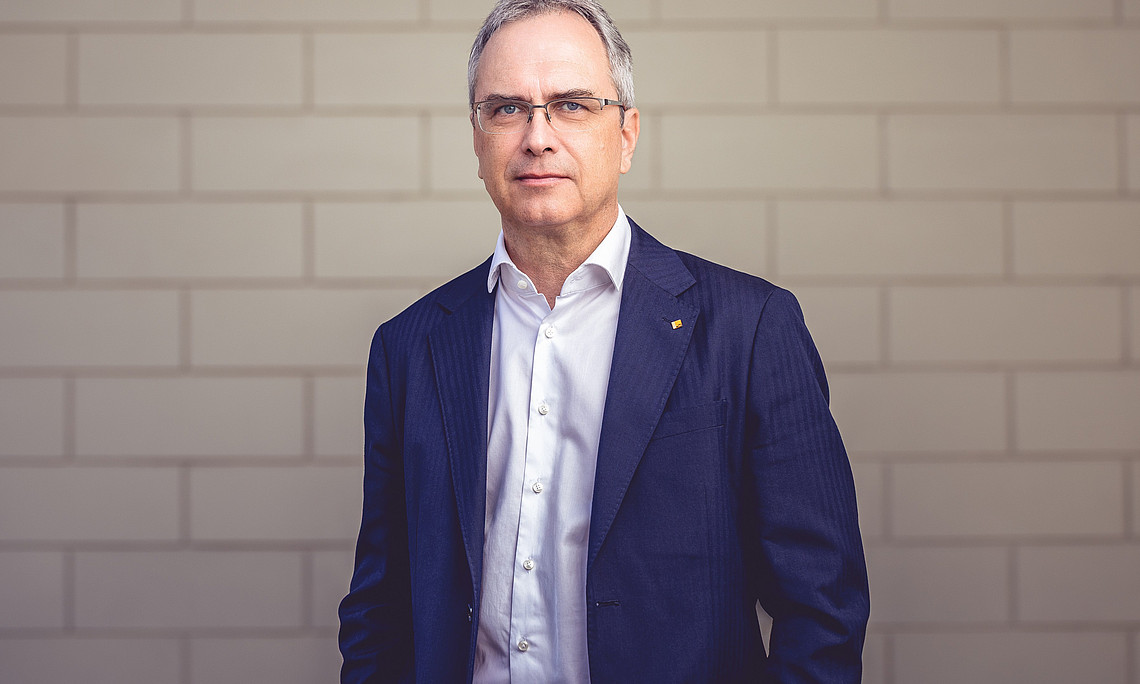
Wie weit Verbote gehen sollen, erforscht Richard Sturn.

Wie weit Verbote gehen sollen, erforscht Richard Sturn. Foto: Andreas Hermsdorf / pixelio.de

Wissenschafter der Uni Graz erforscht, wie weit der Staat die BürgerInnen bevormunden soll

Ein Verbot von Plastiksackerln wird derzeit heftig diskutiert, die EU-Verordnung für energiesparende Staubsauger hat jüngst ebenfalls die Wogen hochgehen lassen. Inwiefern darf sich der Staat in die Privatsphäre der BürgerInnen einmischen? Dieser Frage geht Ao.Univ.-Prof. Dr. Richard Sturn vom Institut für Finanzwissenschaft und Öffentliche Wirtschaft der Karl-Franzens-Universität Graz auf den Grund.
„KonsumentInnen entscheiden sich nicht immer rational und nicht immer zu ihren Gunsten“, bringt der Experte eine Problematik auf den Punkt. Sie handeln manchmal emotional oder wissen schlichtweg nicht genug über das Produkt, das ihnen angepriesen wird, wie das beispielsweise bei Finanzdienstleistungen öfters der Fall ist. „Da macht es durchaus Sinn, KundInnen mit gewissen Regeln vor der Abzocke zu schützen“, betont Sturn. Grundsätzlich sollten die Eingriffe in die Entscheidungsfreiheit aber möglichst gering gehalten werden und für die Betroffenen mit wenig Aufwand und niedrigen Kosten verbunden sein.
Ein positives Paradebeispiel ist für den Wissenschafter die Einführung der Gurtenpflicht. „Sie hat unbestritten viel gebracht und ist für die BürgerInnen keine Belastung“, fasst er zusammen. Ähnlich könnte sich der diskutierte Bann von Einweg-Plastiksackerln auswirken. KonsumentInnen würden dadurch zu ökologischem Handeln angestiftet. „Es wäre allerdings zunächst zu überprüfen, ob auch andere Anreize wirken würden“, präzisiert Sturn. Ein striktes Verbot ist nur als letzter Ausweg sinnvoll, wenn etwa steuerliche Anreize oder Maßnahmen zur Bewusstseinsbildung keinen Erfolg versprechen.
Gerade in puncto Umwelt sind vermutlich gewisse Impulse unvermeidlich, damit BürgerInnen dazulernen und Innovationen annehmen. „Mit unseren Forschungen wollen wir auch bewirken, dass solche Regelungen nicht zu sehr von den Sonderinteressen einzelner Lobbys bestimmt werden, ein Kritikpunkt, der etwa für den Fall der Energiesparlampen im Raum steht“, erklärt der Experte.
Das Thema Ökologisierung des Konsums soll auch im Rahmen eines Doktoratskollegs näher untersucht werden.

Richard Sturn forscht im Rahmen des universitätsweiten Schwerpunkts „Heterogenität und Kohäsion“, der sich aktuellen Themen im Spannungsfeld zwischen gesellschaftlicher Vielfalt und sozialem Zusammenhalt widmet. Kürzlich erschien „Grenzen der Konsumentensouveränität“ (Jahrbuch für normative und institutionelle Grundfragen der Ökonomik Bd. 13., Marburg 2013).

created by Dagmar Eklaude

Related news

Higher Education Strategy 2040: Austria’s universities on course for the future

Austria has 77 higher education institutions, which is above the EU average – but does this really make sense? The new Higher Education Strategy 2040 focuses on cooperation rather than mergers. As one of the six largest universities in Austria, the University of Graz plays a central role in this.

Climate research in Greenland: Old data provides new insights

The polar explorer and University of Graz professor Alfred Wegener left behind a unique collection of climate data from Greenland. A research team from the University of Graz is now analysing this 100-year-old treasure trove of data and comparing it with current measurements.

Diversity in nature and science: How we talk about plants and each other

Ginkgo, kiwi, hemp: they exist as male and female plants. Anyone who paid attention in biology class will confirm this. But is this categorisation, established by Carl von Linné almost 300 years ago, still valid today? An interdisciplinary team at the University of Graz is questioning these attributions and using this as a starting point to provide food for thought for gender-sensitive interaction between students, scientific and teaching staff.

Around the world in eight stops: the Long Night of Research at the University of Graz

On 24 April from 5 pm, you can take a short trip around the globe at the University of Graz, discovering pecularities of foreign countries or new local features in the entrance hall of the University Library. The itinerary takes you through introduced animal species, political attitudes and the omnipotence of algorithms. There will also be a programme in the historic reading hall, as well as at the UniGraz@Museum and the University Archive.

Begin of page section:
Additional information:

University of Graz
Universitaetsplatz 3
8010 Graz
Austria
  • Contact
  • Web Editors
  • Moodle
  • UNIGRAZonline
  • Imprint
  • Data Protection Declaration
  • Accessibility Declaration
Weatherstation
Uni Graz

End of this page section. Go to overview of page sections

End of this page section. Go to overview of page sections

Begin of page section:

End of this page section. Go to overview of page sections