



Begin of page section:
Page sections:

  • Go to contents (Accesskey 1)
  • Go to position marker (Accesskey 2)
  • Go to main navigation (Accesskey 3)
  • Go to sub navigation (Accesskey 4)
  • Go to additional information (Accesskey 5)
  • Go to page settings (user/language) (Accesskey 8)
  • Go to search (Accesskey 9)

End of this page section. Go to overview of page sections

Begin of page section:
Page settings:

English en
Deutsch de
Search
Login

End of this page section. Go to overview of page sections

Begin of page section:
Search:

Search for details about Uni Graz
Close

End of this page section. Go to overview of page sections


Search

Begin of page section:
Main navigation:

Page navigation:

  • University

    University
    • About the University
    • Organisation
    • Faculties
    • Library
    • Working at University of Graz
    • Campus
    Developing solutions for the world of tomorrow - that is our mission. Our students and our researchers take on the great challenges of society and carry the knowledge out.
  • Research Profile

    Research Profile
    • Our Expertise
    • Research Questions
    • Research Portal
    • Promoting Research
    • Research Transfer
    • Ethics in Research
    • Commission for Scientific Integrity
    Scientific excellence and the courage to break new ground. Research at the University of Graz creates the foundations for making the future worth living.
  • Studies

    Studies
    • Prospective Students
    • Students
    • Welcome Weeks for First Year Students
  • Community

    Community
    • International
    • Location
    • Research and Business
    • Alumni
    The University of Graz is a hub for international research and brings together scientists and business experts. Moreover, it fosters the exchange and cooperation in study and teaching.
Topics
  • Sustainable University
  • Researchers answer
  • Work for us
Close menu

End of this page section. Go to overview of page sections

Begin of page section:
You are here:

University of Graz News Punktgenau

End of this page section. Go to overview of page sections

Wednesday, 14 September 2022

Punktgenau

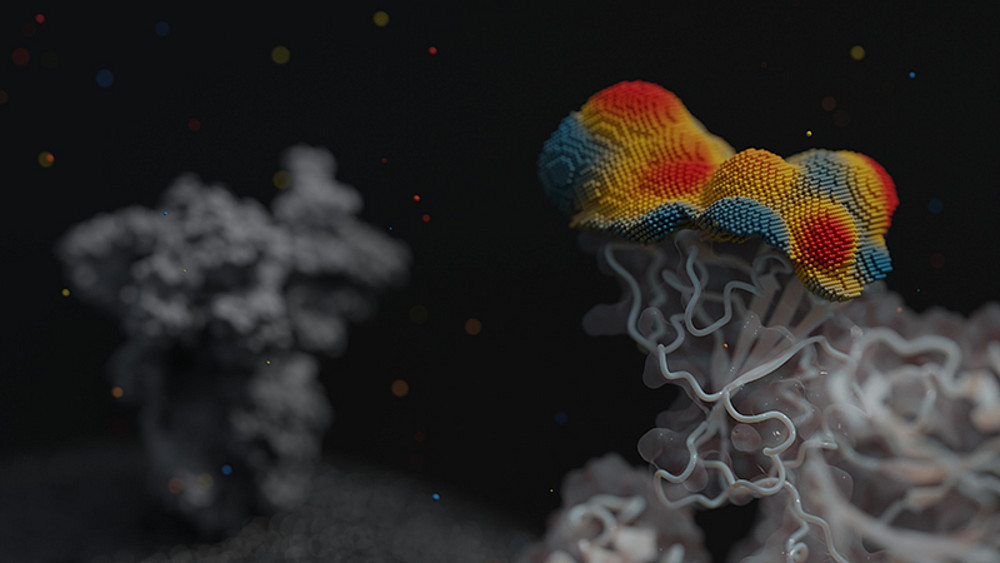
Darstellung eines Halos auf der SARS-CoV-2-Spike-Rezeptorbindungsdomäne (RBD). Am vom Halo abgedeckten Bereich findet die Bindung zwischen der Spike-Rezeptorbindungsdomäne und dem menschlichen Rezeptor hACE2 statt. Die Eigenschaften in diesem Bereich sind daher besonders wichtig für die Bindung. Foto: © Innophore, Verena Resch

Darstellung eines Halos auf der SARS-CoV-2-Spike-Rezeptorbindungsdomäne (RBD). Am vom Halo abgedeckten Bereich findet die Bindung zwischen der Spike-Rezeptorbindungsdomäne und dem menschlichen Rezeptor hACE2 statt. Die Eigenschaften in diesem Bereich sind daher besonders wichtig für die Bindung. Foto: © Innophore, Verena Resch

Grazer ForscherInnen entwickeln Technologie zur präzisen Einschätzung der Gefährlichkeit von Virus-Varianten

Eine der größten Schwierigkeiten in der Bekämpfung von viralen Infektionskrankheiten ist die exzellente Anpassungsfähigkeit der Viren. „Bei SARS-CoV-2 haben wir gesehen, wie schnell sich ständig neue Varianten bilden, die unterschiedliche Eigenschaften mit sich bringen. Deshalb ist es wichtig, dass es uns in Zukunft gelingt, rascher und präziser vorherzusagen, wie gefährlich ein Virus werden kann“, erklärt Christian Gruber, Geschäftsführer des Bioinformatik-Start-ups Innophore, einem Spin-off der Universität Graz und des Austrian Centre of Industrial Biotechnology (acib).

Der Wissenschafter präsentiert nun in Zusammenarbeit mit KollegInnen des acib und der Universität Graz eine neue, auf künstlicher Intelligenz basierende Technologie, die die Gefährlichkeit von Virusvarianten zuverlässig klassifiziert. Dazu fließen globale und lokale Daten, wie zum Beispiel aus Abwasserproben, die rasch und umfassend auf ausgeschiedene Viren getestet werden, in die Berechnungen ein. Die Ergebnisse der Kooperation, die auf die Simulationsleistung von Amazon Web Services zurückgreift, sind kürzlich im Fachjournal „Scientific Reports“ aus dem Publikationshaus Nature erschienen. 

Bisherige Klassifizierungssysteme von Virusvarianten benötigten viel Zeit. Christian Gruber und sein Team nutzen dafür jetzt die von Innophore entwickelte Punktwolkentechnologie. Im ersten Schritt werden strukturelle Modelle der aktuellsten Virusvarianten erstellt. Aus diesen Modellen berechnen die ForscherInnen so genannte Punktwolken. „Diese geben uns Aufschluss darüber, wie stark die SARS-CoV-2-Spike-Rezeptorbindungsdomäne (RBD) mit dem menschlichen Rezeptor hACE2 interagiert. Das wiederum ist ein wichtiger Indikator für die Infektiosität“, erklärt Christian Gruber. 

Ein wesentlicher Vorteil der Punktwolkentechnologie ist außerdem, dass die Methode auf künstlicher Intelligenz beruht und mit großen Datensätzen trainiert wird. Das erhöht die Genauigkeit und verbessert die Zuverlässigkeit der Vorhersagen. Das Einbinden von Simulationsleistung von Amazon Web Services erhöht die Geschwindigkeit der von Innophore durchgeführten Berechnungen zusätzlich um ein Vielfaches. Die Zusammenarbeit zwischen den beiden Unternehmen ist im Rahmen der Initiative zur Entwicklung von Diagnostika (DDI) entstanden und zu einer stabilen Kooperation gewachsen. 

Publikation: Gruber et.al., Structural bioinformatics analysis of SARS-CoV-2 variants reveals higher hACE2 receptor binding affinity for Omicron B.1.1.529 spike RBD compared to wild type reference. Scientific Reports volume 12, Article number: 14534 (2022). https://doi.org/10.1038/s41598-022-18507-y 

 

>> Zum Nature Health Blog 

created by Gerhild Leljak

Related news

Electrifying: Researchers film the first moments on the way from light to electricity

Physicists at the University of Graz (Austria), in collaboration with colleagues from Marburg University and Forschungszentrum Jülich (Germany), have achieved a scientific breakthrough. For the first time, the generation of electrical energy from light has been filmed and described theoretically. This work is of far-reaching significance, not least for optimising sustainable energy production from photovoltaics. This is because it provides fundamental building blocks for understanding the physical processes that take place, for example, in organic solar cells. The paper was published in the journal Physical Review X, one of the world’s most prestigious physics journals.

University of Graz: Working together to make Styria a sustainable centre of learning

Round table calls for sustainable funding for the 2028–2030 performance agreement period between the five Styrian universities and the federal government.

How can we teach using YouTube and AI? The University of Graz is strengthening media education in schools

A journey through the blood vessels using VR headsets brings biology lessons to life. An interactive quiz brings physics to life. The YouTube video explains the First World War. Whilst mobile phones are increasingly being banned from the classroom, social media platforms, apps and AI are playing an ever-greater role in knowledge transfer at school. But how can teaching with media be made even more effective? What are the challenges in media-based teaching? At the University of Graz, researchers are discussing these issues at a conference being held in Austria for the first time.

Jurassic Sounds: Biologist reconstructs insect songs from 165 million years ago

It was apparently not just the roars of the dinosaurs that made up the soundscape of the animal world during the Jurassic period. Crickets and grasshoppers communicated through a variety of songs and high-pitched sounds, as Thorin Jonsson from the Institute of Biology at the University of Graz discovered together with colleagues from the universities of Lincoln, Bristol (UK), Beijing (China) and Tempe (USA). The findings on what are so far the oldest traces of sound on Earth have just been published in the journal PNAS.

Begin of page section:
Additional information:

University of Graz
Universitaetsplatz 3
8010 Graz
Austria
  • Contact
  • Web Editors
  • Moodle
  • UNIGRAZonline
  • Imprint
  • Data Protection Declaration
  • Accessibility Declaration
Weatherstation
Uni Graz

End of this page section. Go to overview of page sections

End of this page section. Go to overview of page sections

Begin of page section:

End of this page section. Go to overview of page sections


