Begin of page section:
Page sections:

  • Go to contents (Accesskey 1)
  • Go to position marker (Accesskey 2)
  • Go to main navigation (Accesskey 3)
  • Go to sub navigation (Accesskey 4)
  • Go to additional information (Accesskey 5)
  • Go to page settings (user/language) (Accesskey 8)
  • Go to search (Accesskey 9)

End of this page section. Go to overview of page sections

Begin of page section:
Page settings:

English en
Deutsch de
Search
Login

End of this page section. Go to overview of page sections

Begin of page section:
Search:

Search for details about Uni Graz
Close

End of this page section. Go to overview of page sections


Search

Begin of page section:
Main navigation:

Page navigation:

  • University

    University
    • About the University
    • Organisation
    • Faculties
    • Library
    • Working at University of Graz
    • Campus
    Developing solutions for the world of tomorrow - that is our mission. Our students and our researchers take on the great challenges of society and carry the knowledge out.
  • Research Profile

    Research Profile
    • Our Expertise
    • Research Questions
    • Research Portal
    • Promoting Research
    • Research Transfer
    • Ethics in Research
    • Commission for Scientific Integrity
    Scientific excellence and the courage to break new ground. Research at the University of Graz creates the foundations for making the future worth living.
  • Studies

    Studies
    • Prospective Students
    • Students
    • Registration for Study Programme (Winter semester 2026/27)
  • Community

    Community
    • International
    • Location
    • Research and Business
    • Alumni
    The University of Graz is a hub for international research and brings together scientists and business experts. Moreover, it fosters the exchange and cooperation in study and teaching.
Topics
  • Sustainable University
  • Researchers answer
  • Work for us
Close menu

End of this page section. Go to overview of page sections

Begin of page section:
You are here:

University of Graz News Protein als Barriere

End of this page section. Go to overview of page sections

Friday, 16 January 2015

Protein als Barriere

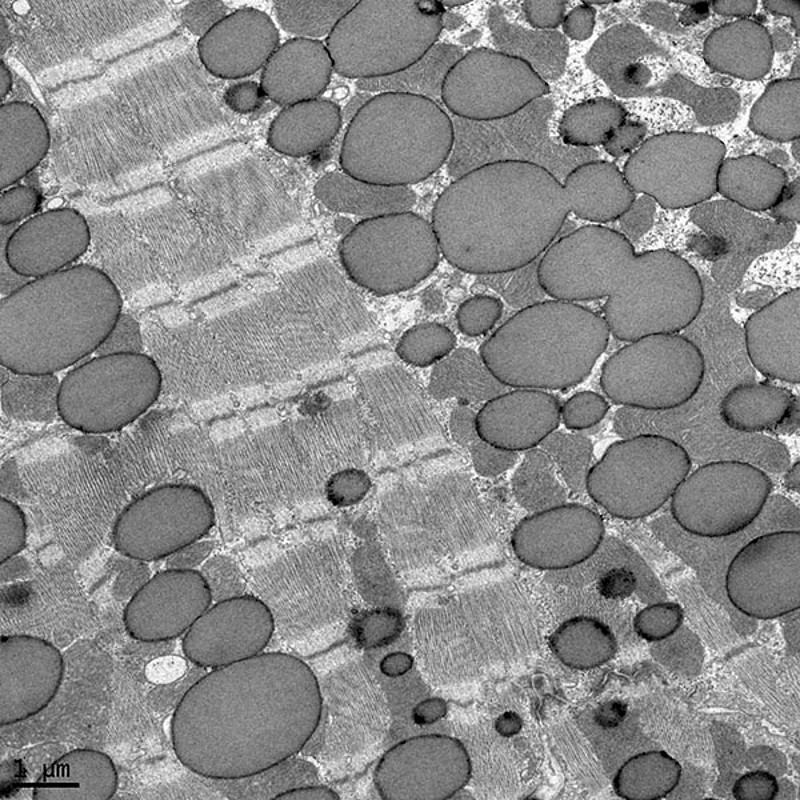
Herzmuskel mit großen Lipidtröpfchen: Durch eine Störung im Fettstoffwechsel können die Triglyzeride nicht abgebaut werden.

Herzmuskel mit großen Lipidtröpfchen: Durch eine Störung im Fettstoffwechsel können die Triglyzeride nicht abgebaut werden.

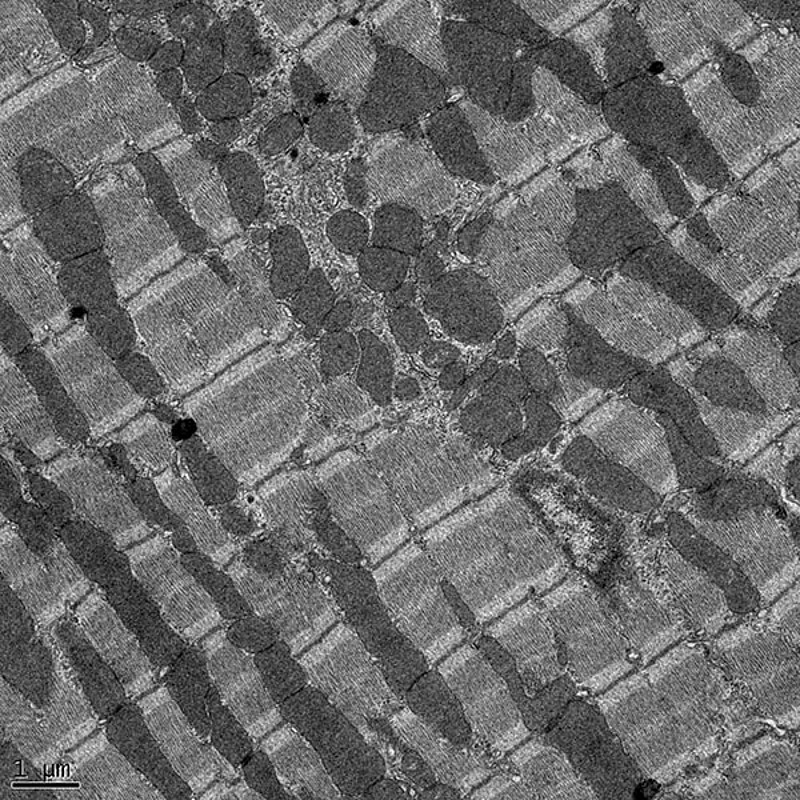
Gesunder Herzmuskel. Fotos: IMB/Uni Graz

Gesunder Herzmuskel. Fotos: IMB/Uni Graz

ForscherInnen der Uni Graz entdecken Mechanismus zur Regulation des Fettstoffwechsels im Herzen

Einen Großteil der Energie, die das Herz für seine Pumpleistung braucht, erhält es aus der Fettverbrennung. Deshalb ist ein funktionierender Energiestoffwechsel, bei dem sich die Speicherung und der Abbau von Fettsäuren im Herzen die Waage halten, Voraussetzung für die Gesundheit des gesamten Organismus. ForscherInnen aus der Arbeitsgruppe um Assoz. Univ.-Prof. Dr. Günter Haemmerle am Institut für Molekulare Biowissenschaften der Karl-Franzen-Universität Graz haben dazu grundlegende neue Erkenntnisse gewonnen. Sie konnten erstmals zeigen, wie das Protein Perilipin 5 (PLIN5) den Fettstoffwechsel im Herzen reguliert. Die Forschungsergebnisse wurden in der aktuellen Ausgabe des renommierten Journal of Biological Chemistry (JBC) veröffentlicht. Darüber hinaus dürfen sich die WissenschafterInnen über die ehrenvolle Wahl ihrer Publikation zum Paper of the Week freuen.


Fettsäuren, sogenannte Lipide, gelangen über das Blut in den Herzmuskel und werden dort zuerst einmal als Triglyzeride in Form von sogenannten Lipidtröpfchen gespeichert. Um jedes dieser Tröpfchen legt sich eine Hülle aus einer Vielzahl verschiedener Proteine, unter ihnen auch PLIN5. Benötigt das Herz zusätzliche Energie – etwa bei körperlicher Betätigung oder aber auch beim Fasten –, wird Fett zur Verbrennung freigegeben. Im „Normalzustand“ bleiben die Triglyzeride in den Tröpfchen gespeichert. Wie dieses Gleichgewicht reguliert wird, hat das Team um Günter Haemmerle am Institut für Molekulare Biowissenschaften der Uni Graz nun aufgeklärt.

„Wir konnten zeigen, dass PLIN5, das sich um die Lipidtröpfchen legt, beim Fettabbau eine Barrierefunktion erfüllt“, so Nina Pollak, MSc, Erstautorin der aktuellen Publikation im JBC. Durch PLIN5 hat das fettspaltende Enzym ATGL, das 2004 von der Arbeitsgruppe um Univ.-Prof. Dr. Rudolf Zechner am Institut für Molekulare Biowissenschaften der Uni Graz entdeckt wurde, keinen Zugriff auf die Triglyzeride. Auf diese Weise wird die Fettverbrennung verhindert. „Aufgehoben wird die Barrierefunktion erst, wenn PLIN5 über die Proteinkinase A (PKA) phosphoryliert wird. Das heißt: PLIN5 bekommt durch die PKA eine Phosphatgruppe angehängt“, erklärt Pollak. Dadurch ist der Weg frei für ATGL, und der Abbau der Triglyzeride zur Energiegewinnung kann beginnen.
„Der Energie- und Fettstoffwechsel im Herzen wird also über die Phosphorylierung von PLIN5 reguliert. Ist dieser Mechanismus gestört, bleiben die Triglyzeride im Speicher, und es kommt zur Herzverfettung“, fasst Günter Haemmerle die aufschlussreichen Erkenntnisse der Arbeit zusammen.


Publikation:
The Interplay of Protein Kinase A and Perilipin 5 Regulates Cardiac Lipolysis [Paper of the Week]
The Journal of Biological Chemistry, Vol. 290, Issue 3, 1295-1306, January 16, 2015
Nina M. Pollak; Doris Jaeger; Stephanie Kolleritsch; Robert Zimmermann; Rudolf Zechner; Achim Lass; Guenter Haemmerle
University of Graz
ARTICLE #10.1074/jbc.M114.604744


>> Beitrag über Erstautorin Nina Pollak im JBC

created by Gudrun Pichler

Related news

Sport beyond the World Cup: the TV channel “Welt der Wunder” features diabetes research from the University of Graz

Keeping blood sugar levels in check during physical exertion is a particular challenge for people with type 1 diabetes. Othmar Moser examines how those affected manage to balance physical activity, sport and their metabolic disorder.

"Mathematics explains the world"

How can life be quantified? And what can science reveal that remains hidden from the naked eye? The 14th European Conference on Mathematical and Theoretical Biology at the University of Graz is dedicated to these questions. From 13 to 17 July, around 1,300 researchers from all over the world will gather on campus to discuss models, biological processes and the future of data-driven medicine. Klemens Fellner, Dean of the Faculty of Natural Sciences and Mathematics and a mathematician, talks about the language that explains the world

Internationally up-to-date: University of Graz offers new degree programmes in art studies

From the Old Masters to AI art – three newly designed degree programmes offer students at the University of Graz fresh perspectives on artistic production. In addition to historical art, the programmes place a greater emphasis on contemporary and global developments. The registration period is open.

The Nazi elite school Napola: Historian seeks memories and personal documents

They were to be brought up to become the future elite of National Socialism: boys and girls aged ten and over who, following the ‘Anschluss’ of Austria to the German Reich, attended a so-called Napola (short for Nationalpolitische Lehranstalt; also known as NPEA, Nationalpolitische Erziehungsanstalt). There were nine such institutions in what is now Austria between 1939 and 1945.

Begin of page section:
Additional information:

University of Graz
Universitaetsplatz 3
8010 Graz
Austria
  • Contact
  • Web Editors
  • Moodle
  • UNIGRAZonline
  • Imprint
  • Data Protection Declaration
  • Accessibility Declaration
Weatherstation
Uni Graz

End of this page section. Go to overview of page sections

End of this page section. Go to overview of page sections

Begin of page section:

End of this page section. Go to overview of page sections