



Begin of page section:
Page sections:

  • Go to contents (Accesskey 1)
  • Go to position marker (Accesskey 2)
  • Go to main navigation (Accesskey 3)
  • Go to sub navigation (Accesskey 4)
  • Go to additional information (Accesskey 5)
  • Go to page settings (user/language) (Accesskey 8)
  • Go to search (Accesskey 9)

End of this page section. Go to overview of page sections

Begin of page section:
Page settings:

English en
Deutsch de
Search
Login

End of this page section. Go to overview of page sections

Begin of page section:
Search:

Search for details about Uni Graz
Close

End of this page section. Go to overview of page sections


Search

Begin of page section:
Main navigation:

Page navigation:

  • University

    University
    • About the University
    • Organisation
    • Faculties
    • Library
    • Working at University of Graz
    • Campus
    Developing solutions for the world of tomorrow - that is our mission. Our students and our researchers take on the great challenges of society and carry the knowledge out.
  • Research Profile

    Research Profile
    • Our Expertise
    • Research Questions
    • Research Portal
    • Promoting Research
    • Research Transfer
    • Ethics in Research
    • Commission for Scientific Integrity
    Scientific excellence and the courage to break new ground. Research at the University of Graz creates the foundations for making the future worth living.
  • Studies

    Studies
    • Prospective Students
    • Students
    • Registration for Study Programme (Winter semester 2026/27)
    • Study Days 22-26 June 2026
  • Community

    Community
    • International
    • Location
    • Research and Business
    • Alumni
    The University of Graz is a hub for international research and brings together scientists and business experts. Moreover, it fosters the exchange and cooperation in study and teaching.
Topics
  • Sustainable University
  • Researchers answer
  • Work for us
Close menu

End of this page section. Go to overview of page sections

Begin of page section:
You are here:

University of Graz News Neutralized

End of this page section. Go to overview of page sections

Thursday, 17 June 2021

Neutralized

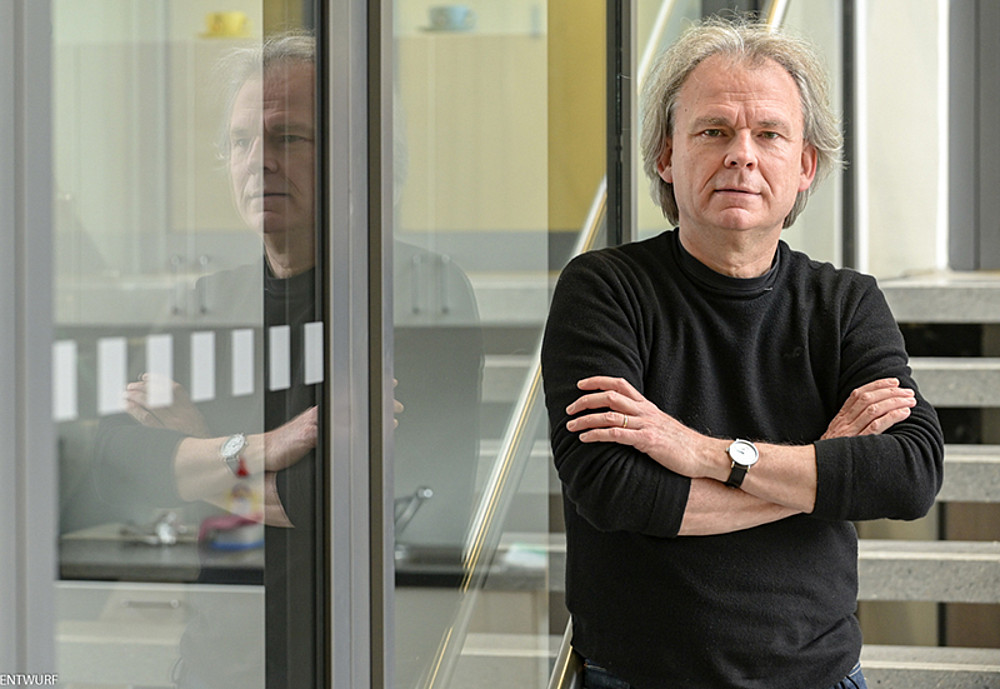
Andreas Kungl was part of a team of researchers who showed that single domain shark VNAR antibodies can neutralize a SARS-CoV-2 infection in vitro. Photo: Uni Graz/Tzivanopoulos.

Andreas Kungl was part of a team of researchers who showed that single domain shark VNAR antibodies can neutralize a SARS-CoV-2 infection in vitro. Photo: Uni Graz/Tzivanopoulos.

A highly potent panel of VNARs against the SARS-CoV-2 spike protein has been isolated

The University of Graz and Ossianix, a British antibody engineering company, announced the publication of a preclinical study that describes discovery of highly potent neutralizing single domain shark antibodies (VNARs) directed against the SARS-CoV-2 spike protein. The study, “Single domain shark VNAR antibodies neutralize SARS-CoV-2 infection in vitro,” was published in bioRxiv on June 8, 2021. Single-domain VNAR antibodies are attractive therapeutics in the fight against COVID-19 as they not only interact with unique epitopes inaccessible to regular immunoglobulin G (IgG) but also are small in size and highly stable.

The study was conducted by Dr. Andreas Kungl, Professor at the University of Graz, in conjunction with Ossianix’s team led by Dr. Pawel Stocki. The trial tested a panel of ten VNAR antibodies that blocked the interaction of the spike protein with its receptor ACE2 and effectively neutralized the SARS-CoV-2 virus in vitro. A number of these VNARs were also found to block the interaction between spike protein mutants (N501Y and E484K) and the ACE2 receptor. 

“The fight to control the COVID-19 pandemic will require a broad range of therapeutic approaches,” said Dr. Frank S. Walsh, CEO of Ossianix. “Vaccination is the primary strategy, but therapeutic antibodies will also have an important role to play in treating the infection. Shark single-domain VNAR antibodies against SARS-CoV-2 are potent therapeutics and complement the human IgG approaches. Their small size, ability to be used in various formulation such as inhalation and the comparatively low cost of goods make them an attractive addition to existing approaches. These antibodies can be used either as single or combination therapeutics.”

Dr. Kungl added, “We were very intrigued by the highly potent anti-viral activity of Ossianix’ VNARs in inhibiting viral infection and propagation. Taken together with their physical stability, a very patient-friendly dose-response for these biologics can be expected for the treatment of COVID-19 infections.”


Publication: Single domain shark VNAR antibodies neutralize SARS-CoV-2 infection in vitro. Aziz Gauhar, Cyril V Privezentzev, Mykhaylo Demydchuk, Tanja Gerlza, Julia Rieger, Andreas J Kungl, Frank S Walsh, J Lynn Rutkowski, Pawel Stocki. doi: https://doi.org/10.1101/2021.06.08.447530

 

created by Gerhild Leljak

Related news

Getting even hotter: Researchers predict global warming of 1.7 degrees by 2027

While Europe is currently sweltering in the heat, global temperatures are also rising towards concerning record levels. In 2026, Earth’s surface air temperature is expected to reach 1.62 degrees, and in 2027 even 1.71 degrees Celsius above pre-industrial levels. The long-term temperature rise – an average over a 20-year period – is predicted to exceed the 1.5-degree threshold of the Paris Agreement as of 2026 already. For the first time, researchers at the University of Graz have been able to make such a forecast so far in advance. The intensifying El Niño climate event favors forecast skill and thereby facilitates a reliable computation.

Forest fire at Rosenhain: Volunteer fire brigade carried out an evacuation drill at the Jesuit refectory

Thick smoke in the stairwell, flames at the edge of the forest, people missing in the Jesuit refectory at the University of Graz: at Rosenhain, the Graz Volunteer Fire Brigade carried out a drill simulating a scenario that is becoming increasingly realistic given the heat and drought

Full effort in the heat: the Sports Centre was in full swing at the Kleeblattlauf

On 19 June 2026, 2,000 runners and hundreds of supporters made their way to the Rosenhain for a sporting end-of-term event.

Save, invest or guarantee: What Austrians expect from the state

Austria needs to make savings. But where? And what should the Republic actually be spending its money on? The answers are provided by the initial findings of a major study involving the University of Graz. 99 per cent of those surveyed are in favour of the state ensuring healthcare provision. Almost three-quarters would like to see more public funding for education, whilst only around three per cent are in favour of cuts in this sector.

Begin of page section:
Additional information:

University of Graz
Universitaetsplatz 3
8010 Graz
Austria
  • Contact
  • Web Editors
  • Moodle
  • UNIGRAZonline
  • Imprint
  • Data Protection Declaration
  • Accessibility Declaration
Weatherstation
Uni Graz

End of this page section. Go to overview of page sections

End of this page section. Go to overview of page sections

Begin of page section:

End of this page section. Go to overview of page sections


