Begin of page section:
Page sections:

  • Go to contents (Accesskey 1)
  • Go to position marker (Accesskey 2)
  • Go to main navigation (Accesskey 3)
  • Go to sub navigation (Accesskey 4)
  • Go to additional information (Accesskey 5)
  • Go to page settings (user/language) (Accesskey 8)
  • Go to search (Accesskey 9)

End of this page section. Go to overview of page sections

Begin of page section:
Page settings:

English en
Deutsch de
Search
Login

End of this page section. Go to overview of page sections

Begin of page section:
Search:

Search for details about Uni Graz
Close

End of this page section. Go to overview of page sections


Search

Begin of page section:
Main navigation:

Page navigation:

  • University

    University
    • About the University
    • Organisation
    • Faculties
    • Library
    • Working at University of Graz
    • Campus
    Developing solutions for the world of tomorrow - that is our mission. Our students and our researchers take on the great challenges of society and carry the knowledge out.
  • Research Profile

    Research Profile
    • Our Expertise
    • Research Questions
    • Research Portal
    • Promoting Research
    • Research Transfer
    • Ethics in Research
    Scientific excellence and the courage to break new ground. Research at the University of Graz creates the foundations for making the future worth living.
  • Studies

    Studies
    • Prospective Students
    • Students
  • Community

    Community
    • International
    • Location
    • Research and Business
    • Alumni
    The University of Graz is a hub for international research and brings together scientists and business experts. Moreover, it fosters the exchange and cooperation in study and teaching.
  • Spotlight
Topics
  • Sustainable University
  • Researchers answer
  • Work for us
Close menu

End of this page section. Go to overview of page sections

Begin of page section:
You are here:

University of Graz News Natürlich heilsam

End of this page section. Go to overview of page sections

Thursday, 19 March 2015

Natürlich heilsam
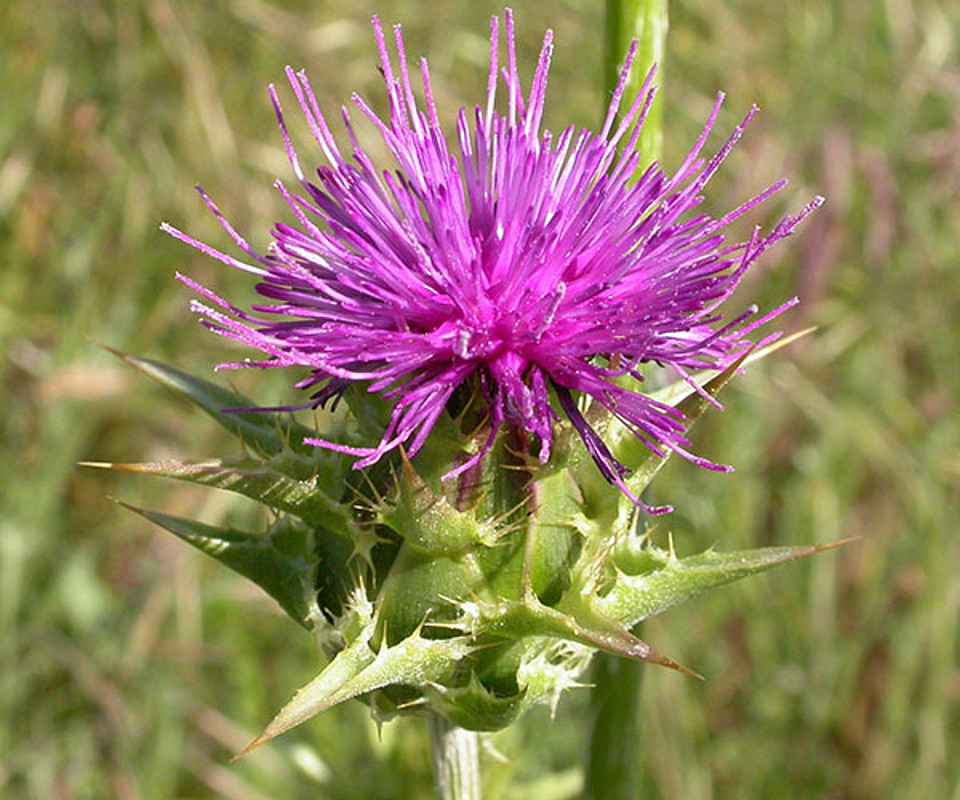
Neu entdeckt: Der Stoff Isosilybin A aus der Mariendistel (Silybum marianum) wirkt unter anderem entzündungshemmend. Foto: Curtis Clark/Wikimedia Commons

Neu entdeckt: Der Stoff Isosilybin A aus der Mariendistel (Silybum marianum) wirkt unter anderem entzündungshemmend. Foto: Curtis Clark/Wikimedia Commons

PharmazeutInnen der Uni Graz entdecken neue pflanzliche Wirkstoffe gegen Entzündungen im Herz-Kreislauf-System

Entzündungsprozesse sind Teil zahlreicher Erkrankungen, unter anderem der Atherosklerose, der Fettsucht oder auch der Typ II-Diabetes. Univ.-Prof. Dr. Rudolf Bauer hat mit seiner Arbeitsgruppe am Institut für Pharmazeutische Wissenschaften der Karl-Franzens-Universität Graz in Pflanzen aus der Traditionellen Chinesischen Medizin (TCM) bisher ungenutzte, vielversprechende Wirkstoffkandidaten gegen Entzündungen insbesondere im Herz-Kreislauf-System entdeckt. Die bioaktiven Stoffe lassen auf neue effektive, nebenwirkungsarme Therapien hoffen.

„In der TCM gibt es knapp 200 Pflanzen, die mit Entzündungsprozessen im Herz-Kreislauf-System in Verbindung gebracht werden“, weiß Rudolf Bauer, Leiter des Instituts für Pharmazeutische Wissenschaften der Karl-Franzens-Universität Graz. Doch viele sind in Bezug auf ihre Wirkstoffe noch nicht ausreichend erforscht. Als Projektpartner in dem vom Österreichischen Wissenschaftsfonds FWF geförderten Nationalen Forschungsnetzwerk „DNTI – Drugs from Nature Targeting Inflammation“ hat sich der TCM-Experte mit seinem Team auf die Suche nach neuen bioaktiven Naturstoffen gemacht. Die Grazer PharmazeutInnen haben Extrakte aus 79 Pflanzenarten gewonnen, die dann von KollegInnen der Universität Wien getestet wurden.

Gemeinsam untersuchten die ForscherInnen die molekularen Wirkungsmechanismen der Naturstoffe und identifizierten einige vielversprechende Substanzen. „Wir konnten zeigen, dass Polyacetylenderivate aus der Gebirgsangelikawurzel (Notopterygium incisum), Isosilybin A aus der Mariendistel (Silybum marianum) und oxidierte Fettsäuren aus Waldreben (Clematis) den intrazellulären Rezeptor PPAR gamma aktivieren“, berichtet Rudolf Bauer. „Dies bewirkt neben einer Entzündungshemmung eine Verbesserung des Glucosestoffwechsels sowie der Insulinsensitivität und steigert die Aufnahme freier Fettsäuren. Damit sinkt auch das Atherosklerose-Risiko“, so Bauer.

Die Arbeiten der Grazer PharmazeutInnen sind im Forschungsschwerpunkt „Molekulare Enzymologie und Physiologie“ der Karl-Franzens-Universität verankert.

created by Gudrun Pichler

Related news

Diversity buddies at the University of Graz: Support on equal terms

The University of Graz is strengthening its commitment to equal opportunities with its new Diversity Buddies. University members can find easily accessible contact persons here for questions relating to equality and diversity. All employees can get involved and take action.

When parents find it difficult to have a say

In her dissertation, translation scholar Marie Tschurtschenthaler examines how communication between compulsory schools and parents whose first language is not German works – and what role professional language mediation plays in this. Initial insights show that it is not just about language, but also about resources, responsibilities and the institutional framework.

AI in schools: Maria Bertel drafts legal guidelines for teachers

The legal expert and her team analysed the legal situation regarding the use of artificial intelligence in education as part of an EU project and answered open questions from practice.

Cosmetics in the environment: University of Graz proves danger to ants

Titanium dioxide, which is found in cosmetics, for example, is increasingly entering the environment in the form of nanoparticles. This could also put insects at risk. If ants ingest the substance in combination with the pesticide glyphosate, it disturbs the development of their offspring. Scientists at the University of Graz are drawing attention to the negative consequences of this toxic cocktail.

Begin of page section:
Additional information:

University of Graz
Universitaetsplatz 3
8010 Graz
Austria
  • Contact
  • Web Editors
  • Moodle
  • UNIGRAZonline
  • Imprint
  • Data Protection Declaration
  • Accessibility Declaration
Weatherstation
Uni Graz

End of this page section. Go to overview of page sections

End of this page section. Go to overview of page sections

Begin of page section:

End of this page section. Go to overview of page sections