Begin of page section:
Page sections:

  • Go to contents (Accesskey 1)
  • Go to position marker (Accesskey 2)
  • Go to main navigation (Accesskey 3)
  • Go to sub navigation (Accesskey 4)
  • Go to additional information (Accesskey 5)
  • Go to page settings (user/language) (Accesskey 8)
  • Go to search (Accesskey 9)

End of this page section. Go to overview of page sections

Begin of page section:
Page settings:

English en
Deutsch de
Search
Login

End of this page section. Go to overview of page sections

Begin of page section:
Search:

Search for details about Uni Graz
Close

End of this page section. Go to overview of page sections


Search

Begin of page section:
Main navigation:

Page navigation:

  • University

    University
    • About the University
    • Organisation
    • Faculties
    • Library
    • Working at University of Graz
    • Campus
    Developing solutions for the world of tomorrow - that is our mission. Our students and our researchers take on the great challenges of society and carry the knowledge out.
  • Research Profile

    Research Profile
    • Our Expertise
    • Research Questions
    • Research Portal
    • Promoting Research
    • Research Transfer
    • Ethics in Research
    • Commission for Scientific Integrity
    Scientific excellence and the courage to break new ground. Research at the University of Graz creates the foundations for making the future worth living.
  • Studies

    Studies
    • Prospective Students
    • Students
    • Registration for Study Programme (Winter semester 2026/27)
  • Community

    Community
    • International
    • Location
    • Research and Business
    • Alumni
    The University of Graz is a hub for international research and brings together scientists and business experts. Moreover, it fosters the exchange and cooperation in study and teaching.
Topics
  • Sustainable University
  • Researchers answer
  • Work for us
Close menu

End of this page section. Go to overview of page sections

Begin of page section:
You are here:

University of Graz News Nationalismus und Nachbarschaft

End of this page section. Go to overview of page sections

Friday, 23 October 2015

Nationalismus und Nachbarschaft
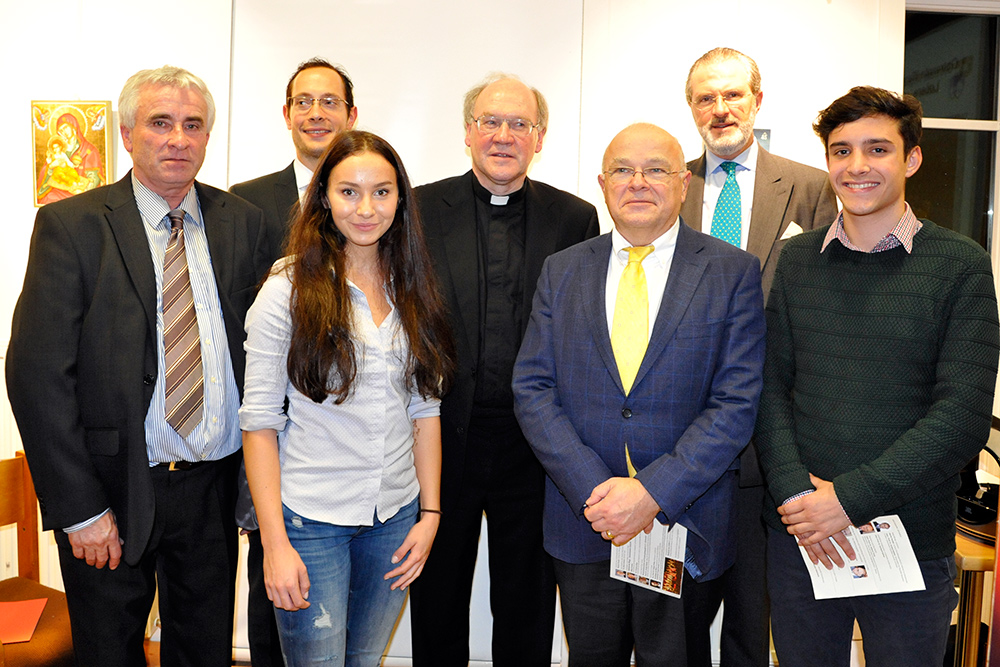
Clemens Koja, Jürgen Pirker, Schülerin Katja Wrolich (BG für Slowenen), Alois Schwarz, Joseph Marko, Martin Pandel, Bildungsreferent des Bildungshauses Sodalitas und Schüler Lukas Krassnitzer (BG Tanzenberg), Foto: Gotthard

Präsentieren Wege in eine gemeinsame Zukunft: Botschafter Clemens Koja, Projektleiter Jürgen Pirker, Katja Wrolich, Schülerin des BG für Slowenen, Bischof Alois Schwarz, Dekan Joseph Marko, Martin Pandel, Bildungsreferent des zweisprachigen Bildungshauses Sodalitas und Lukas Krassnitzer, Schüler des BG Tanzenberg. Foto: Gotthard


Forschungsband über die Kärntnerisch-Slowenische Konfliktgeschichte präsentiert

Die aktuelle Flüchtlingswelle lässt an vielen Grenzen alte Konflikte mit den Nachbarländern wieder aufbrechen. Spannungen zwischen Volksgruppen, Ressentiments gegenüber Minderheiten und wechselseitige Gebietsansprüche sind auch im Europa des 21. Jahrhundert noch nicht vom Tisch. Das betrifft auch das zweisprachige Gebiet Unterkärntens, mit dem sich Jürgen Pirker vom Institut für Öffentliches Recht und Politikwissenschaft der Uni Graz auseinandergesetzt hat. Gemeinsam mit mehr als 5.000 SchülerInnen erhob er in Kärnten und Slowenien die Einstellung der Bevölkerung ihrem Nachbarland zu Minderheitenfragen und zu einem gemeinsamen Europa. Weiters im Fokus der Untersuchung lagen Familiengeschichten sowie der Austausch über Vergangenheit, Gegenwart und Zukunft. Das Ergebnis des Projekts ist nun unter dem Titel „Kärnten und Slowenien: Getrennte Wege – gemeinsame Zukunft“ in Buchform erschienen und wurde im Bildungshaus Sodalitas im kärntnerischen Tainach präsentiert. Der Band behandelt die durch die Umbrüche des 20. Jahrhunderts hinterlassenen Spuren in und zwischen den Ländern des Alpen-Adria-Raumes.

„Das Projekt war ein Beitrag zur politischen Bildung und interaktiven Konfliktlösung. Wir wollen es auch als positives Signal für das Zusammenleben und den Umgang mit Minderheiten verstanden wissen“, betont Pirker. Die slowenische und österreichische UNESCO-Kommission haben die Schirmherrschaft für das Buch übernommen. An der Präsentation nahmen unter anderem der Kärntner Diözesanbischof Alois Schwarz, der österreichische Botschafter in Slowenien Clemens Koja, der slowenische Generalkonsul Milan Predan sowie der Dekan der REWI-Fakultät Joseph Marko teil. Im Rahmen der Präsentation überreichte Bischof Schwarz Pirker sowie sechs weiteren im Schulprojekt Engagierten Goldene Hemma-Nadeln.

created by Dagmar Eklaude

Related news

Sport beyond the World Cup: the TV channel “Welt der Wunder” features diabetes research from the University of Graz

Keeping blood sugar levels in check during physical exertion is a particular challenge for people with type 1 diabetes. Othmar Moser examines how those affected manage to balance physical activity, sport and their metabolic disorder.

"Mathematics explains the world"

How can life be quantified? And what can science reveal that remains hidden from the naked eye? The 14th European Conference on Mathematical and Theoretical Biology at the University of Graz is dedicated to these questions. From 13 to 17 July, around 1,300 researchers from all over the world will gather on campus to discuss models, biological processes and the future of data-driven medicine. Klemens Fellner, Dean of the Faculty of Natural Sciences and Mathematics and a mathematician, talks about the language that explains the world

Internationally up-to-date: University of Graz offers new degree programmes in art studies

From the Old Masters to AI art – three newly designed degree programmes offer students at the University of Graz fresh perspectives on artistic production. In addition to historical art, the programmes place a greater emphasis on contemporary and global developments. The registration period is open.

The Nazi elite school Napola: Historian seeks memories and personal documents

They were to be brought up to become the future elite of National Socialism: boys and girls aged ten and over who, following the ‘Anschluss’ of Austria to the German Reich, attended a so-called Napola (short for Nationalpolitische Lehranstalt; also known as NPEA, Nationalpolitische Erziehungsanstalt). There were nine such institutions in what is now Austria between 1939 and 1945.

Begin of page section:
Additional information:

University of Graz
Universitaetsplatz 3
8010 Graz
Austria
  • Contact
  • Web Editors
  • Moodle
  • UNIGRAZonline
  • Imprint
  • Data Protection Declaration
  • Accessibility Declaration
Weatherstation
Uni Graz

End of this page section. Go to overview of page sections

End of this page section. Go to overview of page sections

Begin of page section:

End of this page section. Go to overview of page sections