Begin of page section:
Page sections:

  • Go to contents (Accesskey 1)
  • Go to position marker (Accesskey 2)
  • Go to main navigation (Accesskey 3)
  • Go to sub navigation (Accesskey 4)
  • Go to additional information (Accesskey 5)
  • Go to page settings (user/language) (Accesskey 8)
  • Go to search (Accesskey 9)

End of this page section. Go to overview of page sections

Begin of page section:
Page settings:

English en
Deutsch de
Search
Login

End of this page section. Go to overview of page sections

Begin of page section:
Search:

Search for details about Uni Graz
Close

End of this page section. Go to overview of page sections


Search

Begin of page section:
Main navigation:

Page navigation:

  • University

    University
    • About the University
    • Organisation
    • Faculties
    • Library
    • Working at University of Graz
    • Campus
    Developing solutions for the world of tomorrow - that is our mission. Our students and our researchers take on the great challenges of society and carry the knowledge out.
  • Research Profile

    Research Profile
    • Our Expertise
    • Research Questions
    • Research Portal
    • Promoting Research
    • Research Transfer
    • Ethics in Research
    Scientific excellence and the courage to break new ground. Research at the University of Graz creates the foundations for making the future worth living.
  • Studies

    Studies
    • Prospective Students
    • Students
  • Community

    Community
    • International
    • Location
    • Research and Business
    • Alumni
    The University of Graz is a hub for international research and brings together scientists and business experts. Moreover, it fosters the exchange and cooperation in study and teaching.
  • Spotlight
Topics
  • Sustainable University
  • Researchers answer
  • Work for us
Close menu

End of this page section. Go to overview of page sections

Begin of page section:
You are here:

University of Graz News Sustainable reforestation: Researchers identify key factors for successful restoration

End of this page section. Go to overview of page sections

Monday, 02 March 2026

Sustainable reforestation: Researchers identify key factors for successful restoration

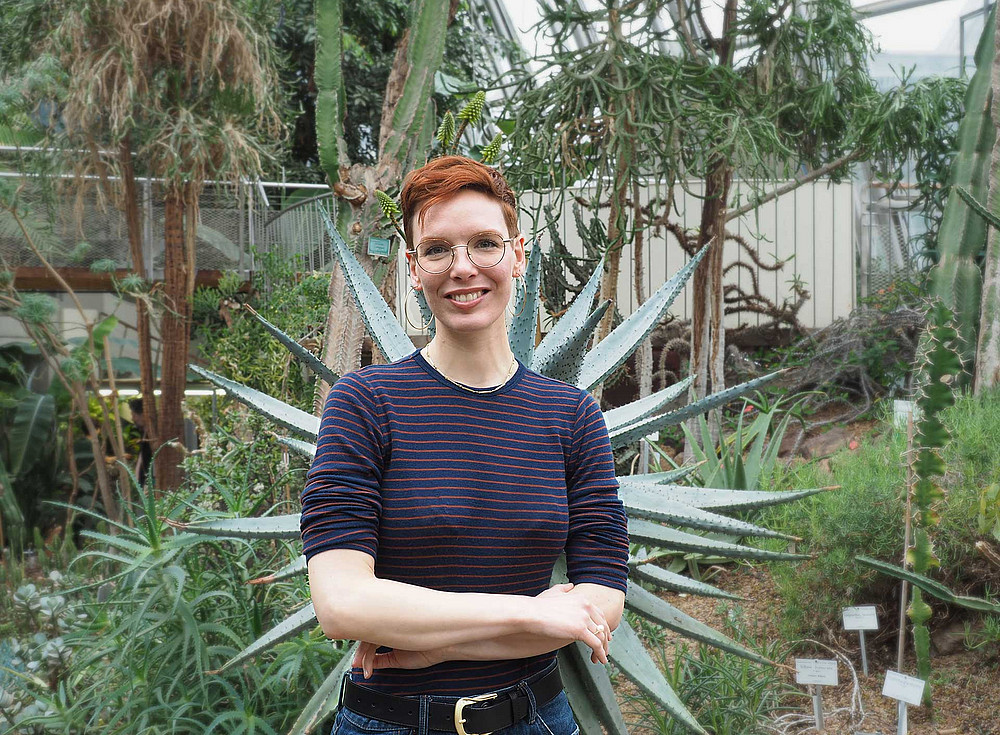
Sarah Bürli in the Botanical Garden of the University of Graz

Sarah Bürli has researched how cleared forests successfully regrow. Photo: University of Graz/Grube

Natural forests are not only valuable for CO₂ storage, but also reservoirs of biodiversity. For this reason, areas that are no longer used for agriculture are being reforested as part of renaturation projects. To ensure successful forest restoration, there are a number of factors to consider. For example, the combination of early- and late-successional tree species plays a role. At the outset, the correct spacing between seedlings is crucial for the survival of young forest plants. Sarah Bürli, head of the Botanical Garden at the University of Graz, has analysed the results of experiments on forest renaturation together with colleagues in Aotearoa/New Zealand. Her findings on beneficial planting strategies were recently published in the science magazine Ecological Solutions and Evidence.

In the natural process of forest development, for example after a fire, fast-growing, sun-loving pioneer trees initially colonise the open areas until they are gradually replaced by slow-growing, more shade-tolerant species. This creates a resilient forest that provides habitat for a variety of flora and fauna. "A major debate in forest restoration is whether to introduce late-successional tree species sequentially once the early-successional trees have grown, or both at the same time. Planting them simultaneously has the advantage of shortening the process and may even stabilise the emerging ecosystem and promotes its biodiversity," says Sarah Bürli. As part of the Living Laboratories programme at Auckland University of Technology in Aotearoa/New Zealand, the plant scientist from the University of Graz investigated what increases the chances of survival for late-successional trees when they are planted simultaneously with pioneer species.

To find out more about optimal conditions, three former agricultural areas were reforested and restored in cooperation with Māori communities. "We observed and analysed the development of more than 1,800 trees," says Bürli, reporting on the experiment. The researchers were able to show that a distance of two metres between early-successional trees significantly improves the survival rate of subsequent species compared to one, three or four metres. "This distance seemed to effectively balance the advantages of protection from the fast-growing trees and the disadvantages of shading and competition," explains the scientist. In addition, larger amounts of dead and living ground vegetation also increased the survival rate of the seedlings.

With regard to the question of simultaneous planting, the study revealed: "Four of the six late-successional tree species in the experiment established well when planted at the same time as the early species," says Bürli. Until now, the opposite was assumed. The fact that planting them together achieves high survival will simplify the work in the future.

Although the trees found in near-natural forests in Europe are different from those in New Zealand, there are also early- and late-successional species in this part of the world. Therefore, the results of the study can be used to conduct European restoration projects.

Publication:
Differential seedling survival of early-planted, late-successional trees: Results from three forest restoration experiments
Sarah Bürli, Luke A. McClean, Bradley S. Case, David Hall, Hannah L. Buckley
Ecological Solutions and Evidence
DOI:10.1002/2688-8319.70207
created by Gudrun Pichler

Related news

When parents find it difficult to have a say

In her dissertation, translation scholar Marie Tschurtschenthaler examines how communication between compulsory schools and parents whose first language is not German works – and what role professional language mediation plays in this. Initial insights show that it is not just about language, but also about resources, responsibilities and the institutional framework.

AI in schools: Maria Bertel drafts legal guidelines for teachers

The legal expert and her team analysed the legal situation regarding the use of artificial intelligence in education as part of an EU project and answered open questions from practice.

Cosmetics in the environment: University of Graz proves danger to ants

Titanium dioxide, which is found in cosmetics, for example, is increasingly entering the environment in the form of nanoparticles. This could also put insects at risk. If ants ingest the substance in combination with the pesticide glyphosate, it disturbs the development of their offspring. Scientists at the University of Graz are drawing attention to the negative consequences of this toxic cocktail.

Varied and healthy: studies move

Exercise is the ideal way to balance out everyday stress, prevent illness and keep fit. Why this is the case, how to do it properly and what role human bodily functions and psychology play can be studied at the University of Graz.

Begin of page section:
Additional information:

University of Graz
Universitaetsplatz 3
8010 Graz
Austria
  • Contact
  • Web Editors
  • Moodle
  • UNIGRAZonline
  • Imprint
  • Data Protection Declaration
  • Accessibility Declaration
Weatherstation
Uni Graz

End of this page section. Go to overview of page sections

End of this page section. Go to overview of page sections

Begin of page section:

End of this page section. Go to overview of page sections