Begin of page section:
Page sections:

  • Go to contents (Accesskey 1)
  • Go to position marker (Accesskey 2)
  • Go to main navigation (Accesskey 3)
  • Go to sub navigation (Accesskey 4)
  • Go to additional information (Accesskey 5)
  • Go to page settings (user/language) (Accesskey 8)
  • Go to search (Accesskey 9)

End of this page section. Go to overview of page sections

Begin of page section:
Page settings:

English en
Deutsch de
Search
Login

End of this page section. Go to overview of page sections

Begin of page section:
Search:

Search for details about Uni Graz
Close

End of this page section. Go to overview of page sections


Search

Begin of page section:
Main navigation:

Page navigation:

  • University

    University
    • About the University
    • Organisation
    • Faculties
    • Library
    • Working at University of Graz
    • Campus
    Developing solutions for the world of tomorrow - that is our mission. Our students and our researchers take on the great challenges of society and carry the knowledge out.
  • Research Profile

    Research Profile
    • Our Expertise
    • Research Questions
    • Research Portal
    • Promoting Research
    • Research Transfer
    • Ethics in Research
    Scientific excellence and the courage to break new ground. Research at the University of Graz creates the foundations for making the future worth living.
  • Studies

    Studies
    • Prospective Students
    • Students
  • Community

    Community
    • International
    • Location
    • Research and Business
    • Alumni
    The University of Graz is a hub for international research and brings together scientists and business experts. Moreover, it fosters the exchange and cooperation in study and teaching.
  • Spotlight
Topics
  • StudiGPT is here! Try it out!
  • Sustainable University
  • Researchers answer
  • Work for us
Close menu

End of this page section. Go to overview of page sections

Begin of page section:
You are here:

University of Graz News Long-term study shows how music lessons shape children's brains

End of this page section. Go to overview of page sections

Wednesday, 14 February 2024

Long-term study shows how music lessons shape children's brains

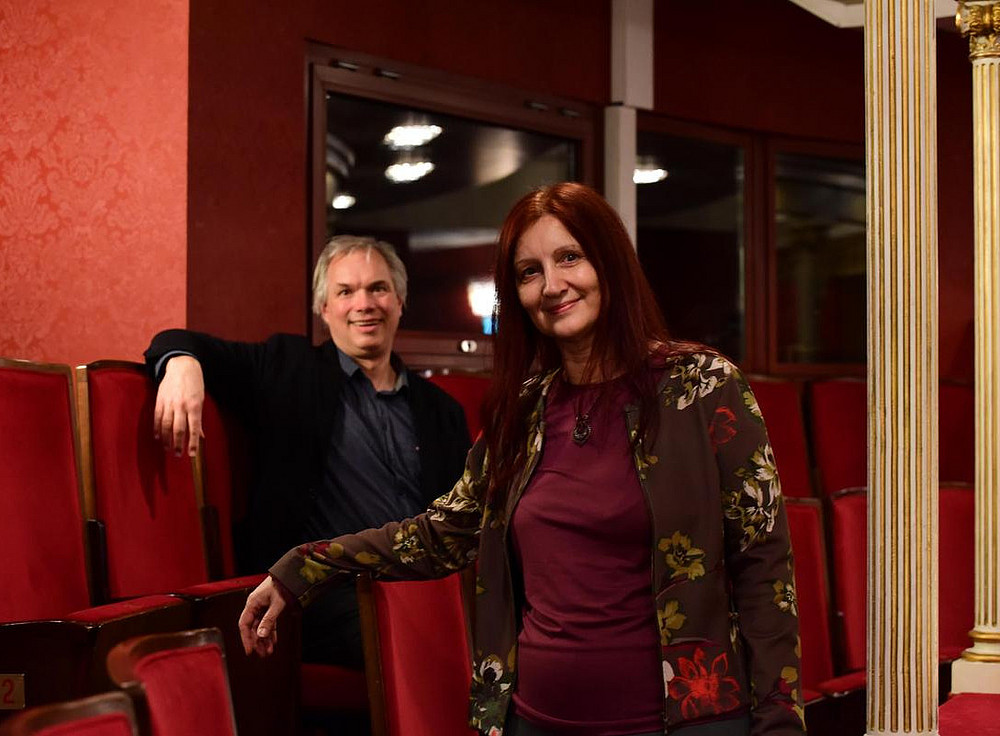
Peter Schneider und Annemarie Seither-Preisler in the City Theater

Peter Schneider und Annemarie Seither-Preisler in the City Theater in Graz Foto: Uni Graz/Tzivanopoulos

When children produce their first, usually off-key notes on the recorder, piano, trumpet or guitar, it may not be a melodic pleasure for the listener. But for young people, it is valuable training for their hearing, from which they will continue to benefit into old age. This has long been suspected, but a twelve-year long-term study by the University of Graz has now provided initial evidence to support this assumption.

Together, Annemarie Seither-Preisler and Peter Schneider from the Department of Psychology at the University of Graz followed the musical development of 220 children between the ages of eight and 18. Around half of them were affected by various developmental problems such as ADHD, ADD or dyslexia during their development. The Journal of Neuroscience has just published the results of this study, which focussed on the test subjects, whose development was unremarkable.

46 of them received no further musical instruction beyond music lessons at school, while 66 participants learnt to play different instruments. They were examined a total of five times over twelve years. Both the changes in the brain and the hearing ability were investigated.

The results are clear: Children with music training were not only able to distinguish pitches, timbres, tone durations and rhythms much better, but were also better able to recognise the fundamental tone of harmonic sounds with increasing age. The latter is an essential prerequisite for recognising different instruments and their melodies in an orchestra, for example, or for correctly interpreting the emotional content of a conversation, which is expressed in the pitch progression.

More nerve cells

The size and shape of the auditory areas in the brains of the music-making and non-music-making test subjects also showed striking differences. Surprisingly, these individual anatomical characteristics already existed at the beginning of the study, with high volumes of grey matter (nerve cells of the cerebrum) in the so-called Heschl's transverse convolutions, primarily in the right hemisphere, predicting a high motivation to make music later on.

In other words: Musicality appears to be inherent to a certain degree. However, there were also changes in the brain directly caused by making music. The more music was played in childhood and adolescence, the greater the activation of the brain areas mentioned. Making music therefore also trains the brain independently of individual talent.

A playful approach to music

What does this mean for parents? “It is advisable to give every child an initially playful approach to music. After all, making music and singing is an investment in the perception of the world that surrounds us. Later cognitive abilities are largely based on the ability to perceive our world in a differentiated sensory way”, says study author Seither-Preisler.

Future research now aims to promote the potential of musical hearing in children and young people with learning and developmental difficulties with the help of active auditory training programmes. This is because often there are also problems with acoustic perception and communication at the same time. In particular, such training programmes are to be tested on people with autism spectrum disorder, AD(H)S and dyslexia.

Publication

Neuroanatomical Disposition, Natural Development, and Training-Induced Plasticity of the Human Auditory System from Childhood to Adulthood: A 12-Year Study in Musicians and Nonmusicians; Peter Schneider, Dorte Engelmann, Christine Groß, Valdis Bernhofs, Elke Hofmann, Markus Christiner, Jan Benner, Steffen Bücher, Alexander Ludwig, Bettina L. Serrallach, Bettina M. Zeidler, Sabrina Turker, Richard Parncutt and Annemarie Seither-Preisler
created by Roman Vilgut

Related news

EU supports team led by molecular biologist Brigitte Pertschy with around ten million euro

The European Research Council (ERC) is funding the snoOPERA project with around ten million euros to research the structure of cellular protein factories. The four researchers involved want to clarify how tiny RNA-protein complexes control the formation of ribosomes—a key to understanding diseases such as cancer and Alzheimer's.

Maths made easy: how gaming elements motivate children to practise

Where does the six belong on a number line from one to ten? This task is a challenge for children with dyscalculia. For fear of failure, many are reluctant to tackle the exercise in the first place. A playful approach can remove this obstacle and give the affected pupils more self-confidence, as psychologist Manuel Ninaus found out in a study.

How artificial intelligence is changing the digital future in Europe

On November 20, 2025, the Technology Impact Summit at the Seifenfabrik in Graz will bring together experts from politics, business, and science. The focus will be on how artificial intelligence is transforming our working world and which specific AI solutions are already being used successfully today.

Sebastian Preissl researches mechanisms of cardiovascular diseases

They are among the most common causes of death worldwide: cardiovascular diseases. Both genetic factors and lifestyle can be responsible for changes in the cells of the heart, thereby impairing the function of the organ. Sebastian Preissl, who has been Professor of Pharmacology and Toxicology at the University of Graz for a year, is researching how molecular mechanisms alter gene activity and what role this plays in the development of diseases.

Begin of page section:
Additional information:

University of Graz
Universitaetsplatz 3
8010 Graz
Austria
  • Contact
  • Web Editors
  • Moodle
  • UNIGRAZonline
  • Imprint
  • Data Protection Declaration
  • Accessibility Declaration
Weatherstation
Uni Graz

End of this page section. Go to overview of page sections

End of this page section. Go to overview of page sections

Begin of page section:

End of this page section. Go to overview of page sections