Begin of page section:
Page sections:

  • Go to contents (Accesskey 1)
  • Go to position marker (Accesskey 2)
  • Go to main navigation (Accesskey 3)
  • Go to sub navigation (Accesskey 4)
  • Go to additional information (Accesskey 5)
  • Go to page settings (user/language) (Accesskey 8)
  • Go to search (Accesskey 9)

End of this page section. Go to overview of page sections

Begin of page section:
Page settings:

English en
Deutsch de
Search
Login

End of this page section. Go to overview of page sections

Begin of page section:
Search:

Search for details about Uni Graz
Close

End of this page section. Go to overview of page sections


Search

Begin of page section:
Main navigation:

Page navigation:

  • University

    University
    • About the University
    • Organisation
    • Faculties
    • Library
    • Working at University of Graz
    • Campus
    Developing solutions for the world of tomorrow - that is our mission. Our students and our researchers take on the great challenges of society and carry the knowledge out.
  • Research Profile

    Research Profile
    • Our Expertise
    • Research Questions
    • Research Portal
    • Promoting Research
    • Research Transfer
    • Ethics in Research
    • Commission for Scientific Integrity
    Scientific excellence and the courage to break new ground. Research at the University of Graz creates the foundations for making the future worth living.
  • Studies

    Studies
    • Prospective Students
    • Students
    • Registration for Study Programme (Winter semester 2026/27)
  • Community

    Community
    • International
    • Location
    • Research and Business
    • Alumni
    The University of Graz is a hub for international research and brings together scientists and business experts. Moreover, it fosters the exchange and cooperation in study and teaching.
Topics
  • Sustainable University
  • Researchers answer
  • Work for us
Close menu

End of this page section. Go to overview of page sections

Begin of page section:
You are here:

University of Graz News Keine Paranoia

End of this page section. Go to overview of page sections

Friday, 09 September 2022

Keine Paranoia

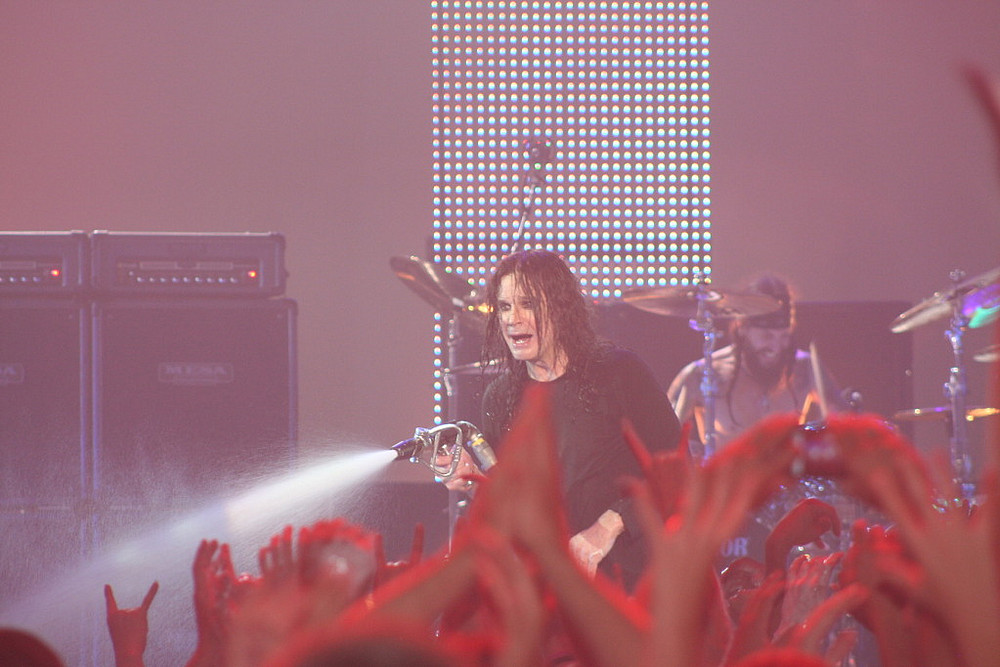
Ozzy Osbourne, der Leadsänger von Black Sabbath, steht seit mehr als 50 Jahren auf der Bühne. Foto: Aznplayer213, CC0, via Wikimedia Commons

Ozzy Osbourne, der Leadsänger von Black Sabbath, steht seit mehr als 50 Jahren auf der Bühne. Foto: Aznplayer213, CC0, via Wikimedia Commons

Die neue Folge der Reihe „Geschmackslabor Gespräche“ durchbohrt die Geschichte der Schwermetall-Musik

1970 legte die britische Rockband „Black Sabbath“ mit ihrem Album und Song „Paranoid“ das Fundament für Heavy Metal. Bis heute steht der Leadsänger der Gruppe, Ozzy Osbourne, mit 73 Jahren auf der Bühne und wippt seinen Kopf ekstatisch vor und zurück. Zum Rhythmus der Musik – Headbanging. „Als Ende der 1960er-Jahre politische Veränderungen wie der Vietnamkrieg und die Öl- und Wirtschaftskrise die Hippie-Utopie und somit die Vision einer besseren Welt nach dem Zweiten Weltkrieg langsam zerschlagen haben, versuchte man den Unmut über die Zeitgeschichte musikalisch in eine neue Form zu gießen“, weiß der Historiker und Metal-Forscher Peter Pichler. Krieg, Mord und Gewalt wurden fortan bühnenreif und schrieben sich in die Texten dieser neuen Musikrichtung fest. Verkehrte Kreuze, Pentagramme und der Teufel höchst persönlich gaben dem Heavy Metal eine neue, verbotene und reizvolle Symbolik. Black Sabbath legte sogar noch was drauf: Erschien doch ihr erstes Album an einem Freitag, dem 13. Ein PR-Gag der Plattenfirma. Es rückten in England Gruppen wie „Iron Maiden“, „Judas Priest“ oder „Saxon“ in die Tradition Black Sabbaths nach. In Kalifornien startete „Metallica“ aus der Garage auf die Bühne.

Anfang der 1980er-Jahre begann sich auch hierzulande eine Schwermetall-Szene zu entwickeln; nicht nur die Fans pilgerten zu den Konzerten ihrer Idole, sondern auch Bands wurden gegründet und starteten ihre ersten Proben in den Kellerräumen von Jugendzentren und Pfarrhäusern. „Die steirische Szene hatte ihren festen Platz in der bürgerlichen Welt, bediente sich aber symbolisch und musikalisch an ihren großen Vorbildern“, betont Pichler, der im Rahmen seines FWF-Forschungsprojekts „Breaking the Law...?! Normenbezogenes klangliches Wissen in der Heavy Metal-Kultur. Graz und die Steiermark, 1980 bis zur Gegenwart“ an der Uni Graz zahlreiche Zeitzeugen interviewt hat. „Etwa der Death Metal, ein Subgenre der Richtung mit starktechnischem Sound und einer gutturalen, verzerrten Stimme wurde in der Steiermark ansässig und quasi zum Kulturgut“, erklärt er. Heute ist die Obersteiermark mit dem Metal-Unternehmen „Napalm Records“ ein Zentrum dieser Welt.

Doch Heavy Metal ist mehr als nur Musik und Kopf durch die Luft wirbeln. Es ist eine Jugendkultur, die auch auf die aktuellen gesellschaftspolitischen Probleme reagiert. „Man kann im Metal, wie durch ein Brennglas, fokussiert auf Themen wie Migration, Klimawandel, Covid-Pandemie und Fremdenhass blicken“, erklärt der Historiker und Kulturwissenschafter. „Und das macht das Forschungsgebiet beinahe unerschöpflich und wahnsinnig spannend.“

Podcast: „Wie konservativ ist Heay Metal?“
Der Molekularbiologie und Metal-Fan Fritz Treiber aus dem Offenen Labor der Uni Graz lockt in seiner Podcast-Reihe „Geschmackslabor Gespräche“ immer wieder WissenschafterInnen aus der Reserve und interviewt sie zu ihrer Arbeit. In „Wie konservativ ist Heavy Metal? Geschmackslabor Gespräche #metaledition“ lotet er mit Peter Pichler die Grenzen der Musikrichtung aus und versucht Antworten auf die Fragen „Wie kann man „Heavy Metal“ eigentlich beforschen?“, „Wie wurde der Black Metal zur Gegenkultur von der Gegenkultur?“ und „Warum ist der Teufel ein immer wiederkehrendes Thema in dieser Musikrichtung?“ zu finden. Der Podcast ist ab 9. September 2022 über den Youtube-Kanal der Uni Graz zu sehen. Auch dieses Datum ist nicht zufällig gewählt: Just an diesem Tag erscheint auch das neueste Album von Black Sabbath-Frontman und Metal-Legende Ozzy Osbourne.

Metal-Video
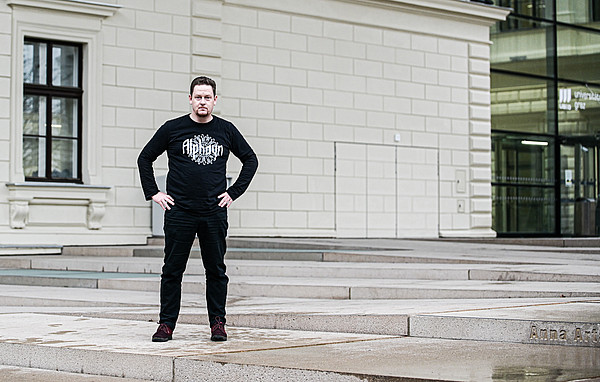
Peter Pichler hat sich auch wissenschaftlich dem Heavy Metal verschrieben. Foto: Uni Graz/Tzivanopoulos
created by Konstantin Tzivanopoulos

Related news

Complying with the norm: Why Do Standards Shape Our Lives, Elisabeth Staudegger?

Standards determine whether a sheet of paper fits in a printer or whether a charging plug can power multiple devices. These standards shape our everyday lives. But who actually sets these standards? Where are the weaknesses, and how could science help to improve them? Elisabeth Staudegger, Head of the ‘Law and IT’ Department at the Institute for Legal Foundations at the University of Graz, host the Academic Standards Day on 16 June. Here she relays how sciences can contribute to the topic of standardisation and reveals her personal favourite standard.

More body awareness than a culture war

In Italy, sex education lessons will in future only be permitted with parental consent, and will be banned entirely in nurseries and primary schools. At the same time, Pride Month highlights why knowledge about the body, relationships, boundaries and diversity is important for young people. A study by the University of Graz shows how important knowledge about the body, contraception, relationship skills and protection against violence is

Will Austria win the World Cup? Mathematician reveals calculation method

Michael Fischer uses the football tournament as a practical example for highschool lessons.

Survival strategies: How plants respond to drought

According to Geosphere Austria, this spring was the driest in Austria since records began around 170 years ago. The low rainfall put particular pressure on the agricultural sector. And climate change is set to make the situation even worse in the coming decades. We asked Johannes Liesche, a professor at the Department of Biology at the University of Graz, how plants react to water shortages and how they survive periods of drought.

Begin of page section:
Additional information:

University of Graz
Universitaetsplatz 3
8010 Graz
Austria
  • Contact
  • Web Editors
  • Moodle
  • UNIGRAZonline
  • Imprint
  • Data Protection Declaration
  • Accessibility Declaration
Weatherstation
Uni Graz

End of this page section. Go to overview of page sections

End of this page section. Go to overview of page sections

Begin of page section:

End of this page section. Go to overview of page sections