Begin of page section:
Page sections:

  • Go to contents (Accesskey 1)
  • Go to position marker (Accesskey 2)
  • Go to main navigation (Accesskey 3)
  • Go to sub navigation (Accesskey 4)
  • Go to additional information (Accesskey 5)
  • Go to page settings (user/language) (Accesskey 8)
  • Go to search (Accesskey 9)

End of this page section. Go to overview of page sections

Begin of page section:
Page settings:

English en
Deutsch de
Search
Login

End of this page section. Go to overview of page sections

Begin of page section:
Search:

Search for details about Uni Graz
Close

End of this page section. Go to overview of page sections


Search

Begin of page section:
Main navigation:

Page navigation:

  • University

    University
    • About the University
    • Organisation
    • Faculties
    • Library
    • Working at University of Graz
    • Campus
    Developing solutions for the world of tomorrow - that is our mission. Our students and our researchers take on the great challenges of society and carry the knowledge out.
  • Research Profile

    Research Profile
    • Our Expertise
    • Research Questions
    • Research Portal
    • Promoting Research
    • Research Transfer
    • Ethics in Research
    Scientific excellence and the courage to break new ground. Research at the University of Graz creates the foundations for making the future worth living.
  • Studies

    Studies
    • Prospective Students
    • Students
  • Community

    Community
    • International
    • Location
    • Research and Business
    • Alumni
    The University of Graz is a hub for international research and brings together scientists and business experts. Moreover, it fosters the exchange and cooperation in study and teaching.
  • Spotlight
Topics
  • Our digital Advent calendar
  • Sustainable University
  • Researchers answer
  • Work for us
Close menu

End of this page section. Go to overview of page sections

Begin of page section:
You are here:

University of Graz News Jungforscherin der Uni Graz für ihre Arbeit zum Thema "Sonnenwinde" ausgezeichnet

End of this page section. Go to overview of page sections

Thursday, 24 May 2012

Jungforscherin der Uni Graz für ihre Arbeit zum Thema "Sonnenwinde" ausgezeichnet

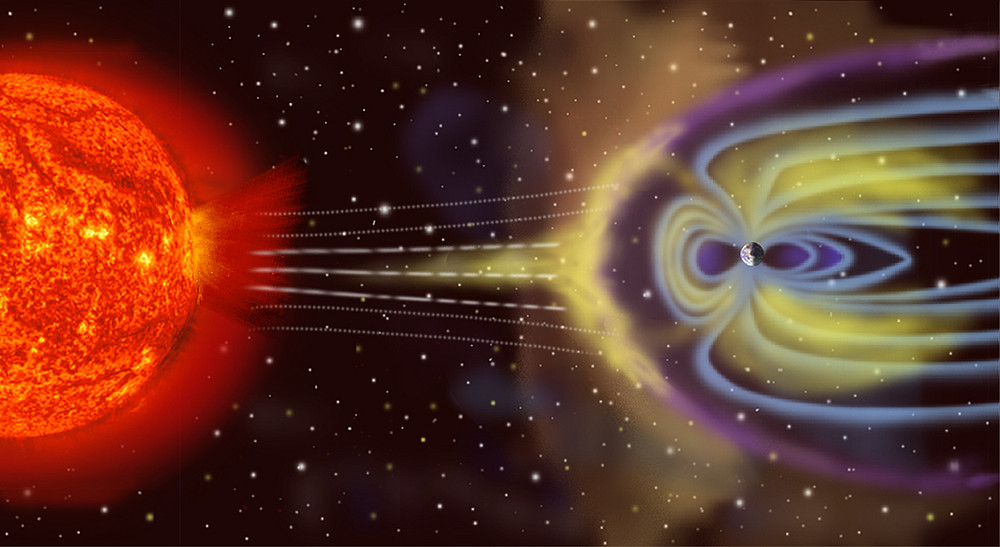
Sonnenwinde stehen im Zentrum von Gressls Diplomarbeit.

Sonnenwinde stehen im Zentrum von Gressls Diplomarbeit. Foto: NASA.

Die junge Uni Graz-Physikerin Mag. Corinna Gressl hat für ihre Diplomarbeit im Bereich Astrophysik den Studierenden-Forschungs-Wettbewerb des Community Coordinated Modeling Center (CCMC) der NASA und der US National Science Foundation (NSF) gewonnen. Der Preis besteht aus einer Einladung inklusive Übernahme der gesamten Kosten zur Teilnahme an der "2012 SHINE" Konferenz in Maui, Hawaii, vom 25. bis 29. Juni 2012, wo sie ihre Arbeit und Resultate der breiten, internationalen Wissenschaftscommunity in einem Vortrag vorstellen wird.

In ihrer Arbeit mit dem Titel "Vergleiche von MHD Simulationen des Sonnenwindes mit in-situ gemessenen Plasma- und Magnetfeld-Parametern bei 1 AU" behandelt die Nachwuchsforscherin das Thema "Space Weather". "Die Sonne ist ein aktiver Stern mit einem elfjährigen Aktivitätszyklus. Alle elf Jahre ist die Sonnenaktivität besonders groß. Die Sonnenaktivität ist in den letzten Monaten gestiegen und das nächste Aktivitätsmaximum steht unmittelbar bevor", erklärt Gressl. Unter „Sonnenaktivität“ versteht man eine Vielzahl von Phänomenen: Sonnenflecke, erhöhte Radio-, UV- und Röntgenstrahlung und auch spektakuläre Events wie Koronale Massenauswürfe (CMEs – „coronal mass ejections“) und Flares, bei denen es in kurzer Zeit zu enormer Energiefreisetzung kommt.

Die Auswirkungen der Sonnenaktivität auf die Erde und den erdnahen Weltraum wird unter dem Begriff „Weltraumwetter“ oder „Space Weather“ zusammengefasst. "Die Erde wird ständig von einem Teilchenstrom, hauptsächlich Protonen und Elektronen, von der Sonne, dem sogenannten Sonnenwind, getroffen", erzählt die Forscherin. Die Teilchen des Sonnenwindes stammen aus der Sonnenkorona und erreichen die Erde in durchschnittlich 4 Tagen. Das Magnetfeld der Erde lenkt die Teilchen ab, sodass sie seitlich an der Erde vorbeiströmen und ist somit ein wichtiger Schutz für die Erde. Bei hoher Sonnenaktivität kann die Geschwindigkeit des Sonnenwindes bis zu 2000 km/s erreichen. Sonnenstürme, die eine Auswirkung auf die Erde haben, werden als „geoeffektiv“ bezeichnet und stören das Erdmagnetfeld teils erheblich. Es treten Polarlichter auf, bei starken Stürmen können Satelliten ausfallen, der Funkverkehr kann gestört werden und in seltenen Fällen kann es auch zu Stromausfällen kommen. Ganz besonders betroffen ist die Raumfahrt, da sich Satelliten mit empfindlichen Messgeräten oder sogar Astronauten außerhalb des schützenden Erdmagnetfeldes befinden.

Um sich auf bevorstehendes „ungemütliches“ Weltraumwetter vorbereiten zu können braucht man eine verlässliche Weltraumwetter-Vorhersage. Der tatsächliche Zustand des Sonnenwindes kann nur mittels Satelliten gemessen werden. "Während der Arbeit an meiner Diplomarbeit war es meine Aufgabe, Sonnenwindmodelle auf ihre Zuverlässigkeit zu überprüfen. Dies hatte einerseits den Zweck, als Feedback für die Modell-Entwickler zu dienen und herauszufinden, wo bei den verschiedenen Modellen Verbesserungsmöglichkeiten liegen und wo bereits gute Resultate erzielt werden. Zum anderen galt es herauszufinden, welches Sonnenwindmodell die besten Vorhersagen liefert um zu entscheiden, welches Modell für die zukünftige europäische Weltraumwettervorhersagestation verwendet zu werden soll", sagt Gressl, die derzeit ihr Doktorat am Institut für Physik betreibt.

Infos zum Contest >>Hier

created by Konstantinos Tzivanopoulos

Related news

Chemical Christmas show at the University of Graz: An explosive evening at the Schauspielh

At the beginning of December, the University of Graz transformed the theater into a laboratory: as part of “Chemical Life,” teacher training students staged a chemical Christmas show for Styrian school classes—complete with ethanol rockets, nitrogen snow, and glowing effects. An evening designed to inspire interest in studying chemistry.

Train by train: Koralm railway accelerates exchange between the Universities

Lectures at the University of Klagenfurt in the morning, seminars at the University of Graz in the afternoon: Austria's longest tunnel and a journey time of around 45 minutes make it easy. The Koralm railway increases the speed of networking between the two university locations. The collaboration builds on existing cooperation - for example in the areas of teacher training, Slavic studies and as employers, the universities are well coordinated.

On the trail of the Big Bang: University of Graz receives 1.5 million euros for doctoral programmes

The Austrian Science Fund FWF has selected the Doctoral Programme in Theoretical Particle Physics at the University of Graz for funding from the Doc.funds. Six young scientists will be funded for 3.5 years. They will gain fundamentally new insights into the origins of the world.

From trans women and knee prostheses: sports science prizes awarded

Walking better with a prosthesis, successfully getting rid of excess weight, training more effectively, more fairness for trans people in sport: these were the topics addressed by the students at the University of Graz who were awarded the sports science prizes for their Master's theses on 3 December 2025.

Begin of page section:
Additional information:

University of Graz
Universitaetsplatz 3
8010 Graz
Austria
  • Contact
  • Web Editors
  • Moodle
  • UNIGRAZonline
  • Imprint
  • Data Protection Declaration
  • Accessibility Declaration
Weatherstation
Uni Graz

End of this page section. Go to overview of page sections

End of this page section. Go to overview of page sections

Begin of page section:

End of this page section. Go to overview of page sections