Begin of page section:
Page sections:

  • Go to contents (Accesskey 1)
  • Go to position marker (Accesskey 2)
  • Go to main navigation (Accesskey 3)
  • Go to sub navigation (Accesskey 4)
  • Go to additional information (Accesskey 5)
  • Go to page settings (user/language) (Accesskey 8)
  • Go to search (Accesskey 9)

End of this page section. Go to overview of page sections

Begin of page section:
Page settings:

English en
Deutsch de
Search
Login

End of this page section. Go to overview of page sections

Begin of page section:
Search:

Search for details about Uni Graz
Close

End of this page section. Go to overview of page sections


Search

Begin of page section:
Main navigation:

Page navigation:

  • University

    University
    • About the University
    • Organisation
    • Faculties
    • Library
    • Working at University of Graz
    • Campus
    Developing solutions for the world of tomorrow - that is our mission. Our students and our researchers take on the great challenges of society and carry the knowledge out.
  • Research Profile

    Research Profile
    • Our Expertise
    • Research Questions
    • Research Portal
    • Promoting Research
    • Research Transfer
    • Ethics in Research
    • Commission for Scientific Integrity
    Scientific excellence and the courage to break new ground. Research at the University of Graz creates the foundations for making the future worth living.
  • Studies

    Studies
    • Prospective Students
    • Students
  • Community

    Community
    • International
    • Location
    • Research and Business
    • Alumni
    The University of Graz is a hub for international research and brings together scientists and business experts. Moreover, it fosters the exchange and cooperation in study and teaching.
  • Spotlight
Topics
  • Sustainable University
  • Researchers answer
  • Work for us
Close menu

End of this page section. Go to overview of page sections

Begin of page section:
You are here:

University of Graz News In See stechen

End of this page section. Go to overview of page sections

Thursday, 03 July 2014

In See stechen

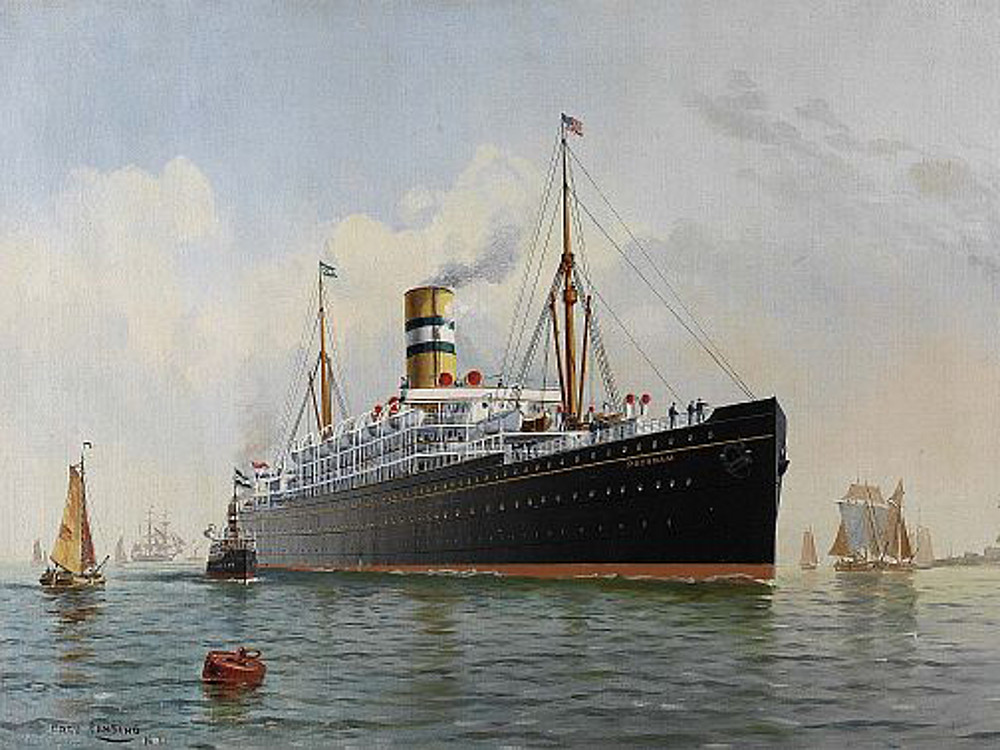
Die Potsdam auf einem Gemälde von Fred Pansing. Das holländische Schiff brachte ab 1900 EmigrantInnen nach New York. Foto: Wikipedia Commons

Die Potsdam auf einem Gemälde von Fred Pansing. Das holländische Schiff brachte ab 1900 EmigrantInnen nach New York. Foto: Wikipedia Commons

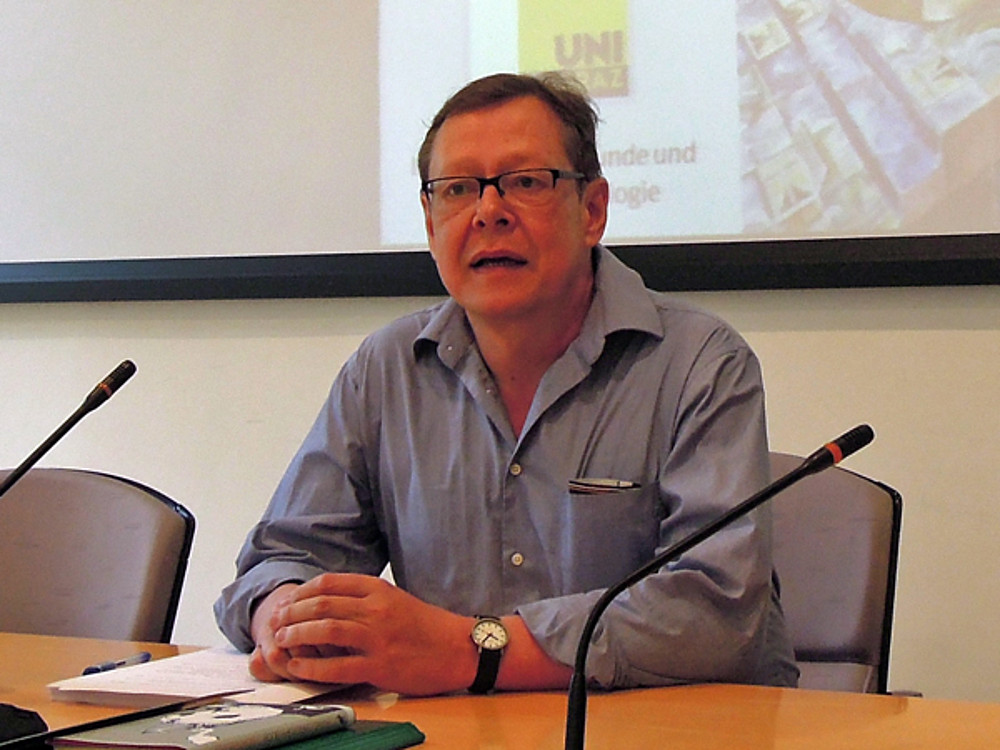
Joachim Schlör von der University of Southhampton ist derzeit Kurt-David-Brühl-Gastprofessor für Jüdische Studien in Graz und veranstaltete Ende Juni den Workshop Die Schiffsreise als Übergangsphänomen im Migrationsprozess.

Joachim Schlör von der University of Southhampton ist derzeit Kurt-David-Brühl-Gastprofessor für Jüdische Studien in Graz und veranstaltete Ende Juni den Workshop Die Schiffsreise als Übergangsphänomen im Migrationsprozess.

Die Erlebnisse und Erfahrungen von EmigrantInnen auf der Schiffsreise erforschen und dokumentieren WissenschafterInnen in einem neuen Open-Access-Journal

Katastrophenmeldungen von Schiffbrüchigen vor Lampedusa finden sich nahezu wöchentlich in den Medien. Welche Eindrücke und Erlebnisse die MigrantInnen dabei prägen, ist auch Gegenstand wissenschaftlicher Untersuchungen. Beiträge dazu sollen in der ersten Ausgabe des neuen Open-Access-Journals mcsj publiziert werden. Gefragt sind auch Forschungsbeiträge zu den historischen Erfahrungen auf der Schiffsreise von Ausgewanderten im späten 19. und im 20. Jahrhundert.

"Die Seefahrt war eine Zäsur, eine außergewöhnliche Erfahrung, bei der Raum und Zeit aufgehoben waren", begründet Joachim Schlör, derzeit Kurt-David-Brühl-Gastprofessor für Jüdische Studien an der Uni Graz, die Beschäftigung mit diesem Thema. Er organisierte Ende Juni einen Workshop mit dem Titel „Die Schiffsreise als Übergangsphänomen im Migrationsprozess“. Die Reise bot auch Gelegenheit, über sich, die Herkunft und die Zukunft nachzudenken. EmigrantInnen beschreiben das Schiff, die Mitreisenden, die sozialen Unterschiede, die kulturellen Praktiken, sie dokumentieren und fotografieren das Schiff, als gelte es, den so flüchtigen Moment des Übergangs doch irgendwie festzuhalten, bevor man anlegt und eine neue Etappe beginnt.

Die Vielzahl von Dokumenten, die im Laufe der Überfahrten entstanden, sind nirgends systematisch gesammelt und befinden sich häufig noch in privatem Besitz: Briefe und Tagebücher, Bord-Merkblätter, Tickets und Speisekarten, literarische Manuskripte, Fotografien und Zeichnungen. Ziel des Workshops war es, solche Quellen – historische ebenso wie literarische oder visuelle – zu identifizieren, Möglichkeiten ihrer Bewahrung zu suchen, und methodische wie theoretische Annäherungen zu ihrer Analyse im Rahmen einer interdisziplinären Migrationsforschung zu diskutieren.
Die wissenschaftlichen Beiträge werden in der ersten Ausgabe des Magazins Mobile Culture Studies ›mcsj› veröffentlicht, das zu Jahresbeginn 2015 auf der Open-Access-Plattform uni.pub erscheinen wird. Weitere Artikel werden noch angenommen, Vorschläge können bis 15. August 2014 eingereicht werden (mehr Info dazu).

Die Zeitschrift wird von Johanna Rolshoven (Institut für Volkskunde und Kulturanthropologie der Uni Graz) und Joachim Schlör (University of Southhampton) herausgegeben und unter anderem Ergebnisse der Forschung zu den kulturellen und gesellschaftlichen Mobilitätsphänomenen vermitteln, Erkenntnisse zur Geschichte der Mobilitätspraktiken oder zum Wandel der Mobilitätskonzepte.

 

created by Dagmar Eklaude

Related news

Higher Education Strategy 2040: Austria’s universities on course for the future

Austria has 77 higher education institutions, which is above the EU average – but does this really make sense? The new Higher Education Strategy 2040 focuses on cooperation rather than mergers. As one of the six largest universities in Austria, the University of Graz plays a central role in this.

Climate research in Greenland: Old data provides new insights

The polar explorer and University of Graz professor Alfred Wegener left behind a unique collection of climate data from Greenland. A research team from the University of Graz is now analysing this 100-year-old treasure trove of data and comparing it with current measurements.

Diversity in nature and science: How we talk about plants and each other

Ginkgo, kiwi, hemp: they exist as male and female plants. Anyone who paid attention in biology class will confirm this. But is this categorisation, established by Carl von Linné almost 300 years ago, still valid today? An interdisciplinary team at the University of Graz is questioning these attributions and using this as a starting point to provide food for thought for gender-sensitive interaction between students, scientific and teaching staff.

Around the world in eight stops: the Long Night of Research at the University of Graz

On 24 April from 5 pm, you can take a short trip around the globe at the University of Graz, discovering pecularities of foreign countries or new local features in the entrance hall of the University Library. The itinerary takes you through introduced animal species, political attitudes and the omnipotence of algorithms. There will also be a programme in the historic reading hall, as well as at the UniGraz@Museum and the University Archive.

Begin of page section:
Additional information:

University of Graz
Universitaetsplatz 3
8010 Graz
Austria
  • Contact
  • Web Editors
  • Moodle
  • UNIGRAZonline
  • Imprint
  • Data Protection Declaration
  • Accessibility Declaration
Weatherstation
Uni Graz

End of this page section. Go to overview of page sections

End of this page section. Go to overview of page sections

Begin of page section:

End of this page section. Go to overview of page sections