



Begin of page section:
Page sections:

  • Go to contents (Accesskey 1)
  • Go to position marker (Accesskey 2)
  • Go to main navigation (Accesskey 3)
  • Go to sub navigation (Accesskey 4)
  • Go to additional information (Accesskey 5)
  • Go to page settings (user/language) (Accesskey 8)
  • Go to search (Accesskey 9)

End of this page section. Go to overview of page sections

Begin of page section:
Page settings:

English en
Deutsch de
Search
Login

End of this page section. Go to overview of page sections

Begin of page section:
Search:

Search for details about Uni Graz
Close

End of this page section. Go to overview of page sections


Search

Begin of page section:
Main navigation:

Page navigation:

  • University

    University
    • About the University
    • Organisation
    • Faculties
    • Library
    • Working at University of Graz
    • Campus
    Developing solutions for the world of tomorrow - that is our mission. Our students and our researchers take on the great challenges of society and carry the knowledge out.
  • Research Profile

    Research Profile
    • Our Expertise
    • Research Questions
    • Research Portal
    • Promoting Research
    • Research Transfer
    • Ethics in Research
    • Commission for Scientific Integrity
    Scientific excellence and the courage to break new ground. Research at the University of Graz creates the foundations for making the future worth living.
  • Studies

    Studies
    • Prospective Students
    • Students
    • Registration for Study Programme (Winter semester 2026/27)
  • Community

    Community
    • International
    • Location
    • Research and Business
    • Alumni
    The University of Graz is a hub for international research and brings together scientists and business experts. Moreover, it fosters the exchange and cooperation in study and teaching.
Topics
  • Sustainable University
  • Researchers answer
  • Work for us
Close menu

End of this page section. Go to overview of page sections

Begin of page section:
You are here:

University of Graz News In the Shadow of the (Holy) Wisdom

End of this page section. Go to overview of page sections

Monday, 27 July 2020

In the Shadow of the (Holy) Wisdom

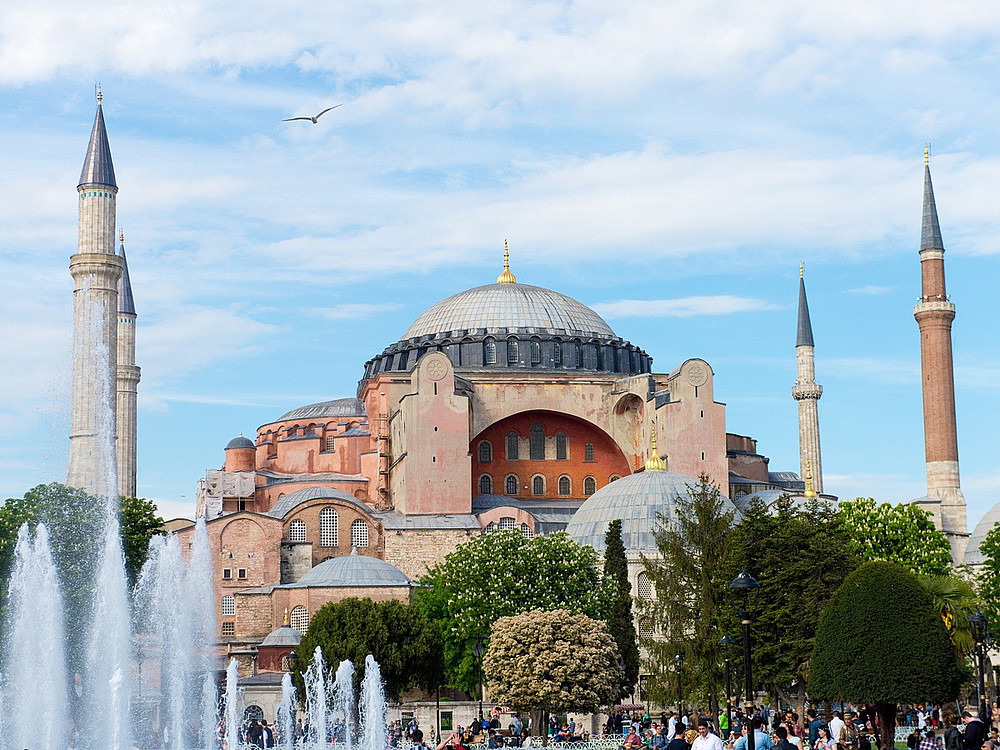
The Hagia Sophia - holy wisdom - in Istanbul is the symbolical gate to the Orient. Die former byzantinic chirch was transformed into a museum and is now used as a mosque. Photo: Pixabay

The Hagia Sophia - holy wisdom - in Istanbul is the symbolical gate to the Orient. Die former byzantinic chirch was transformed into a museum and is now used as a mosque. Photo: Pixabay

The transformation of holy places like the Hagia Sophia has been a common practice, says Pablo Argárate, Professor for Ecumenical Theology, Eastern Orthodoxy and Patristic Studies

Religions are (almost) always connected to certain places. Special loci are perceived as topoi, where the Holy is particularly present and active. Within religions and even confessions there are competing appropriations of loci sancti. In times of war it was consequential that the Gods of the defeated had to yield to those Gods who had proved more powerful in victory. The conquerors destroyed the holy places of the defeated or adopted them for their own religion.  Such was not only common in Islam, but also in Christianity. Heathen temples (like Baalbek or the Pantheon in Rome) and even mosques like the one of Córdoba were converted into churches.
Building an important temple of a religion is never neutral, but always part of a bigger political programme. This is also true for the (East)Roman emperors Constantine and Justinian, who ordered the construction and reconstruction of the Church of the Holy Wisdom (Hagia Sophia). After the Turkish conquest in 1453 Mehmet II consequently had it transformed into a mosque.
There are, however, two important historical exceptions of such transformation processes. Caliph Umar refused to set foot in the Church of the Holy Sepulchre (the most important church of Christianity) to keep it from being adopted by Muslims. In 1934 Attatürk turned the mosque Ayasofya into a museum. His intention was not to create a place of dialogue for different cultures and religions, but rather to restrain the power of religion. 86 years later Erdoğan now acts in an equally political way – although in the opposite direction. Neither then nor now religion was or is in the foreground. Erdoğan’s autocratic decision (the court of justice let him have his will – for whatever reason) is part of his aggressive politics: demonstration of power, distraction from the vast financial crisis and inner repression. It is also one step ahead in his provocation of the West, especially of the Greece, who see themselves as the successors of the Byzantines. On July 24th (the anniversary of the Treaty of Lausanne 1923) the Hagia Sophia was re-converted into a mosque. If this was inspired by (holy) wisdom, remains most questionable.
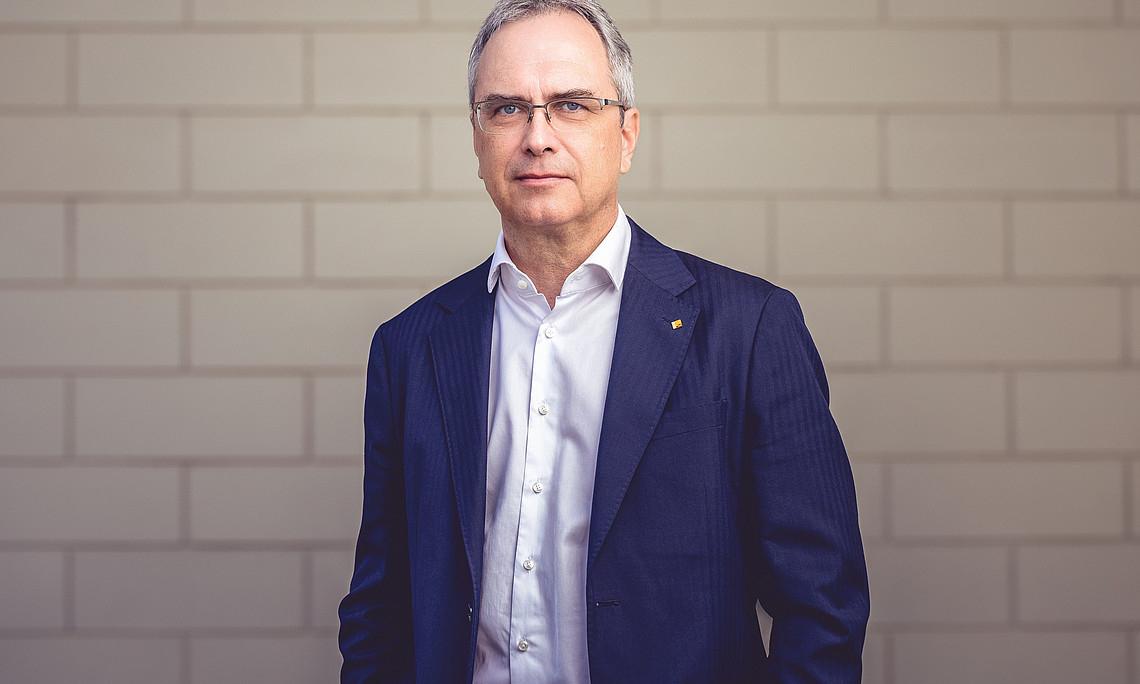

 

created by Pablo Argárate

Related news

Complying with the norm: Why Do Standards Shape Our Lives, Elisabeth Staudegger?

Standards determine whether a sheet of paper fits in a printer or whether a charging plug can power multiple devices. These standards shape our everyday lives. But who actually sets these standards? Where are the weaknesses, and how could science help to improve them? Elisabeth Staudegger, Head of the ‘Law and IT’ Department at the Institute for Legal Foundations at the University of Graz, host the Academic Standards Day on 16 June. Here she relays how sciences can contribute to the topic of standardisation and reveals her personal favourite standard.

More body awareness than a culture war

In Italy, sex education lessons will in future only be permitted with parental consent, and will be banned entirely in nurseries and primary schools. At the same time, Pride Month highlights why knowledge about the body, relationships, boundaries and diversity is important for young people. A study by the University of Graz shows how important knowledge about the body, contraception, relationship skills and protection against violence is

Will Austria win the World Cup? Mathematician reveals calculation method

Michael Fischer uses the football tournament as a practical example for highschool lessons.

Survival strategies: How plants respond to drought

According to Geosphere Austria, this spring was the driest in Austria since records began around 170 years ago. The low rainfall put particular pressure on the agricultural sector. And climate change is set to make the situation even worse in the coming decades. We asked Johannes Liesche, a professor at the Department of Biology at the University of Graz, how plants react to water shortages and how they survive periods of drought.

Begin of page section:
Additional information:

University of Graz
Universitaetsplatz 3
8010 Graz
Austria
  • Contact
  • Web Editors
  • Moodle
  • UNIGRAZonline
  • Imprint
  • Data Protection Declaration
  • Accessibility Declaration
Weatherstation
Uni Graz

End of this page section. Go to overview of page sections

End of this page section. Go to overview of page sections

Begin of page section:

End of this page section. Go to overview of page sections

