Begin of page section:
Page sections:

  • Go to contents (Accesskey 1)
  • Go to position marker (Accesskey 2)
  • Go to main navigation (Accesskey 3)
  • Go to sub navigation (Accesskey 4)
  • Go to additional information (Accesskey 5)
  • Go to page settings (user/language) (Accesskey 8)
  • Go to search (Accesskey 9)

End of this page section. Go to overview of page sections

Begin of page section:
Page settings:

English en
Deutsch de
Search
Login

End of this page section. Go to overview of page sections

Begin of page section:
Search:

Search for details about Uni Graz
Close

End of this page section. Go to overview of page sections


Search

Begin of page section:
Main navigation:

Page navigation:

  • University

    University
    • About the University
    • Organisation
    • Faculties
    • Library
    • Working at University of Graz
    • Campus
    Developing solutions for the world of tomorrow - that is our mission. Our students and our researchers take on the great challenges of society and carry the knowledge out.
  • Research Profile

    Research Profile
    • Our Expertise
    • Research Questions
    • Research Portal
    • Promoting Research
    • Research Transfer
    • Ethics in Research
    • Commission for Scientific Integrity
    Scientific excellence and the courage to break new ground. Research at the University of Graz creates the foundations for making the future worth living.
  • Studies

    Studies
    • Prospective Students
    • Students
    • Welcome Weeks for First Year Students
  • Community

    Community
    • International
    • Location
    • Research and Business
    • Alumni
    The University of Graz is a hub for international research and brings together scientists and business experts. Moreover, it fosters the exchange and cooperation in study and teaching.
Topics
  • Sustainable University
  • Researchers answer
  • Work for us
Close menu

End of this page section. Go to overview of page sections

Begin of page section:
You are here:

University of Graz News Running hot

End of this page section. Go to overview of page sections

Monday, 17 April 2023

Running hot

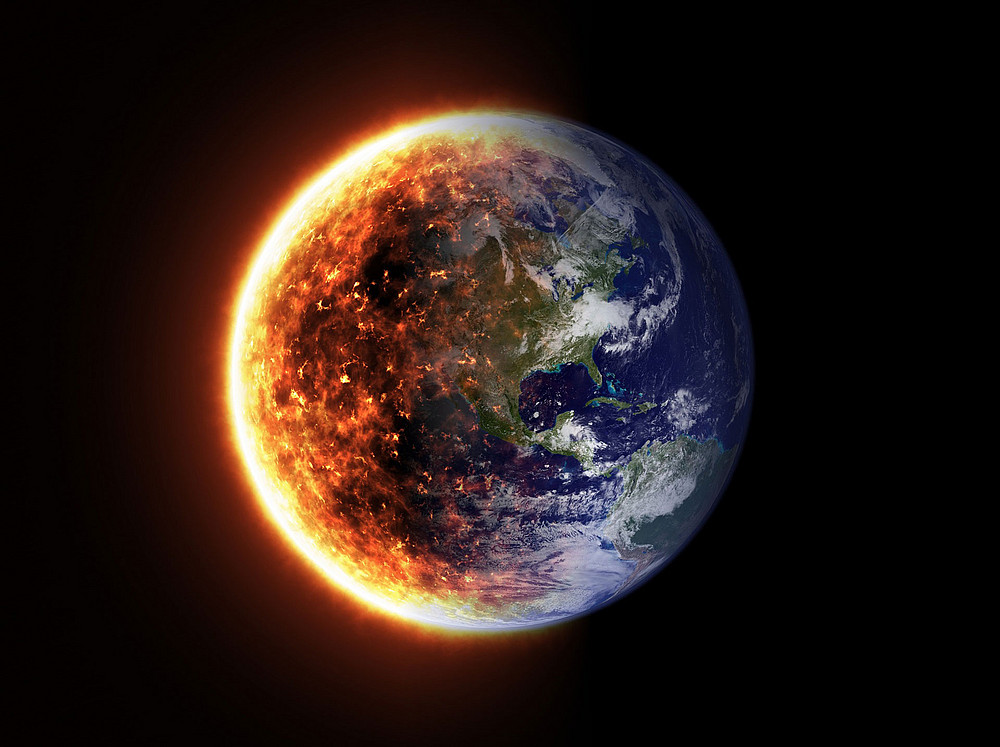
Earth globe, left half reddish coloured

If the heat content in the atmosphere grows at such a disproportionate rate, this drives weather extremes even more strongly, says Gottfried Kirchengast, climate researcher from the University of Graz. Photo: pixabay

The atmosphere has warmed four times faster in the last twenty years than during the decades before

Researchers at the University of Graz, Austria, have shown in an international study that the heat energy content in the global atmosphere has increased about four times faster since the beginning of the 21st century than it did within 1960 and 2000. In the northern hemisphere, outside the tropics, it has even increased around six times faster. The driving cause are the human-made greenhouse gas emissions. “Such a strong heat increase in such a short time cannot be explained purely by natural fluctuations,” says Gottfried Kirchengast, one of the lead authors of the study published in the journal Earth System Science Data. “If the heat content in the atmosphere grows at such a disproportionate rate compared to ocean and land, this drives weather and climate extremes even more strongly,” says the researcher from the Wegener Center and Institute of Physics at the University of Graz.

Energy imbalance
Due to the continuing fossil emissions, the concentration of greenhouse gases in the atmosphere is steadily increasing. This causes a global energy imbalance between the solar radiation reaching our planet and the back-radiation from the Earth, which is reduced by the greenhouse gas increase. “The imbalance leaves a huge amount of excess energy in the Earth system, around 13 trillion gigajoules every year, which is more than twenty times the world’s energy consumption. This inevitably drives global warming and only a reduction of emissions towards zero can stop this process,” Kirchengast explains.

Heat inventory
The large-scale international study by about seventy scientists from fourteen countries, conducted in the frame of the UN’s Global Climate Observing System (GCOS) programme, provides an up-to-date assessment of Earth’s heat inventory. It shows how much excess energy has been accumulating in the planet’s oceans, land masses and atmosphere since the 1960s, and how it has led to the melting of ice sheets and glaciers. The results show that about 89 percent of this energy is currently stored by the oceans, five percent by the land, four percent is utilized to melt ice, and about two percent goes into the atmosphere.
“While the atmosphere takes up the smallest absolute amount of heat – mainly thanks to the buffer storage by the oceans – in relative terms its changes are the strongest. And they have the most direct impact on us, such as through stronger weather and climate extremes,” Kirchengast summarizes. “The increase in atmospheric heat content is a fundamental indicator of anthropogenic climate change,” the researcher emphasizes.
The authors of the study recommend that the Earth heat inventory be further on updated on a regular basis, similar to the global emissions monitoring, and included in the Global Stocktake of the Paris Climate Agreement. The first of these stocktakes will be completed this year, assessing the progress towards the agreed goals achieved so far.

Excellent team
The atmosphere team of the study also included Maximilian Gorfer and Andrea Steiner from the University of Graz as well as Michael Mayer and Leopold Haimberger from the University of Vienna. Kirchengast’s research group is among the internationally leading ones in the field of atmosphere & climate observations and related climate change analyses. It also explores new grounds, in highly interdisciplinary partnerships, in the area of low carbon transition solutions (Carbon Management). The research is embedded in the Field of Excellence Climate Change Graz and is supported in particular through projects funded by the Austrian Research Promotion Agency FFG, the Austrian Science Fund FWF and the European Meteorological Satellites Organization EUMETSAT.

>> Wegener Center for Climate and Global Change
>> Climate Change Graz

Publication
von Schuckmann, K., A. Miniere, F. Gues, F. J. Cuesta-Valero, G. Kirchengast, S. Adusumilli, F. Straneo, et al. (2023):
Heat stored in the Earth system 1960-2020: where does the energy go?
Earth System Science Data, https://doi.org/10.5194/essd-15-1675-2023

>> Illustration “heat energy increase in the atmosphere” I with explanatory text I scientific illustration

created by Gudrun Pichler

Related news

Austria’s emissions rose in 2025: University of Graz researchers analyse the causes

The Environment Agency Austria has today published the figures for the country’s greenhouse gas emissions in 2025. While emissions fell sharply year on year from 2022 to 2024, they rose again by just under 0.7 per cent in 2025. Researchers at the University of Graz have analysed how much of this increase was due to structural changes in the economy and how much was attributable to external factors over which there is little control. “In 2025, the colder winter compared with 2024 increased emissions by 0.81 per cent, while the weak economy reduced them by 0.38 per cent. If we factor out these influences, we find an underlying increase of 0.26 per cent compared with the previous year,” reports economist Karl Steininger. “This clearly means that Austria is not on track to meet its climate targets, which require a substantial reduction in emissions by 2030.”

Electrifying: Researchers film the first moments on the way from light to electricity

Physicists at the University of Graz (Austria), in collaboration with colleagues from Marburg University and Forschungszentrum Jülich (Germany), have achieved a scientific breakthrough. For the first time, the generation of electrical energy from light has been filmed and described theoretically. This work is of far-reaching significance, not least for optimising sustainable energy production from photovoltaics. This is because it provides fundamental building blocks for understanding the physical processes that take place, for example, in organic solar cells. The paper was published in the journal Physical Review X, one of the world’s most prestigious physics journals.

University of Graz: Working together to make Styria a sustainable centre of learning

Round table calls for sustainable funding for the 2028–2030 performance agreement period between the five Styrian universities and the federal government.

How can we teach using YouTube and AI? The University of Graz is strengthening media education in schools

A journey through the blood vessels using VR headsets brings biology lessons to life. An interactive quiz brings physics to life. The YouTube video explains the First World War. Whilst mobile phones are increasingly being banned from the classroom, social media platforms, apps and AI are playing an ever-greater role in knowledge transfer at school. But how can teaching with media be made even more effective? What are the challenges in media-based teaching? At the University of Graz, researchers are discussing these issues at a conference being held in Austria for the first time.

Begin of page section:
Additional information:

University of Graz
Universitaetsplatz 3
8010 Graz
Austria
  • Contact
  • Web Editors
  • Moodle
  • UNIGRAZonline
  • Imprint
  • Data Protection Declaration
  • Accessibility Declaration
Weatherstation
Uni Graz

End of this page section. Go to overview of page sections

End of this page section. Go to overview of page sections

Begin of page section:

End of this page section. Go to overview of page sections