



Begin of page section:
Page sections:

  • Go to contents (Accesskey 1)
  • Go to position marker (Accesskey 2)
  • Go to main navigation (Accesskey 3)
  • Go to sub navigation (Accesskey 4)
  • Go to additional information (Accesskey 5)
  • Go to page settings (user/language) (Accesskey 8)
  • Go to search (Accesskey 9)

End of this page section. Go to overview of page sections

Begin of page section:
Page settings:

English en
Deutsch de
Search
Login

End of this page section. Go to overview of page sections

Begin of page section:
Search:

Search for details about Uni Graz
Close

End of this page section. Go to overview of page sections


Search

Begin of page section:
Main navigation:

Page navigation:

  • University

    University
    • About the University
    • Organisation
    • Faculties
    • Library
    • Working at University of Graz
    • Campus
    Developing solutions for the world of tomorrow - that is our mission. Our students and our researchers take on the great challenges of society and carry the knowledge out.
  • Research Profile

    Research Profile
    • Our Expertise
    • Research Questions
    • Research Portal
    • Promoting Research
    • Research Transfer
    • Ethics in Research
    • Commission for Scientific Integrity
    Scientific excellence and the courage to break new ground. Research at the University of Graz creates the foundations for making the future worth living.
  • Studies

    Studies
    • Prospective Students
    • Students
    • Post-registration Law
  • Community

    Community
    • International
    • Location
    • Research and Business
    • Alumni
    The University of Graz is a hub for international research and brings together scientists and business experts. Moreover, it fosters the exchange and cooperation in study and teaching.
Topics
  • Sustainable University
  • Researchers answer
  • Work for us
Close menu

End of this page section. Go to overview of page sections

Begin of page section:
You are here:

University of Graz News Resource scarcity

End of this page section. Go to overview of page sections

Friday, 03 June 2022

Resource scarcity

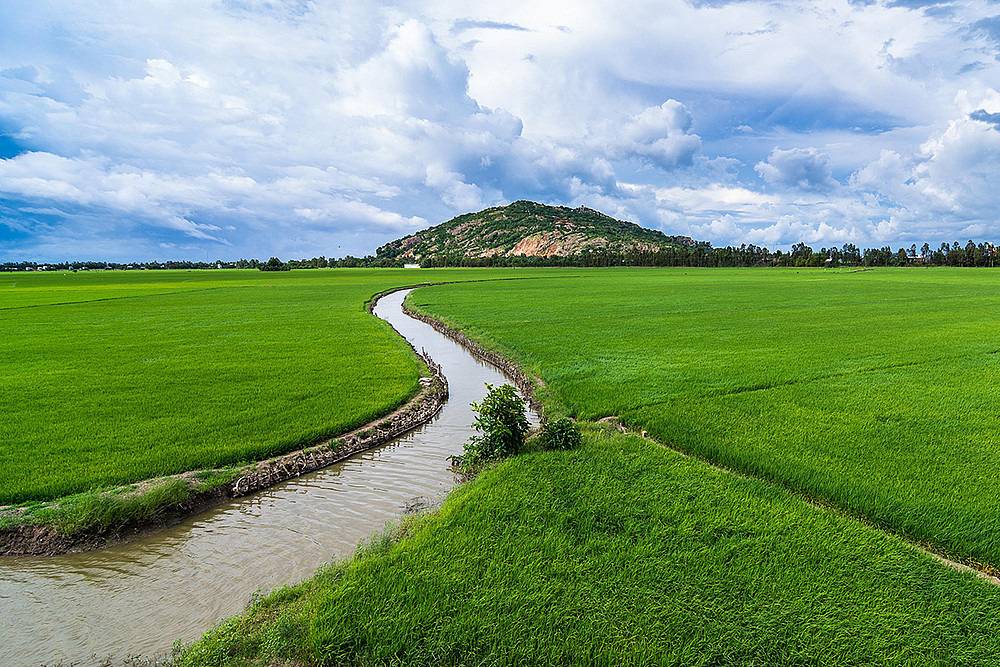
A behavioural experiment has shown: If the scarce resource of water is distributed fairly in a group, the actors cooperate more and are better able to cope with drought. Photo: pixabay

A behavioural experiment has shown: If the scarce resource of water is distributed fairly in a group, the actors cooperate more and are better able to cope with drought. Photo: pixabay

Privileged play crucial role in successful adaptation to changing environmental conditions

Private jets, luxury yachts, expensive cars - worldwide, 0.5 per cent of the richest people cause more CO2 emissions than 50 per cent of the poorest and consume disproportionately more resources in the process. If the privileged were to cut back a little in the interest of a fairer distribution, society as a whole could deal better with climate change. This is suggested by findings from a behavioural experiment. Ilona M. Otto, a resource economist at the University of Graz, analysed the results together with international colleagues.

The experiment was conducted in the form of a game. The participants were farmers and students from the Chinese region of Hangzhou. The game simulated a small irrigation system with five parties along a canal. The challenge was to cope as best as possible with increasing drought. "The experiment shows that a fair distribution of resources is crucial for successfully adapting to changing environmental conditions, and that it is in the hands of the privileged actors to ensure this fair distribution," Ilona M. Otto summarises the results.

Several groups of five actors took part in the social simulations. These five had cultivation areas along the irrigation canal. The position was decided by lot. Those at the top of the canal were privileged because they were the first to take as much water as they wanted, those further down had to take what was left. In the first round of the game, participants had the option to invest financially in the maintenance of the canal. The more money everyone paid in together, the more water was available in total. In the second round, weather uncertainties came into play, so higher investments did not necessarily guarantee more water. As time went on, the drought increased. In the third round, the players could choose adaptation measures to optimise resource use: either buy a pump together, which required at least three players, or each invest in a weather service separately.

"Cooperative groups, i.e. those in which the players invested together and took care of each other, were much better able to adapt to the drought than less cooperative groups," reports Ilona M. Otto. What is particularly interesting is that it was the privileged actors who had a decisive influence on the group dynamics. "If those at the top of the canal took less water and thus distributed resources more fairly, all parties were more cooperative because they trusted each other more," adds the researcher.

Even if this finding from the experiment cannot be automatically transferred to other situations, it makes social dynamics visible and shows that justice can be an important driver for collective efforts to tackle climate change. "Making privileged resource users aware of their crucial role in fostering cooperation seems to be a sensible step to increase the chances of successful adaptation of society as a whole," say the authors of the recently published study.

Publication
Cooperation Enhances Adaptation to Environmental Uncertainty: Evidence from Irrigation Behavioral Experiments in South China
Sebastian Heinz; Ilona M. Otto; Rong Tan; Yingyi Jin; Thilo Glebe
Water, 2022-03, DOI: 10.3390/w14071098


created by Gudrun Pichler

Related news

Record of reported species: Styria wins the global City Nature Challenge

Observers in Styria recorded 4,660 different animals, plants and fungi as part of the international City Nature Challenge between 24 and 27 April 2026. This saw the region take first place in the "species" category. Ostrava in the Czech Republic made the most observations, with just under 140,000, whilst the San Francisco Bay Area had the highest number of participants, namely 3,019.

Studying at the University of Graz: How to enrol

Ready for a new chapter in your life with the start of your studies at the University of Graz in the winter semester 2026/27? Here you will find information on deadlines, admission procedures, registration, and everything else you need to successfully start your studies in the fall.

Europe Day: Strengthening international expertise with Arqus

On 9 May, the spotlight will be on Europe. At the University of Graz, European cooperation is also a tangible part of everyday student life – not least through the Arqus university alliance. Master’s and PhD students can currently register for the Arqus micro-credential in ‘Advanced Creative Thinking and Communication’.

A substantial community: the key role of soil crusts in the earth system

They are often overshadowed by the plant world: lichens, fungi, mosses and bacteria, which form unique communities on rocks and trees or as soil crusts. Bettina Weber from the University of Graz is bringing this biological alliance into the research spotlight. Her research shows that these communities form an essential part of the Earth’s critical zone and play a key role in the interactions between land and atmosphere. Bettina Weber was honoured by the European Geosciences Union for her groundbreaking research at the beginning of May.

Begin of page section:
Additional information:

University of Graz
Universitaetsplatz 3
8010 Graz
Austria
  • Contact
  • Web Editors
  • Moodle
  • UNIGRAZonline
  • Imprint
  • Data Protection Declaration
  • Accessibility Declaration
Weatherstation
Uni Graz

End of this page section. Go to overview of page sections

End of this page section. Go to overview of page sections

Begin of page section:

End of this page section. Go to overview of page sections

