Begin of page section:
Page sections:

  • Go to contents (Accesskey 1)
  • Go to position marker (Accesskey 2)
  • Go to main navigation (Accesskey 3)
  • Go to sub navigation (Accesskey 4)
  • Go to additional information (Accesskey 5)
  • Go to page settings (user/language) (Accesskey 8)
  • Go to search (Accesskey 9)

End of this page section. Go to overview of page sections

Begin of page section:
Page settings:

English en
Deutsch de
Search
Login

End of this page section. Go to overview of page sections

Begin of page section:
Search:

Search for details about Uni Graz
Close

End of this page section. Go to overview of page sections


Search

Begin of page section:
Main navigation:

Page navigation:

  • University

    University
    • About the University
    • Organisation
    • Faculties
    • Library
    • Working at University of Graz
    • Campus
    Developing solutions for the world of tomorrow - that is our mission. Our students and our researchers take on the great challenges of society and carry the knowledge out.
  • Research Profile

    Research Profile
    • Our Expertise
    • Research Questions
    • Research Portal
    • Promoting Research
    • Research Transfer
    • Ethics in Research
    Scientific excellence and the courage to break new ground. Research at the University of Graz creates the foundations for making the future worth living.
  • Studies

    Studies
    • Prospective Students
    • Students
  • Community

    Community
    • International
    • Location
    • Research and Business
    • Alumni
    The University of Graz is a hub for international research and brings together scientists and business experts. Moreover, it fosters the exchange and cooperation in study and teaching.
  • Spotlight
Topics
  • Our digital Advent calendar
  • Sustainable University
  • Researchers answer
  • Work for us
Close menu

End of this page section. Go to overview of page sections

Begin of page section:
You are here:

University of Graz News Resource scarcity

End of this page section. Go to overview of page sections

Friday, 03 June 2022

Resource scarcity

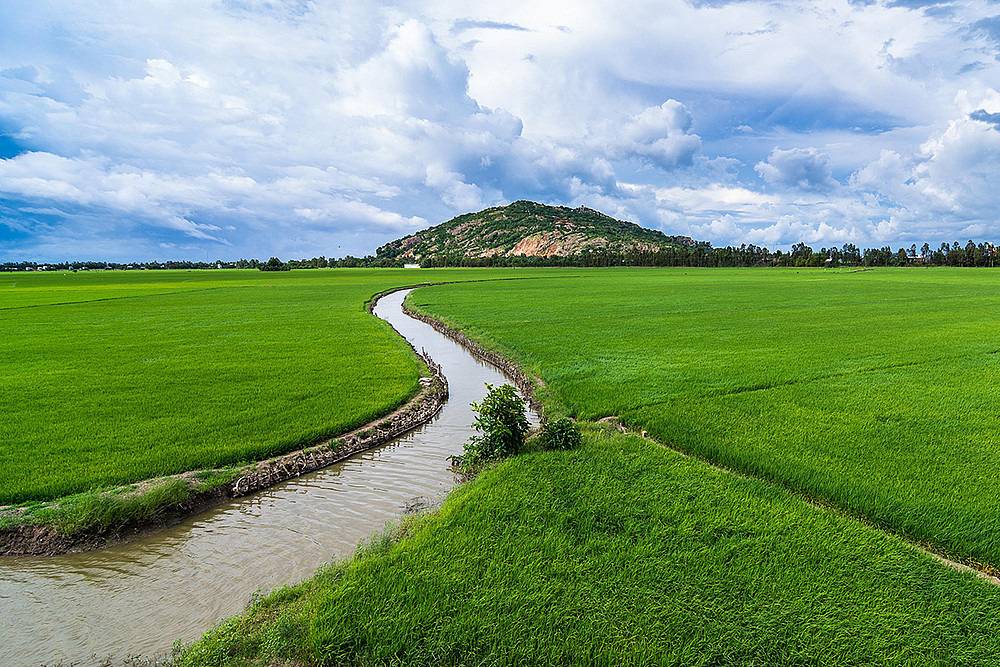
A behavioural experiment has shown: If the scarce resource of water is distributed fairly in a group, the actors cooperate more and are better able to cope with drought. Photo: pixabay

A behavioural experiment has shown: If the scarce resource of water is distributed fairly in a group, the actors cooperate more and are better able to cope with drought. Photo: pixabay

Privileged play crucial role in successful adaptation to changing environmental conditions

Private jets, luxury yachts, expensive cars - worldwide, 0.5 per cent of the richest people cause more CO2 emissions than 50 per cent of the poorest and consume disproportionately more resources in the process. If the privileged were to cut back a little in the interest of a fairer distribution, society as a whole could deal better with climate change. This is suggested by findings from a behavioural experiment. Ilona M. Otto, a resource economist at the University of Graz, analysed the results together with international colleagues.

The experiment was conducted in the form of a game. The participants were farmers and students from the Chinese region of Hangzhou. The game simulated a small irrigation system with five parties along a canal. The challenge was to cope as best as possible with increasing drought. "The experiment shows that a fair distribution of resources is crucial for successfully adapting to changing environmental conditions, and that it is in the hands of the privileged actors to ensure this fair distribution," Ilona M. Otto summarises the results.

Several groups of five actors took part in the social simulations. These five had cultivation areas along the irrigation canal. The position was decided by lot. Those at the top of the canal were privileged because they were the first to take as much water as they wanted, those further down had to take what was left. In the first round of the game, participants had the option to invest financially in the maintenance of the canal. The more money everyone paid in together, the more water was available in total. In the second round, weather uncertainties came into play, so higher investments did not necessarily guarantee more water. As time went on, the drought increased. In the third round, the players could choose adaptation measures to optimise resource use: either buy a pump together, which required at least three players, or each invest in a weather service separately.

"Cooperative groups, i.e. those in which the players invested together and took care of each other, were much better able to adapt to the drought than less cooperative groups," reports Ilona M. Otto. What is particularly interesting is that it was the privileged actors who had a decisive influence on the group dynamics. "If those at the top of the canal took less water and thus distributed resources more fairly, all parties were more cooperative because they trusted each other more," adds the researcher.

Even if this finding from the experiment cannot be automatically transferred to other situations, it makes social dynamics visible and shows that justice can be an important driver for collective efforts to tackle climate change. "Making privileged resource users aware of their crucial role in fostering cooperation seems to be a sensible step to increase the chances of successful adaptation of society as a whole," say the authors of the recently published study.

Publication
Cooperation Enhances Adaptation to Environmental Uncertainty: Evidence from Irrigation Behavioral Experiments in South China
Sebastian Heinz; Ilona M. Otto; Rong Tan; Yingyi Jin; Thilo Glebe
Water, 2022-03, DOI: 10.3390/w14071098

created by Gudrun Pichler

Related news

Semester abroad without barriers: University of Graz wins award for promoting inclusion

The University of Graz has been awarded the Internationalization Award for its new inclusion initiative. Students with fewer opportunities now also receive financial support for their semester abroad outside Europe.

Fair distribution: Researchers determine just greenhouse gas budgets for all EU regions

Ten years ago, on 12 December 2015, the Paris Climate Agreement was signed at the UN Climate Conference. In order to limit global warming to well below two degrees, only a certain amount of CO2 may be emitted worldwide. While the focus was originally on national emission targets, more than 200 subnational regions and almost 300 cities have now adopted their own targets. But how many emissions are they fairly entitled to? Researchers at the University of Graz have now developed transparent criteria for fair distribution at the subnational level for the first time and determined corresponding greenhouse gas budgets for all European regions. The paper was published today in the scientific journal Nature Communications.

Chemical Christmas show at the University of Graz: An explosive evening at the Schauspielh

At the beginning of December, the University of Graz transformed the theater into a laboratory: as part of “Chemical Life,” teacher training students staged a chemical Christmas show for Styrian school classes—complete with ethanol rockets, nitrogen snow, and glowing effects. An evening designed to inspire interest in studying chemistry.

Train by train: Koralm railway accelerates exchange between the Universities

Lectures at the University of Klagenfurt in the morning, seminars at the University of Graz in the afternoon: Austria's longest tunnel and a journey time of around 45 minutes make it easy. The Koralm railway increases the speed of networking between the two university locations. The collaboration builds on existing cooperation - for example in the areas of teacher training, Slavic studies and as employers, the universities are well coordinated.

Begin of page section:
Additional information:

University of Graz
Universitaetsplatz 3
8010 Graz
Austria
  • Contact
  • Web Editors
  • Moodle
  • UNIGRAZonline
  • Imprint
  • Data Protection Declaration
  • Accessibility Declaration
Weatherstation
Uni Graz

End of this page section. Go to overview of page sections

End of this page section. Go to overview of page sections

Begin of page section:

End of this page section. Go to overview of page sections