Begin of page section:
Page sections:

  • Go to contents (Accesskey 1)
  • Go to position marker (Accesskey 2)
  • Go to main navigation (Accesskey 3)
  • Go to sub navigation (Accesskey 4)
  • Go to additional information (Accesskey 5)
  • Go to page settings (user/language) (Accesskey 8)
  • Go to search (Accesskey 9)

End of this page section. Go to overview of page sections

Begin of page section:
Page settings:

English en
Deutsch de
Search
Login

End of this page section. Go to overview of page sections

Begin of page section:
Search:

Search for details about Uni Graz
Close

End of this page section. Go to overview of page sections


Search

Begin of page section:
Main navigation:

Page navigation:

  • University

    University
    • About the University
    • Organisation
    • Faculties
    • Library
    • Working at University of Graz
    • Campus
    Developing solutions for the world of tomorrow - that is our mission. Our students and our researchers take on the great challenges of society and carry the knowledge out.
  • Research Profile

    Research Profile
    • Our Expertise
    • Research Questions
    • Research Portal
    • Promoting Research
    • Research Transfer
    • Ethics in Research
    Scientific excellence and the courage to break new ground. Research at the University of Graz creates the foundations for making the future worth living.
  • Studies

    Studies
    • Prospective Students
    • Students
  • Community

    Community
    • International
    • Location
    • Research and Business
    • Alumni
    The University of Graz is a hub for international research and brings together scientists and business experts. Moreover, it fosters the exchange and cooperation in study and teaching.
  • Spotlight
Topics
  • Our digital Advent calendar
  • Sustainable University
  • Researchers answer
  • Work for us
Close menu

End of this page section. Go to overview of page sections

Begin of page section:
You are here:

University of Graz News Gleichheit

End of this page section. Go to overview of page sections

Friday, 18 June 2021

Gleichheit

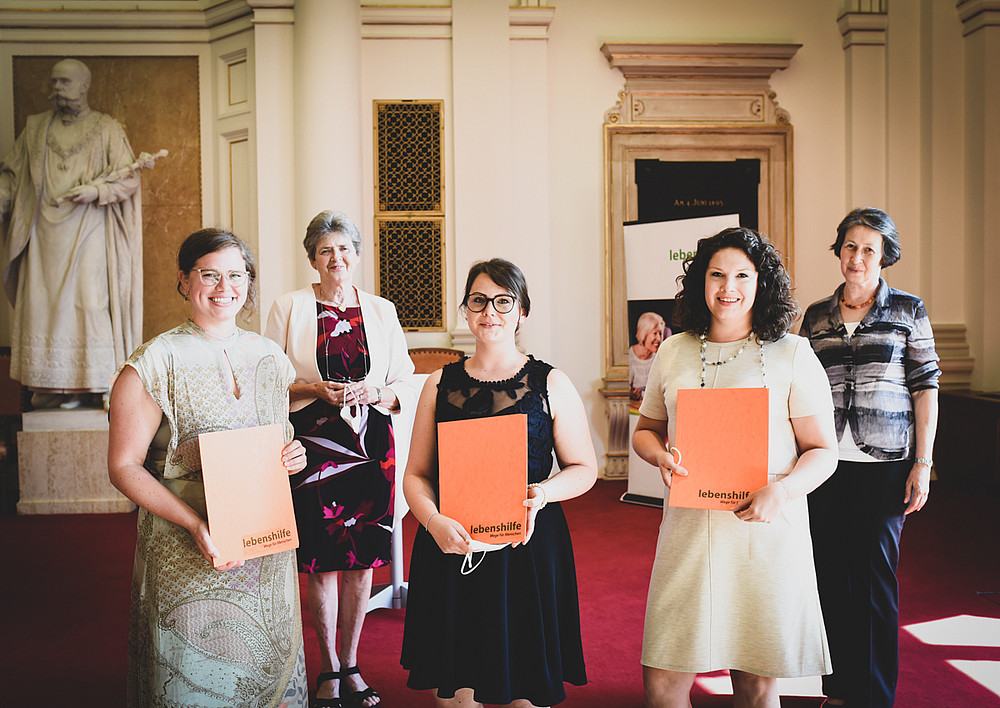
Die Preisträgerinnen Lea Hochgatterer, Caroline Breyer und Dominique Leitner (v.l.) mit Ursula Vennemann (Lebenshilfe) und Barbara Gasteiger-Klicpera (rechts) in der Aula der Uni Graz. Foto: Uni Graz/Tzivanopoulos

Die Preisträgerinnen Lea Hochgatterer, Caroline Breyer und Dominique Leitner (v.l.) mit Ursula Vennemann (Lebenshilfe) und Barbara Gasteiger-Klicpera (rechts) in der Aula der Uni Graz. Foto: Uni Graz/Tzivanopoulos

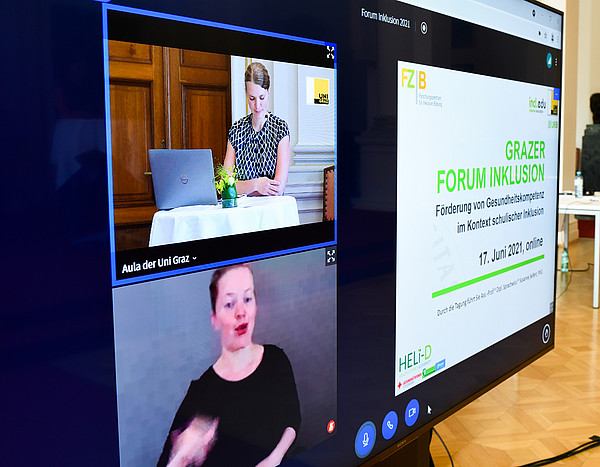
Universität Graz lud zum „Forum Inklusion“. Schwerpunktthema der hybriden Tagung war Gesundheitskompetenz von SchülerInnen

Viele Jugendliche suchen sich täglich im Internet Informationen zu allen Themen, die sie bewegen. So ist auch „Dr. Google“ für sie die erste Anlaufstelle bei Gesundheitsfragen. Doch wie anfällig ist die Jugend für Fake News und Fake Facts? Glauben sie alles, was in Gesundheitsforen und in Sozialen Netzwerken steht?

An der Universität Graz versucht ein Team von BildungswissenschafterInnen dem Trend, Falschinformationen im Internet zu verbreiten, entgegenzuwirken. Sie haben das Projekt „Health-Literacy und Diversity für SchülerInnen der Sekundarstufe I“ – kurz „HeLi D“ – ins Leben gerufen. Die ForscherInnen haben in Workshops an Schulen erhoben, welche Gesundheitsthemen für SchülerInnen der Sekundarstufe relevant sind und diese Daten in einem adaptiven Programm auf Open-Access-Basis. Das Programm wurde nun im Rahmen der jährlichen Tagung „Grazer Forum Inklusion“ am 17. Juni in der Aula der Uni Graz vorgestellt. Veranstaltet wurde die Konferenz, die teils in Präsenz und teils online für die rund 70 TeilnehmerInnen über die Bühne ging, vom Arbeitsbereich Inklusive Bildung und Heilpädagogische Psychologie vom Institut für Bildungsforschung und PädagogInnenbildung.

„In HeLi D geht es um die Förderung von Gesundheitskompetenz für Schülerinnen und Schüler der sechsten und siebten Schulstufe anhand von Geschichten zu fünf gesundheitlich relevanten Themen, wie zum Beispiel Verletzungen oder das Immunsystem. Das Programm fördert die kritische Informationskompetenz der Schülerinnen und Schüler durch Rechercheaufgaben im Internet und es arbeitet inhaltlich adaptiv, das heißt, es passt die Komplexität der Texte und der Informationen an die Lesekompetenz der Lernenden an“, erklärt Bildungsforscherin Barbara Gasteiger-Klicpera die Funktionsweise von „HeLi D“. Es ist ab sofort über die Webseite https://heli-d.uni-graz.at erreichbar.

Lebenshilfe Forschungspreis für Inklusion
Ein besonderes Highlight an diesem Tag stellte auch wieder die Verleihung der Lebenshilfe Forschungspreise dar. Dabei wurden hervorragende wissenschaftliche Abschlussarbeiten prämiert, mit denen ein wesentlicher Beitrag zur Forschung und Weiterentwicklung von Inklusion geleistet wurde. Seit 2018 werden sie durch die Lebenshilfe Graz und Umgebung Voitsberg gestiftet.

PreisträgerInnen 2021:
Der erste Platz – dotiert mit 1500 Euro – wurde heuer gleich zwei Mal vergeben: Lea Hochgatterer bekam ihn für ihre Arbeit „Lebenswelten im Kontext von Migration, Flucht und Behinderung: multiperspektivische Erfassung der Familienstrukturen und sozialen Unterstützung anhand eines Good-Practice Beispiels“. Dominique Leitner bekam die Auszeichnung für ihre Abschlussarbeit „Inklusive Wohngemeinschaften: eine Analyse am Beispiel von alpha nova“. Platz zwei ging an Caroline Breyer, die mit ihrer Dissertation „Inklusion und Schulassistenz: Professionalisierung unter Berücksichtigung individueller Faktoren“ einen besonderen Einblick in das Thema gegeben hat. Sie erhielt 1000 Euro Preisgeld.


Mehr zu "HeLi D" in der UNIZEIT 03/2020 
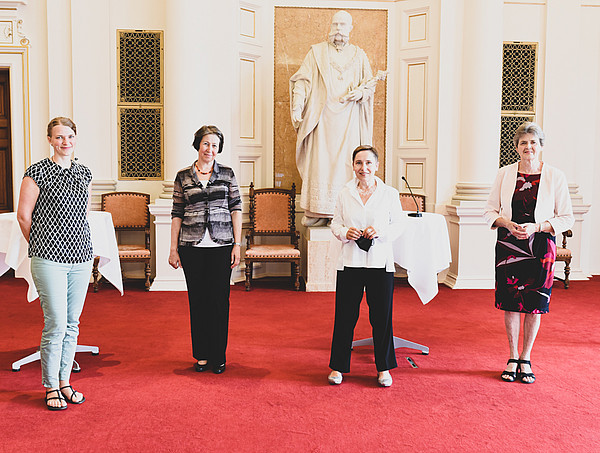
Digitalisierungs-Vizerektorin Petra Schaper-Rinkel (2. von rechts) eröffnete die hybride Tagung. Susanne Seifert (links) moderierte die Veranstaltung live.
created by Konstantin Tzivanopoulos

Related news

Semester abroad without barriers: University of Graz wins award for promoting inclusion

The University of Graz has been awarded the Internationalization Award for its new inclusion initiative. Students with fewer opportunities now also receive financial support for their semester abroad outside Europe.

Fair distribution: Researchers determine just greenhouse gas budgets for all EU regions

Ten years ago, on 12 December 2015, the Paris Climate Agreement was signed at the UN Climate Conference. In order to limit global warming to well below two degrees, only a certain amount of CO2 may be emitted worldwide. While the focus was originally on national emission targets, more than 200 subnational regions and almost 300 cities have now adopted their own targets. But how many emissions are they fairly entitled to? Researchers at the University of Graz have now developed transparent criteria for fair distribution at the subnational level for the first time and determined corresponding greenhouse gas budgets for all European regions. The paper was published today in the scientific journal Nature Communications.

Chemical Christmas show at the University of Graz: An explosive evening at the Schauspielh

At the beginning of December, the University of Graz transformed the theater into a laboratory: as part of “Chemical Life,” teacher training students staged a chemical Christmas show for Styrian school classes—complete with ethanol rockets, nitrogen snow, and glowing effects. An evening designed to inspire interest in studying chemistry.

Train by train: Koralm railway accelerates exchange between the Universities

Lectures at the University of Klagenfurt in the morning, seminars at the University of Graz in the afternoon: Austria's longest tunnel and a journey time of around 45 minutes make it easy. The Koralm railway increases the speed of networking between the two university locations. The collaboration builds on existing cooperation - for example in the areas of teacher training, Slavic studies and as employers, the universities are well coordinated.

Begin of page section:
Additional information:

University of Graz
Universitaetsplatz 3
8010 Graz
Austria
  • Contact
  • Web Editors
  • Moodle
  • UNIGRAZonline
  • Imprint
  • Data Protection Declaration
  • Accessibility Declaration
Weatherstation
Uni Graz

End of this page section. Go to overview of page sections

End of this page section. Go to overview of page sections

Begin of page section:

End of this page section. Go to overview of page sections