Begin of page section:
Page sections:

  • Go to contents (Accesskey 1)
  • Go to position marker (Accesskey 2)
  • Go to main navigation (Accesskey 3)
  • Go to sub navigation (Accesskey 4)
  • Go to additional information (Accesskey 5)
  • Go to page settings (user/language) (Accesskey 8)
  • Go to search (Accesskey 9)

End of this page section. Go to overview of page sections

Begin of page section:
Page settings:

English en
Deutsch de
Search
Login

End of this page section. Go to overview of page sections

Begin of page section:
Search:

Search for details about Uni Graz
Close

End of this page section. Go to overview of page sections


Search

Begin of page section:
Main navigation:

Page navigation:

  • University

    University
    • About the University
    • Organisation
    • Faculties
    • Library
    • Working at University of Graz
    • Campus
    Developing solutions for the world of tomorrow - that is our mission. Our students and our researchers take on the great challenges of society and carry the knowledge out.
  • Research Profile

    Research Profile
    • Our Expertise
    • Research Questions
    • Research Portal
    • Promoting Research
    • Research Transfer
    • Ethics in Research
    • Commission for Scientific Integrity
    Scientific excellence and the courage to break new ground. Research at the University of Graz creates the foundations for making the future worth living.
  • Studies

    Studies
    • Prospective Students
    • Students
    • Post-registration Law
  • Community

    Community
    • International
    • Location
    • Research and Business
    • Alumni
    The University of Graz is a hub for international research and brings together scientists and business experts. Moreover, it fosters the exchange and cooperation in study and teaching.
Topics
  • Sustainable University
  • Researchers answer
  • Work for us
Close menu

End of this page section. Go to overview of page sections

Begin of page section:
You are here:

University of Graz News Gleichheit

End of this page section. Go to overview of page sections

Friday, 18 June 2021

Gleichheit

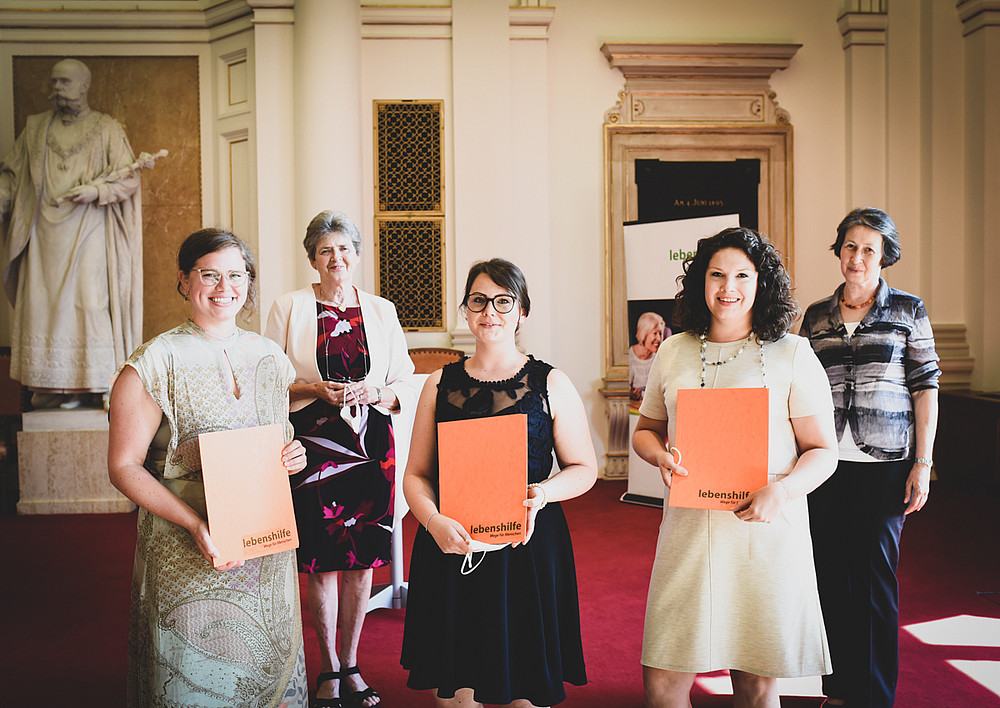
Die Preisträgerinnen Lea Hochgatterer, Caroline Breyer und Dominique Leitner (v.l.) mit Ursula Vennemann (Lebenshilfe) und Barbara Gasteiger-Klicpera (rechts) in der Aula der Uni Graz. Foto: Uni Graz/Tzivanopoulos

Die Preisträgerinnen Lea Hochgatterer, Caroline Breyer und Dominique Leitner (v.l.) mit Ursula Vennemann (Lebenshilfe) und Barbara Gasteiger-Klicpera (rechts) in der Aula der Uni Graz. Foto: Uni Graz/Tzivanopoulos

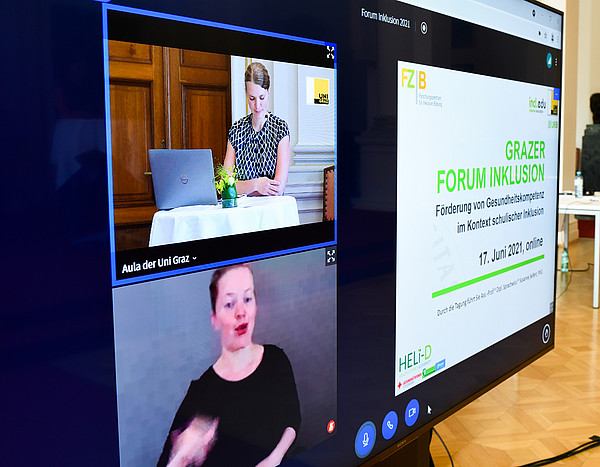
Universität Graz lud zum „Forum Inklusion“. Schwerpunktthema der hybriden Tagung war Gesundheitskompetenz von SchülerInnen

Viele Jugendliche suchen sich täglich im Internet Informationen zu allen Themen, die sie bewegen. So ist auch „Dr. Google“ für sie die erste Anlaufstelle bei Gesundheitsfragen. Doch wie anfällig ist die Jugend für Fake News und Fake Facts? Glauben sie alles, was in Gesundheitsforen und in Sozialen Netzwerken steht?

An der Universität Graz versucht ein Team von BildungswissenschafterInnen dem Trend, Falschinformationen im Internet zu verbreiten, entgegenzuwirken. Sie haben das Projekt „Health-Literacy und Diversity für SchülerInnen der Sekundarstufe I“ – kurz „HeLi D“ – ins Leben gerufen. Die ForscherInnen haben in Workshops an Schulen erhoben, welche Gesundheitsthemen für SchülerInnen der Sekundarstufe relevant sind und diese Daten in einem adaptiven Programm auf Open-Access-Basis. Das Programm wurde nun im Rahmen der jährlichen Tagung „Grazer Forum Inklusion“ am 17. Juni in der Aula der Uni Graz vorgestellt. Veranstaltet wurde die Konferenz, die teils in Präsenz und teils online für die rund 70 TeilnehmerInnen über die Bühne ging, vom Arbeitsbereich Inklusive Bildung und Heilpädagogische Psychologie vom Institut für Bildungsforschung und PädagogInnenbildung.

„In HeLi D geht es um die Förderung von Gesundheitskompetenz für Schülerinnen und Schüler der sechsten und siebten Schulstufe anhand von Geschichten zu fünf gesundheitlich relevanten Themen, wie zum Beispiel Verletzungen oder das Immunsystem. Das Programm fördert die kritische Informationskompetenz der Schülerinnen und Schüler durch Rechercheaufgaben im Internet und es arbeitet inhaltlich adaptiv, das heißt, es passt die Komplexität der Texte und der Informationen an die Lesekompetenz der Lernenden an“, erklärt Bildungsforscherin Barbara Gasteiger-Klicpera die Funktionsweise von „HeLi D“. Es ist ab sofort über die Webseite https://heli-d.uni-graz.at erreichbar.

Lebenshilfe Forschungspreis für Inklusion
Ein besonderes Highlight an diesem Tag stellte auch wieder die Verleihung der Lebenshilfe Forschungspreise dar. Dabei wurden hervorragende wissenschaftliche Abschlussarbeiten prämiert, mit denen ein wesentlicher Beitrag zur Forschung und Weiterentwicklung von Inklusion geleistet wurde. Seit 2018 werden sie durch die Lebenshilfe Graz und Umgebung Voitsberg gestiftet.

PreisträgerInnen 2021:
Der erste Platz – dotiert mit 1500 Euro – wurde heuer gleich zwei Mal vergeben: Lea Hochgatterer bekam ihn für ihre Arbeit „Lebenswelten im Kontext von Migration, Flucht und Behinderung: multiperspektivische Erfassung der Familienstrukturen und sozialen Unterstützung anhand eines Good-Practice Beispiels“. Dominique Leitner bekam die Auszeichnung für ihre Abschlussarbeit „Inklusive Wohngemeinschaften: eine Analyse am Beispiel von alpha nova“. Platz zwei ging an Caroline Breyer, die mit ihrer Dissertation „Inklusion und Schulassistenz: Professionalisierung unter Berücksichtigung individueller Faktoren“ einen besonderen Einblick in das Thema gegeben hat. Sie erhielt 1000 Euro Preisgeld.


Mehr zu "HeLi D" in der UNIZEIT 03/2020 
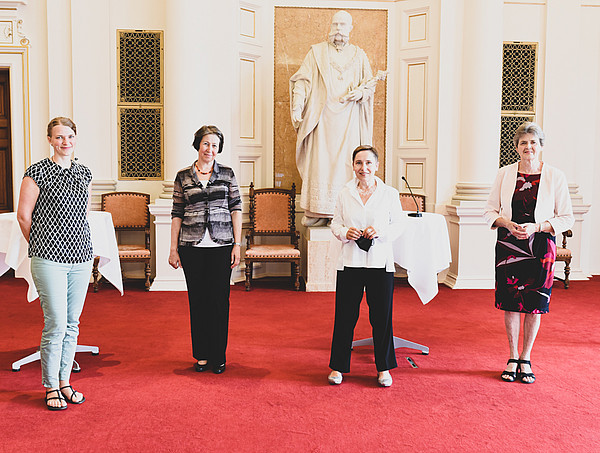
Digitalisierungs-Vizerektorin Petra Schaper-Rinkel (2. von rechts) eröffnete die hybride Tagung. Susanne Seifert (links) moderierte die Veranstaltung live.
created by Konstantin Tzivanopoulos

Related news

Studying at the University of Graz: How to enrol

Ready for a new chapter in your life with the start of your studies at the University of Graz in the winter semester 2026/27? Here you will find information on deadlines, admission procedures, registration, and everything else you need to successfully start your studies in the fall.

Europe Day: Strengthening international expertise with Arqus

On 9 May, the spotlight will be on Europe. At the University of Graz, European cooperation is also a tangible part of everyday student life – not least through the Arqus university alliance. Master’s and PhD students can currently register for the Arqus micro-credential in ‘Advanced Creative Thinking and Communication’.

A substantial community: the key role of soil crusts in the earth system

They are often overshadowed by the plant world: lichens, fungi, mosses and bacteria, which form unique communities on rocks and trees or as soil crusts. Bettina Weber from the University of Graz is bringing this biological alliance into the research spotlight. Her research shows that these communities form an essential part of the Earth’s critical zone and play a key role in the interactions between land and atmosphere. Bettina Weber was honoured by the European Geosciences Union for her groundbreaking research at the beginning of May.

The digital world of tomorrow: University of Graz works with people to shape the future

Digitalisation is supposed to make everything better: artificial intelligence that even organises travel. The car that drives itself. Robots that care for us in our old age. But what kind of future do people actually want? What role should technology play in this? The University of Graz is exploring these questions through a new research facility. At the Graz Sociodigital and Participatory Futures Studio – or GraSP Futures Studio for short – young and old work together with researchers to design visions of the future that also critically examine technical innovations.

Begin of page section:
Additional information:

University of Graz
Universitaetsplatz 3
8010 Graz
Austria
  • Contact
  • Web Editors
  • Moodle
  • UNIGRAZonline
  • Imprint
  • Data Protection Declaration
  • Accessibility Declaration
Weatherstation
Uni Graz

End of this page section. Go to overview of page sections

End of this page section. Go to overview of page sections

Begin of page section:

End of this page section. Go to overview of page sections