



Begin of page section:
Page sections:

  • Go to contents (Accesskey 1)
  • Go to position marker (Accesskey 2)
  • Go to main navigation (Accesskey 3)
  • Go to sub navigation (Accesskey 4)
  • Go to additional information (Accesskey 5)
  • Go to page settings (user/language) (Accesskey 8)
  • Go to search (Accesskey 9)

End of this page section. Go to overview of page sections

Begin of page section:
Page settings:

English en
Deutsch de
Search
Login

End of this page section. Go to overview of page sections

Begin of page section:
Search:

Search for details about Uni Graz
Close

End of this page section. Go to overview of page sections


Search

Begin of page section:
Main navigation:

Page navigation:

  • University

    University
    • About the University
    • Organisation
    • Faculties
    • Library
    • Working at University of Graz
    • Campus
    Developing solutions for the world of tomorrow - that is our mission. Our students and our researchers take on the great challenges of society and carry the knowledge out.
  • Research Profile

    Research Profile
    • Our Expertise
    • Research Questions
    • Research Portal
    • Promoting Research
    • Research Transfer
    • Ethics in Research
    • Commission for Scientific Integrity
    Scientific excellence and the courage to break new ground. Research at the University of Graz creates the foundations for making the future worth living.
  • Studies

    Studies
    • Prospective Students
    • Students
  • Community

    Community
    • International
    • Location
    • Research and Business
    • Alumni
    The University of Graz is a hub for international research and brings together scientists and business experts. Moreover, it fosters the exchange and cooperation in study and teaching.
  • Spotlight
Topics
  • Sustainable University
  • Researchers answer
  • Work for us
Close menu

End of this page section. Go to overview of page sections

Begin of page section:
You are here:

University of Graz News Geld und Glaube

End of this page section. Go to overview of page sections

Thursday, 20 March 2014

Geld und Glaube

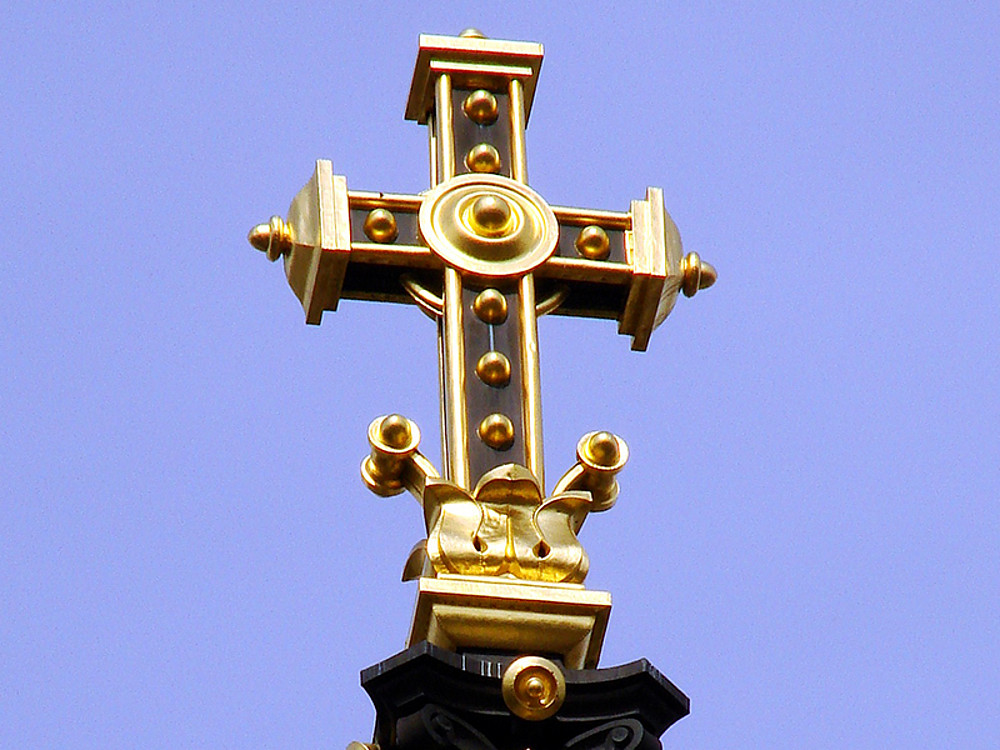
Unterschiedliche historische Entwicklungen führten in Europa zu verschiedenen Formen der Kirchenfinanzierung. Foto: Thomas Max Müller/pixelio.de

Unterschiedliche historische Entwicklungen führten in Europa zu verschiedenen Formen der Kirchenfinanzierung. Foto: Thomas Max Müller/pixelio.de

Theologe der Uni Graz präsentiert verschiedene Modelle der Kirchenfinanzierung in Europa

Die Bewahrung des kulturellen Erbes ist allen Ländern Europas ein wichtiges Anliegen. Kirchen und Religionsgemeinschaften spielen in diesem Zusammenhang eine zentrale Rolle. Bei der Kirchenfinanzierung setzen die Staaten auf ganz unterschiedliche Modelle. Der viel diskutierte österreichische Kirchenbeitrag ist nur eines davon. Ein neues Buch, herausgegeben von Ao.Univ.-Prof. Dr. Rudolf K. Höfer, Theologe an der Uni Graz, stellt verschiedene Varianten und Möglichkeiten vor dem Hintergrund historischer und aktueller Entwicklungen vor.


In Österreich heben die Kirchen selbst von ihren Mitgliedern Beiträge ein. Das entsprechende Gesetz wurde 1939 nach dem Anschluss an Hitler-Deutschland erlassen. Unterschiedliche historische Entwicklungen führten in Europa zu verschiedenen Formen der Kirchenfinanzierung. Sie werden in einem neuen Buch vorgestellt und mit Blick auf gegenwärtige gesellschaftliche Entwicklungen diskutiert. „Neun AutorInnen beschreiben die Kirchenfinanzierung in ausgewählten europäischen Ländern und prüfen, ob das jeweilige Modell noch tragfähig ist oder Änderungen braucht“, fasst Herausgeber Rudolf K. Höfer vom Institut für Kirchengeschichte und kirchliche Zeitgeschichte der Karl-Franzens-Universität Graz die Inhalte zusammen.


Die Modelle reichen von einer ausschließlich staatlichen Finanzierung in Belgien über die vom Staat eingehobene Kirchensteuer in Schweden, Norwegen, Finnland, Dänemark und Deutschland bis zu der Variante, dass alle BürgerInnen einen Steueranteil einer religiösen, kulturellen oder sozialen Institution ihrer Wahl widmen können. Letzteres ist in Spanien, Italien und Ungarn der Fall. In Liechtenstein steht dieses Modell vor der Einführung. In Frankreich und Slowenien dominieren private Spenden, in England finanziert sich die Kirche überwiegend aus eigenem Vermögen.

Die meisten Länder fördern Spenden an Kirchen durch steuerliche Absetzbarkeit, um diese Organisationen, die im kulturellen und sozialen Bereich wertvolle Beiträge für die Gesellschaft leisten, zu unterstützen.

„Kardinal Christoph Schönborn hatte 2012 eine Diskussion über die Kirchenfinanzierungsmodelle begrüßt. Das vorliegende Buch will dazu einen Beitrag liefern“, unterstreicht Rudolf K. Höfer.


Rudolf K. Höfer (Hg.), Kirchenfinanzierung in Europa. Modelle und Trends, Theologie im kulturellen Dialog 25, Tyrolia Innsbruck 2014
created by Gudrun Pichler

Related news

Higher Education Strategy 2040: Austria’s universities on course for the future

Austria has 77 higher education institutions, which is above the EU average – but does this really make sense? The new Higher Education Strategy 2040 focuses on cooperation rather than mergers. As one of the six largest universities in Austria, the University of Graz plays a central role in this.

Climate research in Greenland: Old data provides new insights

The polar explorer and University of Graz professor Alfred Wegener left behind a unique collection of climate data from Greenland. A research team from the University of Graz is now analysing this 100-year-old treasure trove of data and comparing it with current measurements.

Diversity in nature and science: How we talk about plants and each other

Ginkgo, kiwi, hemp: they exist as male and female plants. Anyone who paid attention in biology class will confirm this. But is this categorisation, established by Carl von Linné almost 300 years ago, still valid today? An interdisciplinary team at the University of Graz is questioning these attributions and using this as a starting point to provide food for thought for gender-sensitive interaction between students, scientific and teaching staff.

Around the world in eight stops: the Long Night of Research at the University of Graz

On 24 April from 5 pm, you can take a short trip around the globe at the University of Graz, discovering pecularities of foreign countries or new local features in the entrance hall of the University Library. The itinerary takes you through introduced animal species, political attitudes and the omnipotence of algorithms. There will also be a programme in the historic reading hall, as well as at the UniGraz@Museum and the University Archive.

Begin of page section:
Additional information:

University of Graz
Universitaetsplatz 3
8010 Graz
Austria
  • Contact
  • Web Editors
  • Moodle
  • UNIGRAZonline
  • Imprint
  • Data Protection Declaration
  • Accessibility Declaration
Weatherstation
Uni Graz

End of this page section. Go to overview of page sections

End of this page section. Go to overview of page sections

Begin of page section:

End of this page section. Go to overview of page sections

