Begin of page section:
Page sections:

  • Go to contents (Accesskey 1)
  • Go to position marker (Accesskey 2)
  • Go to main navigation (Accesskey 3)
  • Go to sub navigation (Accesskey 4)
  • Go to additional information (Accesskey 5)
  • Go to page settings (user/language) (Accesskey 8)
  • Go to search (Accesskey 9)

End of this page section. Go to overview of page sections

Begin of page section:
Page settings:

English en
Deutsch de
Search
Login

End of this page section. Go to overview of page sections

Begin of page section:
Search:

Search for details about Uni Graz
Close

End of this page section. Go to overview of page sections


Search

Begin of page section:
Main navigation:

Page navigation:

  • University

    University
    • About the University
    • Organisation
    • Faculties
    • Library
    • Working at University of Graz
    • Campus
    Developing solutions for the world of tomorrow - that is our mission. Our students and our researchers take on the great challenges of society and carry the knowledge out.
  • Research Profile

    Research Profile
    • Our Expertise
    • Research Questions
    • Research Portal
    • Promoting Research
    • Research Transfer
    • Ethics in Research
    Scientific excellence and the courage to break new ground. Research at the University of Graz creates the foundations for making the future worth living.
  • Studies

    Studies
    • Prospective Students
    • Students
  • Community

    Community
    • International
    • Location
    • Research and Business
    • Alumni
    The University of Graz is a hub for international research and brings together scientists and business experts. Moreover, it fosters the exchange and cooperation in study and teaching.
  • Spotlight
Topics
  • Our digital Advent calendar
  • Sustainable University
  • Researchers answer
  • Work for us
Close menu

End of this page section. Go to overview of page sections

Begin of page section:
You are here:

University of Graz News Gefundenes Fressen

End of this page section. Go to overview of page sections

Friday, 28 September 2012

Gefundenes Fressen

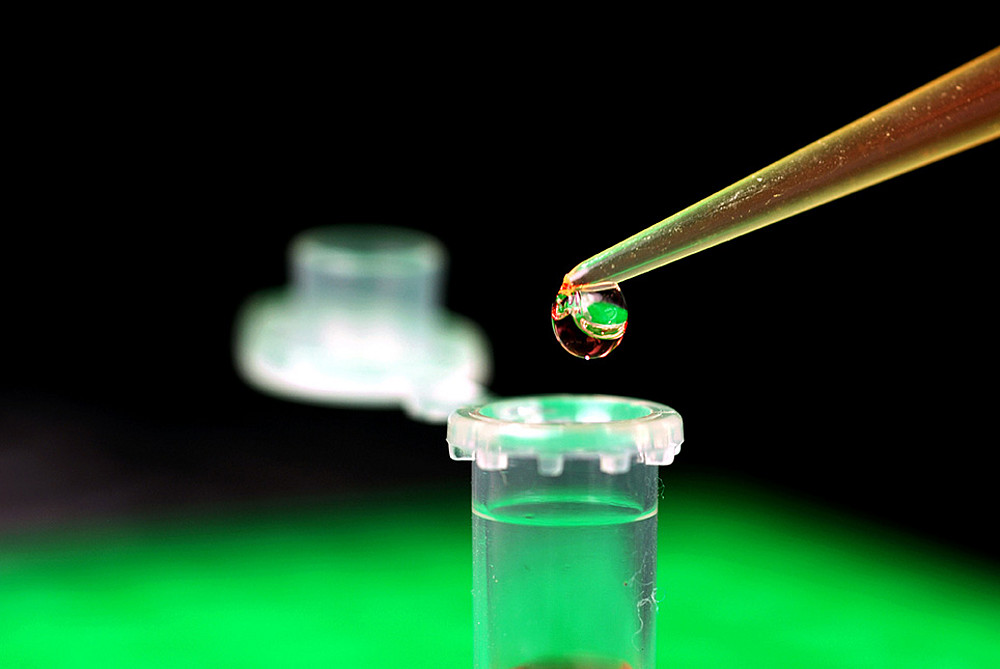
Symbolbild Forschung

Ein internationales ForscherInnen-Team entdeckte einen neuen Zusammenhang bei der Krebsentstehung. Foto: cp-pictures/Uni Graz

ForscherInnen fanden heraus, wie gestresste Krebszellen vom Immunsystem entdeckt und zerstört werden

Ein internationales Forscherteam, an dem unter anderem Frank Madeo vom Institut für Molekulare Biowissenschaften der Karl-Franzens-Universität Graz beteiligt ist, kam einem bedeutenden Zusammenhang bei der Entstehung von Krebs auf die Spur. Die ForscherInnen stellten fest, dass sich Krebszellen, die eine zu hohe Chromosomenzahl aufweisen, gewissermaßen selbst zu erkennen geben und daraufhin vom Immunsystem liquidiert werden. Die aufschlussreiche Entdeckung wurde in der aktuellen Ausgabe des Fachmagazins „Science“ publiziert.


„Abnormale Chromosomenzahlen können durch Fehler in der Zellteilung entstehen und durch Altern oder chemischen Stress ausgelöst werden“, erklärt Madeo. Zellen mit zu vielen Chromosomen-Kopien können weitere Mutationen erwerben, mit der Folge, dass sich die Zellen ungehemmt vermehren und einen Tumor bilden.


Hat sich das Erbgut in einer Zelle vervielfacht, löst das in einer Zellorganelle, dem sogenannten Endoplasmatischen Retikulum (ER), Dauerstress aus. Das wiederum führt dazu, dass das Protein Calreticulin aus dem ER an die Zelloberfläche wandert, wo es sonst fehl am Platz ist. Für das Immunsystem ist das ein Signal, die betroffenen Zellen zu zerstören, hat das Team um Projektleiter Guido Kroemer von der Universität Paris herausgefunden.
Diesen Zusammenhang zwischen Krebszellen mit zu vielen Chromosomen-Kopien und dem Immunsystem haben die WissenschafterInnen unter anderem in Gewebeproben von 60 Brustkrebs-Patientinnen entdeckt: Bei jenen, die auf Chemotherapien gut angesprochen hatten, waren mehr T-Killerzellen – Zellen des Immunsystems, die Krebszellen zerstören können – vorhanden und die wenigen übrig gebliebenen Tumorzellen hatten kleinere Zellkerne als bei Patientinnen, bei denen nach sechs Chemotherapie-Zyklen immer noch Brustkrebs deutlich erkennbar war. Die ForscherInnen vermuten, dass in den kleineren Zellkernen weniger Chromosomen vorhanden sind.


.Bei erfolgreicher Therapie würde also eine lokale Immunantwort mit kleineren Zellkernen einhergehen, während fehlender Behandlungserfolg von einem Fehlen der Immunantwort und größeren Zellkernen begleitet wird, schreiben die Forscher. Somit scheint eine erfolgreiche Therapie mit einem intakten Immunsystem Hand in Hand zu gehen.


>> APA-Meldung

created by Gudrun Pichler

Related news

Chemical Christmas show at the University of Graz: An explosive evening at the Schauspielh

At the beginning of December, the University of Graz transformed the theater into a laboratory: as part of “Chemical Life,” teacher training students staged a chemical Christmas show for Styrian school classes—complete with ethanol rockets, nitrogen snow, and glowing effects. An evening designed to inspire interest in studying chemistry.

Train by train: Koralm railway accelerates exchange between the Universities

Lectures at the University of Klagenfurt in the morning, seminars at the University of Graz in the afternoon: Austria's longest tunnel and a journey time of around 45 minutes make it easy. The Koralm railway increases the speed of networking between the two university locations. The collaboration builds on existing cooperation - for example in the areas of teacher training, Slavic studies and as employers, the universities are well coordinated.

On the trail of the Big Bang: University of Graz receives 1.5 million euros for doctoral programmes

The Austrian Science Fund FWF has selected the Doctoral Programme in Theoretical Particle Physics at the University of Graz for funding from the Doc.funds. Six young scientists will be funded for 3.5 years. They will gain fundamentally new insights into the origins of the world.

From trans women and knee prostheses: sports science prizes awarded

Walking better with a prosthesis, successfully getting rid of excess weight, training more effectively, more fairness for trans people in sport: these were the topics addressed by the students at the University of Graz who were awarded the sports science prizes for their Master's theses on 3 December 2025.

Begin of page section:
Additional information:

University of Graz
Universitaetsplatz 3
8010 Graz
Austria
  • Contact
  • Web Editors
  • Moodle
  • UNIGRAZonline
  • Imprint
  • Data Protection Declaration
  • Accessibility Declaration
Weatherstation
Uni Graz

End of this page section. Go to overview of page sections

End of this page section. Go to overview of page sections

Begin of page section:

End of this page section. Go to overview of page sections