



Begin of page section:
Page sections:

  • Go to contents (Accesskey 1)
  • Go to position marker (Accesskey 2)
  • Go to main navigation (Accesskey 3)
  • Go to sub navigation (Accesskey 4)
  • Go to additional information (Accesskey 5)
  • Go to page settings (user/language) (Accesskey 8)
  • Go to search (Accesskey 9)

End of this page section. Go to overview of page sections

Begin of page section:
Page settings:

English en
Deutsch de
Search
Login

End of this page section. Go to overview of page sections

Begin of page section:
Search:

Search for details about Uni Graz
Close

End of this page section. Go to overview of page sections


Search

Begin of page section:
Main navigation:

Page navigation:

  • University

    University
    • About the University
    • Organisation
    • Faculties
    • Library
    • Working at University of Graz
    • Campus
    Developing solutions for the world of tomorrow - that is our mission. Our students and our researchers take on the great challenges of society and carry the knowledge out.
  • Research Profile

    Research Profile
    • Our Expertise
    • Research Questions
    • Research Portal
    • Promoting Research
    • Research Transfer
    • Ethics in Research
    • Commission for Scientific Integrity
    Scientific excellence and the courage to break new ground. Research at the University of Graz creates the foundations for making the future worth living.
  • Studies

    Studies
    • Prospective Students
    • Students
  • Community

    Community
    • International
    • Location
    • Research and Business
    • Alumni
    The University of Graz is a hub for international research and brings together scientists and business experts. Moreover, it fosters the exchange and cooperation in study and teaching.
  • Spotlight
Topics
  • Sustainable University
  • Researchers answer
  • Work for us
Close menu

End of this page section. Go to overview of page sections

Begin of page section:
You are here:

University of Graz News Gefundenes Fressen

End of this page section. Go to overview of page sections

Friday, 28 September 2012

Gefundenes Fressen

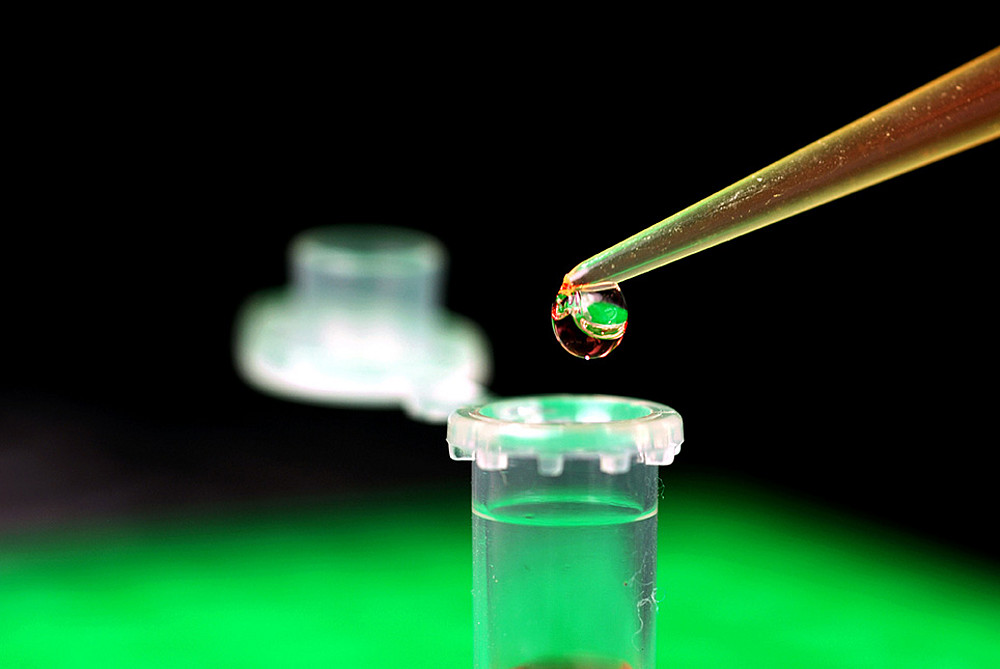
Symbolbild Forschung

Ein internationales ForscherInnen-Team entdeckte einen neuen Zusammenhang bei der Krebsentstehung. Foto: cp-pictures/Uni Graz

ForscherInnen fanden heraus, wie gestresste Krebszellen vom Immunsystem entdeckt und zerstört werden

Ein internationales Forscherteam, an dem unter anderem Frank Madeo vom Institut für Molekulare Biowissenschaften der Karl-Franzens-Universität Graz beteiligt ist, kam einem bedeutenden Zusammenhang bei der Entstehung von Krebs auf die Spur. Die ForscherInnen stellten fest, dass sich Krebszellen, die eine zu hohe Chromosomenzahl aufweisen, gewissermaßen selbst zu erkennen geben und daraufhin vom Immunsystem liquidiert werden. Die aufschlussreiche Entdeckung wurde in der aktuellen Ausgabe des Fachmagazins „Science“ publiziert.


„Abnormale Chromosomenzahlen können durch Fehler in der Zellteilung entstehen und durch Altern oder chemischen Stress ausgelöst werden“, erklärt Madeo. Zellen mit zu vielen Chromosomen-Kopien können weitere Mutationen erwerben, mit der Folge, dass sich die Zellen ungehemmt vermehren und einen Tumor bilden.


Hat sich das Erbgut in einer Zelle vervielfacht, löst das in einer Zellorganelle, dem sogenannten Endoplasmatischen Retikulum (ER), Dauerstress aus. Das wiederum führt dazu, dass das Protein Calreticulin aus dem ER an die Zelloberfläche wandert, wo es sonst fehl am Platz ist. Für das Immunsystem ist das ein Signal, die betroffenen Zellen zu zerstören, hat das Team um Projektleiter Guido Kroemer von der Universität Paris herausgefunden.
Diesen Zusammenhang zwischen Krebszellen mit zu vielen Chromosomen-Kopien und dem Immunsystem haben die WissenschafterInnen unter anderem in Gewebeproben von 60 Brustkrebs-Patientinnen entdeckt: Bei jenen, die auf Chemotherapien gut angesprochen hatten, waren mehr T-Killerzellen – Zellen des Immunsystems, die Krebszellen zerstören können – vorhanden und die wenigen übrig gebliebenen Tumorzellen hatten kleinere Zellkerne als bei Patientinnen, bei denen nach sechs Chemotherapie-Zyklen immer noch Brustkrebs deutlich erkennbar war. Die ForscherInnen vermuten, dass in den kleineren Zellkernen weniger Chromosomen vorhanden sind.


.Bei erfolgreicher Therapie würde also eine lokale Immunantwort mit kleineren Zellkernen einhergehen, während fehlender Behandlungserfolg von einem Fehlen der Immunantwort und größeren Zellkernen begleitet wird, schreiben die Forscher. Somit scheint eine erfolgreiche Therapie mit einem intakten Immunsystem Hand in Hand zu gehen.


>> APA-Meldung

created by Gudrun Pichler

Related news

Career Booster: How the Research Careers Campus supports researchers

They are innovative, creative and productive – researchers who have not yet been appointed to a professorship make a massive contribution to a university’s research output. To provide them with even better support on their career path, the University of Graz has established the Research Careers Campus. The official launch took place on 22 April 2026 with a ‘festival’.

Greenery on the rise: over 500 new flowers, perennials and shrubs on campus

Bright blooms and fresh greenery make our hearts beat faster in spring. But it is not just us humans who delight in this colourful growth. For many animals, this splendour provides, above all, food and habitat. There has recently been an increase in this on the University of Graz campus. More than 500 native flowers, perennials and shrubs have been planted on strips of fallow land around Universitätsplatz 2.

Around the world in eight stops: the Long Night of Research at the University of Graz

On 24 April from 5 pm, you can take a short trip around the globe at the University of Graz, discovering pecularities of foreign countries or new local features in the entrance hall of the University Library. The itinerary takes you through introduced animal species, political attitudes and the omnipotence of algorithms. There will also be a programme in the historic reading hall, as well as at the UniGraz@Museum and the University Archive.

Building biological bridges: Chemist discovers an ecological tool for the pharmaceutical industry

Building a relationship on a solid foundation is also important in chemistry. To produce medicines, disinfectants or plant protection products, stable bonds between carbon atoms must be formed. Conventional chemical methods rely on environmentally harmful reagents and solvents to carry out the desired reaction. This process also produces unusable by-products. Chemist Lilla Gal has discovered an enzyme that enables the same process to take place efficiently and sustainably. The results of her research were recently published in the prestigious journal Angewandte Chemie.

Begin of page section:
Additional information:

University of Graz
Universitaetsplatz 3
8010 Graz
Austria
  • Contact
  • Web Editors
  • Moodle
  • UNIGRAZonline
  • Imprint
  • Data Protection Declaration
  • Accessibility Declaration
Weatherstation
Uni Graz

End of this page section. Go to overview of page sections

End of this page section. Go to overview of page sections

Begin of page section:

End of this page section. Go to overview of page sections


