



Begin of page section:
Page sections:

  • Go to contents (Accesskey 1)
  • Go to position marker (Accesskey 2)
  • Go to main navigation (Accesskey 3)
  • Go to sub navigation (Accesskey 4)
  • Go to additional information (Accesskey 5)
  • Go to page settings (user/language) (Accesskey 8)
  • Go to search (Accesskey 9)

End of this page section. Go to overview of page sections

Begin of page section:
Page settings:

English en
Deutsch de
Search
Login

End of this page section. Go to overview of page sections

Begin of page section:
Search:

Search for details about Uni Graz
Close

End of this page section. Go to overview of page sections


Search

Begin of page section:
Main navigation:

Page navigation:

  • University

    University
    • About the University
    • Organisation
    • Faculties
    • Library
    • Working at University of Graz
    • Campus
    Developing solutions for the world of tomorrow - that is our mission. Our students and our researchers take on the great challenges of society and carry the knowledge out.
  • Research Profile

    Research Profile
    • Our Expertise
    • Research Questions
    • Research Portal
    • Promoting Research
    • Research Transfer
    • Ethics in Research
    • Commission for Scientific Integrity
    Scientific excellence and the courage to break new ground. Research at the University of Graz creates the foundations for making the future worth living.
  • Studies

    Studies
    • Prospective Students
    • Students
  • Community

    Community
    • International
    • Location
    • Research and Business
    • Alumni
    The University of Graz is a hub for international research and brings together scientists and business experts. Moreover, it fosters the exchange and cooperation in study and teaching.
Topics
  • Sustainable University
  • Researchers answer
  • Work for us
Close menu

End of this page section. Go to overview of page sections

Begin of page section:
You are here:

University of Graz News Gefährlicher Elektrosmog?

End of this page section. Go to overview of page sections

Tuesday, 14 August 2012

Gefährlicher Elektrosmog?

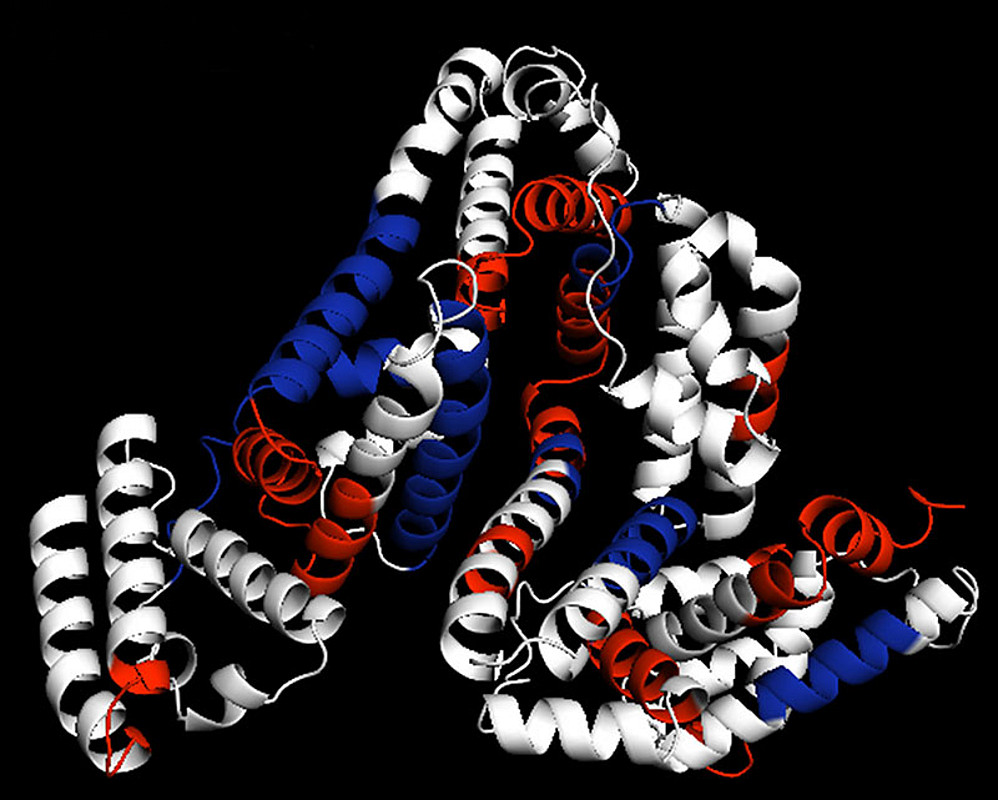
Struktur von Rinderserumalbumin mit durch Mikrowellenverdau generierten Peptidfragmenten (rot, blau). Foto: Journal of Proteomics

Struktur von Rinderserumalbumin mit durch Mikrowellenverdau generierten Peptidfragmenten (rot, blau). Foto: Journal of Proteomics

Grazer ForscherInnen konnten beweisen, dass Mikrowellenstrahlung keine negativen Auswirkungen auf die Struktur von Proteinen hat

Über die gesundheitsgefährdenden Auswirkungen von elektromagnetischer Strahlung scheiden sich die Geister. Die Weltgesundheitsorganisation WHO warnte noch 2011 vor einem möglichen Zusammenhang zwischen dem häufigen Gebrauch des Mobiltelefons und einer seltenen Art von Gehirntumor. Grazer ForscherInnen haben nun nachgewiesen, dass niederenergetische elektromagnetische Strahlung, wie sie unter anderem Handy, WLAN oder Mikrowelle verursachen, zumindest die Struktur von Proteinen nicht verändert – was KritikerInnen immer wieder behaupten. Die Ergebnisse der Untersuchungen wurden soeben im renommierten „Journal of Proteomics“ erstmals publiziert.


Proteine – also Eiweiße –, die auch zahlreich im menschlichen Körper vorkommen, bestehen jeweils aus einer langen Kette von Aminosäuren. Unter Hitzeeinfluss „verdauen“ bestimmte Enzyme das Protein schneller, das heißt, sie zerschneiden es in Peptidsequenzen. Da die Mikrowelle Substanzen in kurzer Zeit extrem aufheizen kann, lassen sich mit ihr Proteine rascher zerlegen als durch konventionelle Aufheizung. Dass es tatsächlich nur die Temperatur ist, die diesen Vorgang beschleunigt, und keine anderen, nicht-thermischen Effekte der elektromagnetischen Mikrowellenstrahlung im Spiel sind, das konnten nun ForscherInnen des „Christian Doppler Labors für Mikrowellenchemie“ unter der Leitung von Univ.-Prof. Dr. C. Oliver Kappe an der Karl-Franzens-Universität Graz eindeutig beweisen. KooperationspartnerInnen waren Forschungsgruppen am Institut für Molekulare Biowissenschaften der Karl-Franzens-Universität und am Institut für Molekularbiologie und Biochemie der Medizinischen Universität Graz.


In mehreren Experimenten ließ Dr. Markus Damm die Proteine Rinderserumalbumin, Cytochrom C, Beta-Casein unter kontrollierten thermischen Bedingungen bei 50 Grad Celsius einmal mit der Mikrowelle und einmal mit herkömmlichen Verfahren im Ölbad verdauen. Das Ergebnis: „Es gibt keine messbaren Unterschiede bei den Auswirkungen auf die Proteinstruktur, da bei gleichlangen Heizintervallen und gleicher Temperatur jeweils die gleichen Peptidsequenzen herausgeschnitten werden. Der Verdauprozess wird also nur durch die Temperatur und nicht durch Mikrowellenstrahlung beeinflusst“, fasst Markus Damm, Erstautor der Studie, zusammen.


Die Grazer Forschungsgruppen widerlegen damit andere Untersuchungen, nach denen Mikrowellenstrahlung direkte Auswirkungen auf die Proteinstruktur hätte. Oliver Kappe führt deren Ergebnisse auf Messfehler zurück: „Es ist extrem schwierig, die Temperatur in der Mikrowelle exakt festzustellen. Wahrscheinlich sind die früher publizierten Experimente nicht bei genau gleicher Temperatur durchgeführt worden.“ Die WissenschafterInnen in Graz sind mit einem Mikrowellen-Reaktor, den die Firma Anton Paar speziell für Forschungen in der Mikrowellenchemie entwickelt hat, eine Nasenlänge voraus. Eine eingebaute faseroptische Temperatursonde garantiert eine störungsfreie, hoch präzise Messung.


Publikation:

Markus Damm, Christoph Nusshold, David Cantillo, Gerald N. Rechberger, Karl Gruber, Wolfgang Sattler, C. Oliver Kappe: Can Electromagnetic Fields Influence the Structure and Enzymatic Digest of Proteins? A Critical Evaluation of Microwave-Assisted Proteomics Protocols
Journal of Proteomics, 2012, publiziert online am 6.8.2012.

Link zur Publikation: http://dx.doi.org/10.1016/j.jprot.2012.07.043
created by Gudrun Pichler

Related news

Complying with the norm: Why Do Standards Shape Our Lives, Elisabeth Staudegger?

Standards determine whether a sheet of paper fits in a printer or whether a charging plug can power multiple devices. These standards shape our everyday lives. But who actually sets these standards? Where are the weaknesses, and how could science help to improve them? Elisabeth Staudegger, Head of the ‘Law and IT’ Department at the Institute for Legal Foundations at the University of Graz, host the Academic Standards Day on 16 June. Here she relays how sciences can contribute to the topic of standardisation and reveals her personal favourite standard.

More body awareness than a culture war

In Italy, sex education lessons will in future only be permitted with parental consent, and will be banned entirely in nurseries and primary schools. At the same time, Pride Month highlights why knowledge about the body, relationships, boundaries and diversity is important for young people. A study by the University of Graz shows how important knowledge about the body, contraception, relationship skills and protection against violence is

Will Austria win the World Cup? Mathematician reveals calculation method

Michael Fischer uses the football tournament as a practical example for highschool lessons.

Survival strategies: How plants respond to drought

According to Geosphere Austria, this spring was the driest in Austria since records began around 170 years ago. The low rainfall put particular pressure on the agricultural sector. And climate change is set to make the situation even worse in the coming decades. We asked Johannes Liesche, a professor at the Department of Biology at the University of Graz, how plants react to water shortages and how they survive periods of drought.

Begin of page section:
Additional information:

University of Graz
Universitaetsplatz 3
8010 Graz
Austria
  • Contact
  • Web Editors
  • Moodle
  • UNIGRAZonline
  • Imprint
  • Data Protection Declaration
  • Accessibility Declaration
Weatherstation
Uni Graz

End of this page section. Go to overview of page sections

End of this page section. Go to overview of page sections

Begin of page section:

End of this page section. Go to overview of page sections


