Begin of page section:
Page sections:

  • Go to contents (Accesskey 1)
  • Go to position marker (Accesskey 2)
  • Go to main navigation (Accesskey 3)
  • Go to sub navigation (Accesskey 4)
  • Go to additional information (Accesskey 5)
  • Go to page settings (user/language) (Accesskey 8)
  • Go to search (Accesskey 9)

End of this page section. Go to overview of page sections

Begin of page section:
Page settings:

English en
Deutsch de
Search
Login

End of this page section. Go to overview of page sections

Begin of page section:
Search:

Search for details about Uni Graz
Close

End of this page section. Go to overview of page sections


Search

Begin of page section:
Main navigation:

Page navigation:

  • University

    University
    • About the University
    • Organisation
    • Faculties
    • Library
    • Working at University of Graz
    • Campus
    Developing solutions for the world of tomorrow - that is our mission. Our students and our researchers take on the great challenges of society and carry the knowledge out.
  • Research Profile

    Research Profile
    • Our Expertise
    • Research Questions
    • Research Portal
    • Promoting Research
    • Research Transfer
    • Ethics in Research
    • Commission for Scientific Integrity
    Scientific excellence and the courage to break new ground. Research at the University of Graz creates the foundations for making the future worth living.
  • Studies

    Studies
    • Prospective Students
    • Students
  • Community

    Community
    • International
    • Location
    • Research and Business
    • Alumni
    The University of Graz is a hub for international research and brings together scientists and business experts. Moreover, it fosters the exchange and cooperation in study and teaching.
Topics
  • Sustainable University
  • Researchers answer
  • Work for us
Close menu

End of this page section. Go to overview of page sections

Begin of page section:
You are here:

University of Graz News Fremdgesteuert

End of this page section. Go to overview of page sections

Thursday, 15 May 2014

Fremdgesteuert

Wie hängen Zeitgefühl und körperliche Wahrnehmung bei Burn-Out-PatientInnen zusammen? Foto: Lupo/<a href="http://www.pixelio.de">pixelio.de</a>.

Wie hängen Zeitgefühl und körperliche Wahrnehmung bei Burn-Out-PatientInnen zusammen? Foto: Lupo/<a href="http://www.pixelio.de">pixelio.de</a>.

WissenschafterInnen der Uni Graz untersuchen den Zusammenhang zwischen Zeit- und Körperwahrnehmung bei Burn-Out-PatientInnen

Sie haben jegliches Gefühl für Zeit verloren, schenken ihrem Körper keine Aufmerksamkeit und glauben, nur mehr funktionieren zu müssen: Burn-Out-PatientInnen im fortgeschrittenen Stadium der Krankheit gleichen oft fremdbestimmten Wesen. Wie wirken sich der Verlust des eigenen Rhythmus und das bruchstückhafte Zeitbewusstsein auf den Körper aus? Diese – für künftige Therapieansätze relevanten – Zusammenhänge untersuchen WissenschafterInnen des Instituts für Philosophie an der Katholisch-Theologischen Fakultät und des Instituts für Sportwissenschaft der Karl-Franzens-Universität Graz in einem vom österreichischen Wissenschaftsfonds FWF geförderten Projekt. Auftakt ist die Tagung „Bodytime“, die am 23. und 24. Mai 2014 an der Uni Graz stattfindet.


Zeit und Körperlichkeit stehen in einem direkten Zusammenhang. Ein Beispiel dafür ist das Altern. Hier besteht eine Beziehung jenseits des Bewusstseins, erklärt Univ.-Prof. Dr. Reinhold Esterbauer, Leiter des Instituts fürs Philosophie an der Katholisch-Theologischen Fakultät: „Das Altern oder auch Zustände wie Müdigkeit und Erschöpfung werden nicht gezielt gesteuert, sondern passieren mit uns.“ Bewusst erleben Menschen den Konnex zwischen Zeit und Leiblichkeit dagegen beim Sport, bestätigt Ao.Univ.-Prof. Dr. Andrea Paletta vom Institut für Sportwissenschaft: „Beim Laufen, Tanzen oder bei Yoga wird auf das individuelle Tempo geachtet und die Aufmerksamkeit auf rhythmisches Atmen gerichtet.“ Die Zusammenarbeit beider wissenschaftlichen Disziplinen ermöglicht einen ganzheitlichen Blick auf die Beziehung zwischen dem individuellen Zeitgefüge und der eigenen körperlichen Wahrnehmung – spezialisiert haben sich die ForscherInnen dabei auf Burn-Out-PatientInnen in klinischer Behandlung.


Erste Ergebnisse des für drei Jahre anberaumten Forschungsprojekts lassen sich bereits feststellen, bestätigt Paletta: „In Tanztherapien haben wir gesehen, dass die PatientInnen zu fast keiner Variation fähig sind, sie zeigen nur mehr rudimentären Antrieb oder Rhythmus – sie ‚funktionieren‘ einfach.“ Dasselbe Muster lässt sich in der Wahrnehmung ihres Tagesablaufs ablesen: „Es dreht sich alles nur um die Arbeit, Zeit für die eigenen Bedürfnisse existiert nicht mehr.“ Nun stehen die WissenschafterInnen vor der Frage, ob sich durch spezielle Bewegungstherapien, in der die PatientInnen wieder lernen, auf Signale des Körpers zu achten, eine Umstellung ihrer Wahrnehmung des eigenen Ich im zeitlichen Gefüge des Lebens bewirken lässt. „Das Ziel ist, die Betroffenen zu motivieren, sich selbst wieder ins Spiel zu bringen“, fasst Paletta zusammen.


Tagung: „Bodytime. Zeitdynamik und leibliche Erfahrung“

Zeit: Freitag, 23., und Samstag, 24. Mai 2014, Beginn jeweils um 9 Uhr
Ort: RESOWI-Zentrum, Sitzungssaal SZ 15.21, Bauteil A/2.OG, Universitätsstraße 15, 8010 Graz

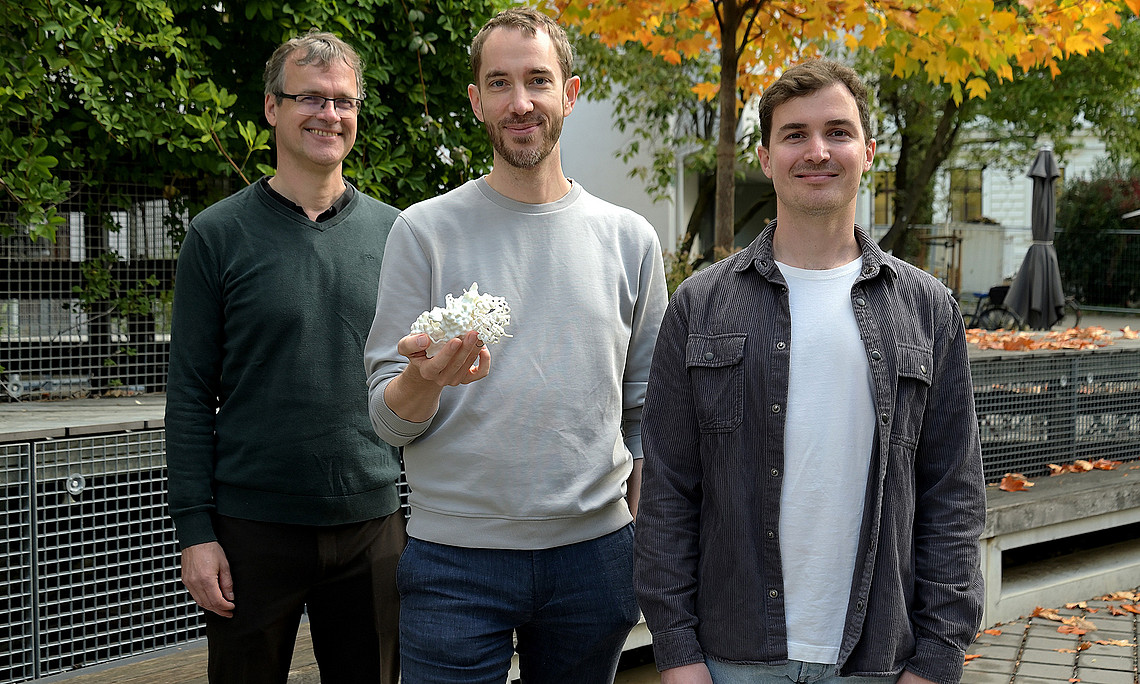
created by Gerhild Kastrun

Related news

Uni Vibes: Where science and art come together

At the third Uni Vibes event hosted by the University of Graz, visitors enjoyed science, music and performances on campus. Guided tours focusing on democracy, educational sciences and the Graz Centre of Physics demonstrated how research shapes community life, urban development and culture.

Protest against budget cuts: universities send a united message in Graz

On 28 May, thousands of students, researchers and staff from all Styrian universities demonstrated in Graz against the announced budget cuts. University management and student representatives warned of severe consequences for research, teaching and the region’s standing as a centre of academic excellence.

Overcoming boundaries: Can we manage without prisons and camps?

The US immigration agency ICE has sparked fear and horror. Not only are migrants criminalised and brutally persecuted, but earlier this year, ICE officers killed two US citizens in Minneapolis. Against the backdrop of these dramatic events, the University of Graz is shedding light on the role of deportation and detention centres as part of the international conference ‘Camps, Belonging, and Abolition Democracy’. Researchers aim to develop scenarios for how a future without prisons and the death penalty can become a reality.

From one to many: Uni Graz researchers identify a mechanism for the origin of species

When a habitat changes, animals, plants and even humans must adapt to the new environmental conditions. Those who manage this fastest and best will prevail. Over time, new species that are specialised for specific habitats also develop. Zoologist Christian Sturmbauer and his research group at the University of Graz, together with international partners, have now demonstrated that the molecular biological process of “alternative splicing” – contrary to previous assumptions – contributes highly effectively to the formation of new species. Different combinations of parts of the same gene give rise to various, structurally slightly different variants of functional proteins. This leads very rapidly to significant changes. The research findings were published in the renowned journal Proceedings of the National Academy of Sciences.

Begin of page section:
Additional information:

University of Graz
Universitaetsplatz 3
8010 Graz
Austria
  • Contact
  • Web Editors
  • Moodle
  • UNIGRAZonline
  • Imprint
  • Data Protection Declaration
  • Accessibility Declaration
Weatherstation
Uni Graz

End of this page section. Go to overview of page sections

End of this page section. Go to overview of page sections

Begin of page section:

End of this page section. Go to overview of page sections