



Begin of page section:
Page sections:

  • Go to contents (Accesskey 1)
  • Go to position marker (Accesskey 2)
  • Go to main navigation (Accesskey 3)
  • Go to sub navigation (Accesskey 4)
  • Go to additional information (Accesskey 5)
  • Go to page settings (user/language) (Accesskey 8)
  • Go to search (Accesskey 9)

End of this page section. Go to overview of page sections

Begin of page section:
Page settings:

English en
Deutsch de
Search
Login

End of this page section. Go to overview of page sections

Begin of page section:
Search:

Search for details about Uni Graz
Close

End of this page section. Go to overview of page sections


Search

Begin of page section:
Main navigation:

Page navigation:

  • University

    University
    • About the University
    • Organisation
    • Faculties
    • Library
    • Working at University of Graz
    • Campus
    Developing solutions for the world of tomorrow - that is our mission. Our students and our researchers take on the great challenges of society and carry the knowledge out.
  • Research Profile

    Research Profile
    • Our Expertise
    • Research Questions
    • Research Portal
    • Promoting Research
    • Research Transfer
    • Ethics in Research
    • Commission for Scientific Integrity
    Scientific excellence and the courage to break new ground. Research at the University of Graz creates the foundations for making the future worth living.
  • Studies

    Studies
    • Prospective Students
    • Students
    • Registration for Study Programme (Winter semester 2026/27)
  • Community

    Community
    • International
    • Location
    • Research and Business
    • Alumni
    The University of Graz is a hub for international research and brings together scientists and business experts. Moreover, it fosters the exchange and cooperation in study and teaching.
Topics
  • Sustainable University
  • Researchers answer
  • Work for us
Close menu

End of this page section. Go to overview of page sections

Begin of page section:
You are here:

University of Graz News Forschungspreise

End of this page section. Go to overview of page sections

Friday, 18 November 2022

Forschungspreise

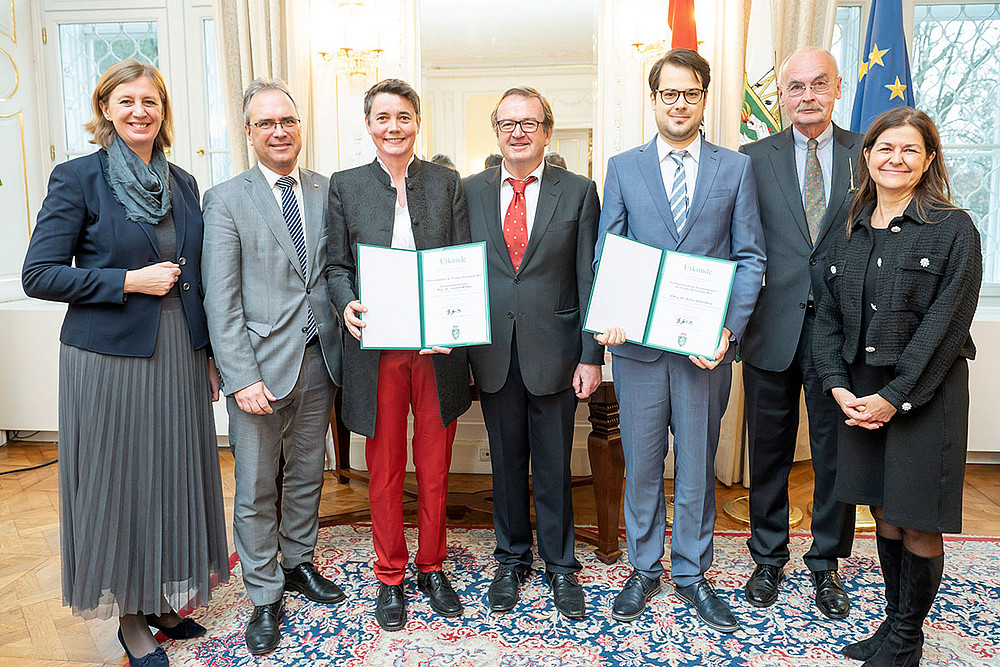
V.l.: Landesrätin Barbara Eibinger-Miedl, Rektor Peter Riedler, Preisträgerin Astrid Veronig, Laudator Arnold Hanslmeier, Preisträger Markus Roschitz, Laudator Dieter-Anton Binder, Landesrätin Doris Kampus. Foto Fischer ©Foto Fischer
©Foto Fischer

V.l.: Landesrätin Barbara Eibinger-Miedl, Rektor Peter Riedler, Preisträgerin Astrid Veronig, Laudator Arnold Hanslmeier, Preisträger Markus Roschitz, Laudator Dieter-Anton Binder, Landesrätin Doris Kampus. Foto Fischer

Land Steiermark zeichnet Astrophysikerin und Historiker der Uni Graz aus

Sie hat die Sterne im Visier, er die Steiermark. Die Astrophysikerin Astrid Veronig beobachtete die Ausbrüche ferner Sonnen, der Historiker Markus Roschitz brachte neue Erkenntnisse über den Aufstieg der NSDAP in der Region Schwanberg ans Licht. Beide Wissenschafter:innen der Universität Graz wurden am 18. November 2022 von den Landesrätinnen Barbara Eibinger-Miedl und Doris Kampus ausgezeichnet. Astrid Veronig erhielt den Forschungspreis des Landes Steiermark, Markus Roschitz den Erzherzog-Johann-Forschungspreis, jeweils dotiert mit 12 000 Euro.

Ausbrüche
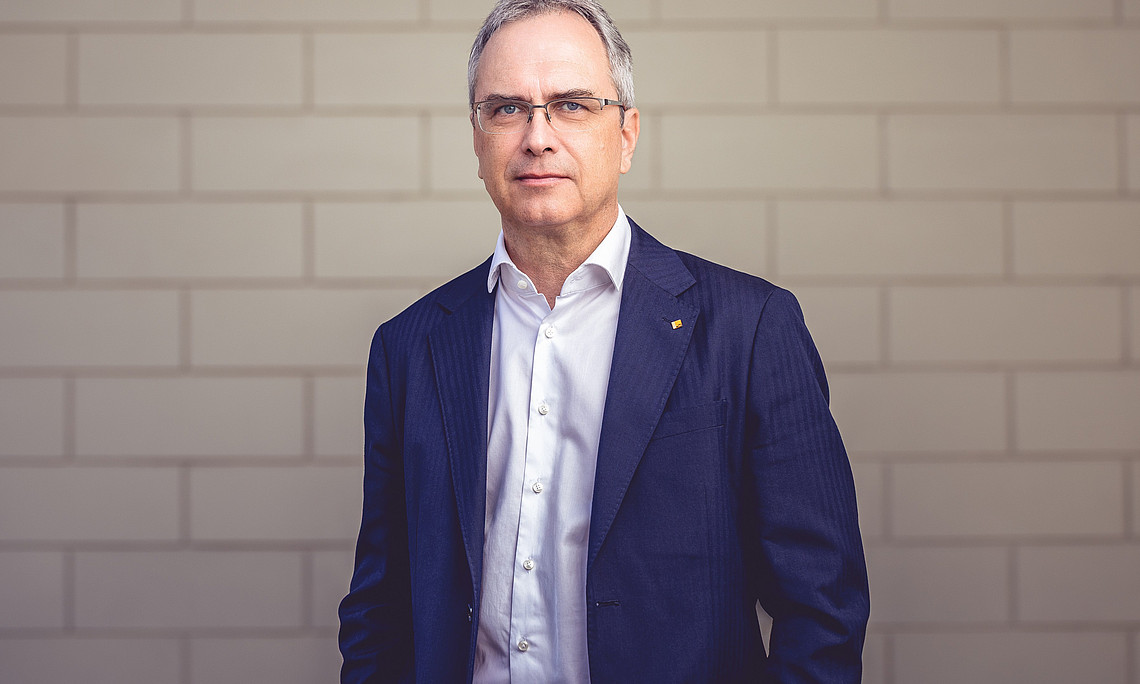
Unsere Sonne versorgt uns nicht nur mit Licht und Wärme, sie schleudert immer wieder auch magnetisierte Plasmawolken ins All. Auf der Erde machen sie sich als faszinierende Polarlichter bemerkbar. Sind die Ausbrüche besonders energiereich, können sie elektronische Systeme auf Satelliten lahmlegen oder sogar Stromausfälle auslösen. Astrid Veronig und ihr Team konnten mit einer neu entwickelten Methode nun auch auf anderen Sternen koronale Massenauswürfe nachweisen. „Wir beobachten die Sonne und Sterne im Licht der ultravioletten und Röntgenstrahlung, wo die Millionen Grad heiße Korona am meisten Strahlung aussendet“, erklärt die Astrophysikerin. „Wenn es zu Massenauswürfen kommt, also riesige Plasmawolken aus der Korona hinausgeschleudert werden, so bleiben in diesem Strahlenkranz Verdunkelungen zurück, die wir nachweisen können“, erklärt die Astrophysikerin.
>> mehr dazu

Umbrüche
Große politische Entwicklungen werden im Kleinen greifbar. In seinem Buch „Die NSDAP in der Region Schwanberg 1930–1938. Eine Mikrostudie“ zeigt der Historiker Markus Roschitz detailliert und anschaulich, wie sich die NSDAP im ländlichen Raum in der Südweststeiermark etablieren konnte. Seine Forschungen, für die er bislang unbekannte Quellen und Bildmaterialien heranzog, stellen eine modellhafte Beschreibung und Analyse dieses Gebiets in jener Zeit dar und brachten neue Erkenntnisse über die damaligen politischen, wirtschaftlichen und gesellschaftlichen Verhältnisse der Region Schwanberg. Roschitz schildert unter anderem den gescheiterten Putschversuch im Juli 1934, die darauffolgende Strategieänderung der lokalen NS-Organisation, die Situation der paramilitärischen „österreichischen Legionäre“, die Gegenmaßnahmen des autoritär regierten Staates sowie weitere wesentliche Ereignisse bis zur nationalsozialistischen Machtübernahme im März 1938, eingebettet in die allgemeinen historischen Entwicklungen.
>> zum Buch

created by Gudrun Pichler

Related news

Adhesive force: Researchers demonstrate how cells determine their function

How does a single cell develop into an organism with skin, muscles, intestines, a heart and other specialised tissues? Two studies published in leading journals have identified a mechanism that links genes, chemical signals and the physical properties of tissues. Scientists from London, Heidelberg and Graz were involved in the research.

Vitamin E is the key: a pharmacist has discovered a substance that ‘switches off’ inflammation

Alzheimer’s, obesity or atherosclerosis: many lifestyle-related diseases are driven by or accompanied by inflammation. “Treatments usually aim to halt the progression of inflammation. However, for a long-term cure, it must be completely resolved,” explains Andreas Koeberle, a pharmacist at the University of Graz. Normally, the body carries out this work itself. However, if this process does not function properly, chronic inflammation can develop, which can contribute to conditions such as cardiovascular disease or cancer.

Sport beyond the World Cup: the TV channel “Welt der Wunder” features diabetes research from the University of Graz

Keeping blood sugar levels in check during physical exertion is a particular challenge for people with type 1 diabetes. Othmar Moser examines how those affected manage to balance physical activity, sport and their metabolic disorder.

"Mathematics explains the world"

How can life be quantified? And what can science reveal that remains hidden from the naked eye? The 14th European Conference on Mathematical and Theoretical Biology at the University of Graz is dedicated to these questions. From 13 to 17 July, around 1,300 researchers from all over the world will gather on campus to discuss models, biological processes and the future of data-driven medicine. Klemens Fellner, Dean of the Faculty of Natural Sciences and Mathematics and a mathematician, talks about the language that explains the world

Begin of page section:
Additional information:

University of Graz
Universitaetsplatz 3
8010 Graz
Austria
  • Contact
  • Web Editors
  • Moodle
  • UNIGRAZonline
  • Imprint
  • Data Protection Declaration
  • Accessibility Declaration
Weatherstation
Uni Graz

End of this page section. Go to overview of page sections

End of this page section. Go to overview of page sections

Begin of page section:

End of this page section. Go to overview of page sections

