Begin of page section:
Page sections:

  • Go to contents (Accesskey 1)
  • Go to position marker (Accesskey 2)
  • Go to main navigation (Accesskey 3)
  • Go to sub navigation (Accesskey 4)
  • Go to additional information (Accesskey 5)
  • Go to page settings (user/language) (Accesskey 8)
  • Go to search (Accesskey 9)

End of this page section. Go to overview of page sections

Begin of page section:
Page settings:

English en
Deutsch de
Search
Login

End of this page section. Go to overview of page sections

Begin of page section:
Search:

Search for details about Uni Graz
Close

End of this page section. Go to overview of page sections


Search

Begin of page section:
Main navigation:

Page navigation:

  • University

    University
    • About the University
    • Organisation
    • Faculties
    • Library
    • Working at University of Graz
    • Campus
    Developing solutions for the world of tomorrow - that is our mission. Our students and our researchers take on the great challenges of society and carry the knowledge out.
  • Research Profile

    Research Profile
    • Our Expertise
    • Research Questions
    • Research Portal
    • Promoting Research
    • Research Transfer
    • Ethics in Research
    Scientific excellence and the courage to break new ground. Research at the University of Graz creates the foundations for making the future worth living.
  • Studies

    Studies
    • Prospective Students
    • Students
  • Community

    Community
    • International
    • Location
    • Research and Business
    • Alumni
    The University of Graz is a hub for international research and brings together scientists and business experts. Moreover, it fosters the exchange and cooperation in study and teaching.
  • Spotlight
Topics
  • Our digital Advent calendar
  • Sustainable University
  • Researchers answer
  • Work for us
Close menu

End of this page section. Go to overview of page sections

Begin of page section:
You are here:

University of Graz News Flächenfraß

End of this page section. Go to overview of page sections

Wednesday, 07 July 2021

Flächenfraß

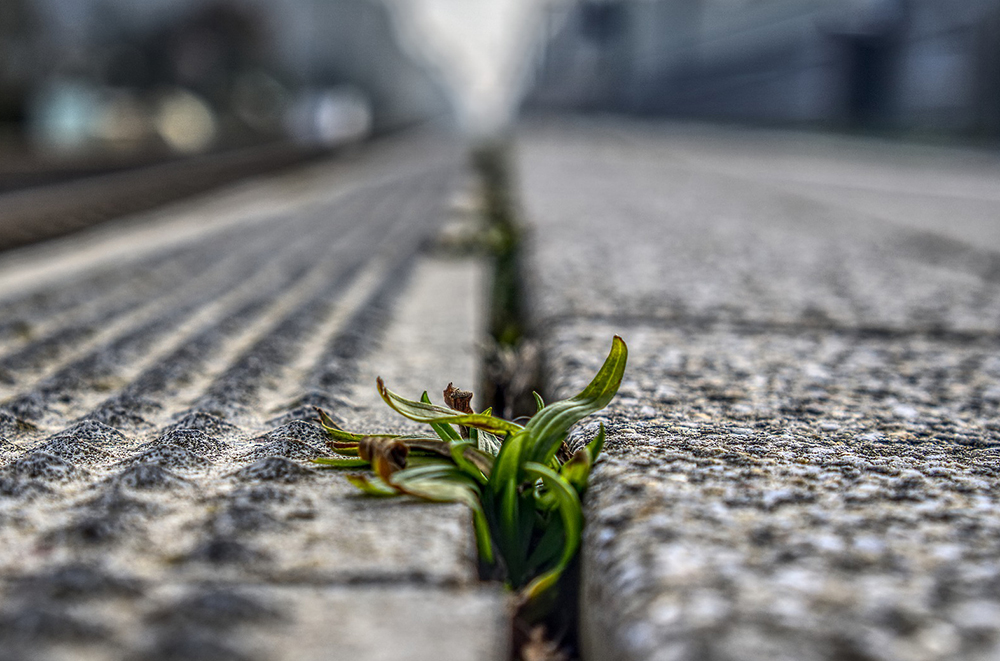
Österreich wird zubetoniert. Foto: Markus Distelrath - Pixabay

Österreich wird zubetoniert. Foto: Markus Distelrath - Pixabay

Eine Bau-Diät empfiehlt Wolfgang Fischer, Experte für nachhaltiges Flächenmanagement

Land der Äcker, zukunftsreich? Von wegen. Österreich wird täglich im Ausmaß mehrerer Fußballfelder zubetoniert. „Die Lage ist lokal ohne Zweifel dramatisch“, bestätigt Wolfgang Fischer vom Institut für Geografie und Raumforschung der Universität Graz. Dabei würden die bestehenden Gesetze durchaus genügen, um den Flächenfraß einzudämmen. Wäre da nur nicht der Faktor Mensch mit seinen unzähligen, individuellen Interessen. Und dennoch ist der Forscher zufrieden. Nicht weil Österreich wegen seines enormen Bodenverbrauchs seit Jahren im EU-Spitzenfeld zu finden ist. Vielmehr über die öffentliche Aufmerksamkeit, die das Thema derzeit genießt. Denn ohne verstärkte Bewusstseinsbildung wird man der extremen Zersiedelung nicht Herr werden.

„Die Qualität der natürlichen Lebensgrundlagen ist durch sparsame und sorgsame Verwendung der natürlichen Ressourcen wie Boden, Wasser und Luft zu erhalten und, soweit erforderlich, nachhaltig zu verbessern. So steht es im Raumordnungsgesetz der Steiermark. Also am Gesetz scheitert es nicht, es liegt am Menschen. Die persönliche Betroffenheit reicht meist nicht aus, um etwas zu ändern. Man schaut zwar gerne über den Zaun und in die Nachbargemeinde, kehrt aber nicht vor der eigenen Haustür. Daher muss das Bewusstsein dafür immer und überall geschärft werden. Denn wir können uns Haus mit Pool, Garage und vermutlich bald den Hubschrauberlandeplatz leisten. Nicht leisten dürfen wir uns die steigende Zersiedelung. Diese tritt vor allem in der Umgebung von Städten auf. Dabei könnte die Gemeinden immer planerisch eingreifen.
In Österreich werden 37 Prozent der insgesamt 84.000 Quadratmeter fürs Wohnen und Wirtschaften verwendet. Davon sind 15 Prozent ökologisch nicht mehr zu retten. Das scheint nicht viel. Doch die Lage spitzt sich, wenn man optimale Ackerflächen wie die idealen Braunerde-Böden im Süden von Graz zunehmend zubetoniert. Denn auf der grünen Wiese scheint alles risikoärmer und schneller umsetzbar.
Gesetzlich verankertem Flächenrecycling, als das vorrangige Nützen ehemaliger Standorte, wird mit ökonomischen und gemeindepolitischen Motiven begegnet. Doch es geht auch anders. Graz nutzt etwa verlassene Industriestandorte wie Wagner-Biro und Reininghaus nach. Ausschlagend sind dabei vielfach regional verankerte InvestorInnen, die über eine Identität mit dem Raum verfügen. Denn sie haben die buchstäblich notwendige Bodenhaftung.“
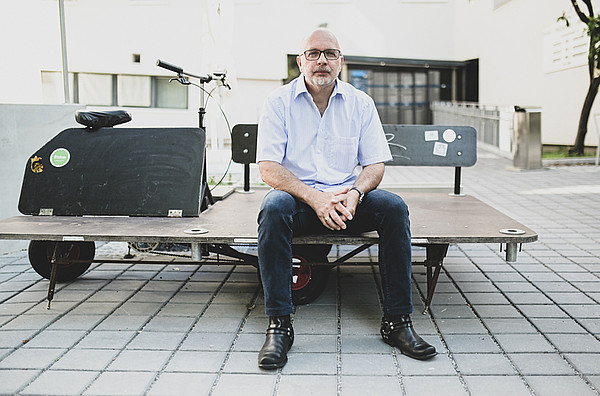
Wolfgang Fischer: „Die persönliche Betroffenheit reicht meist nicht aus, um etwas zu ändern.“ Foto: Uni Graz/Tzivanopoulos
created by Andreas Schweiger

Related news

Semester abroad without barriers: University of Graz wins award for promoting inclusion

The University of Graz has been awarded the Internationalization Award for its new inclusion initiative. Students with fewer opportunities now also receive financial support for their semester abroad outside Europe.

Fair distribution: Researchers determine just greenhouse gas budgets for all EU regions

Ten years ago, on 12 December 2015, the Paris Climate Agreement was signed at the UN Climate Conference. In order to limit global warming to well below two degrees, only a certain amount of CO2 may be emitted worldwide. While the focus was originally on national emission targets, more than 200 subnational regions and almost 300 cities have now adopted their own targets. But how many emissions are they fairly entitled to? Researchers at the University of Graz have now developed transparent criteria for fair distribution at the subnational level for the first time and determined corresponding greenhouse gas budgets for all European regions. The paper was published today in the scientific journal Nature Communications.

Chemical Christmas show at the University of Graz: An explosive evening at the Schauspielh

At the beginning of December, the University of Graz transformed the theater into a laboratory: as part of “Chemical Life,” teacher training students staged a chemical Christmas show for Styrian school classes—complete with ethanol rockets, nitrogen snow, and glowing effects. An evening designed to inspire interest in studying chemistry.

Train by train: Koralm railway accelerates exchange between the Universities

Lectures at the University of Klagenfurt in the morning, seminars at the University of Graz in the afternoon: Austria's longest tunnel and a journey time of around 45 minutes make it easy. The Koralm railway increases the speed of networking between the two university locations. The collaboration builds on existing cooperation - for example in the areas of teacher training, Slavic studies and as employers, the universities are well coordinated.

Begin of page section:
Additional information:

University of Graz
Universitaetsplatz 3
8010 Graz
Austria
  • Contact
  • Web Editors
  • Moodle
  • UNIGRAZonline
  • Imprint
  • Data Protection Declaration
  • Accessibility Declaration
Weatherstation
Uni Graz

End of this page section. Go to overview of page sections

End of this page section. Go to overview of page sections

Begin of page section:

End of this page section. Go to overview of page sections