



Begin of page section:
Page sections:

  • Go to contents (Accesskey 1)
  • Go to position marker (Accesskey 2)
  • Go to main navigation (Accesskey 3)
  • Go to sub navigation (Accesskey 4)
  • Go to additional information (Accesskey 5)
  • Go to page settings (user/language) (Accesskey 8)
  • Go to search (Accesskey 9)

End of this page section. Go to overview of page sections

Begin of page section:
Page settings:

English en
Deutsch de
Search
Login

End of this page section. Go to overview of page sections

Begin of page section:
Search:

Search for details about Uni Graz
Close

End of this page section. Go to overview of page sections


Search

Begin of page section:
Main navigation:

Page navigation:

  • University

    University
    • About the University
    • Organisation
    • Faculties
    • Library
    • Working at University of Graz
    • Campus
    Developing solutions for the world of tomorrow - that is our mission. Our students and our researchers take on the great challenges of society and carry the knowledge out.
  • Research Profile

    Research Profile
    • Our Expertise
    • Research Questions
    • Research Portal
    • Promoting Research
    • Research Transfer
    • Ethics in Research
    • Commission for Scientific Integrity
    Scientific excellence and the courage to break new ground. Research at the University of Graz creates the foundations for making the future worth living.
  • Studies

    Studies
    • Prospective Students
    • Students
    • Registration for Study Programme (Winter semester 2026/27)
    • Study Days 22-26 June 2026
  • Community

    Community
    • International
    • Location
    • Research and Business
    • Alumni
    The University of Graz is a hub for international research and brings together scientists and business experts. Moreover, it fosters the exchange and cooperation in study and teaching.
Topics
  • Sustainable University
  • Researchers answer
  • Work for us
Close menu

End of this page section. Go to overview of page sections

Begin of page section:
You are here:

University of Graz News Flächenfraß

End of this page section. Go to overview of page sections

Wednesday, 07 July 2021

Flächenfraß

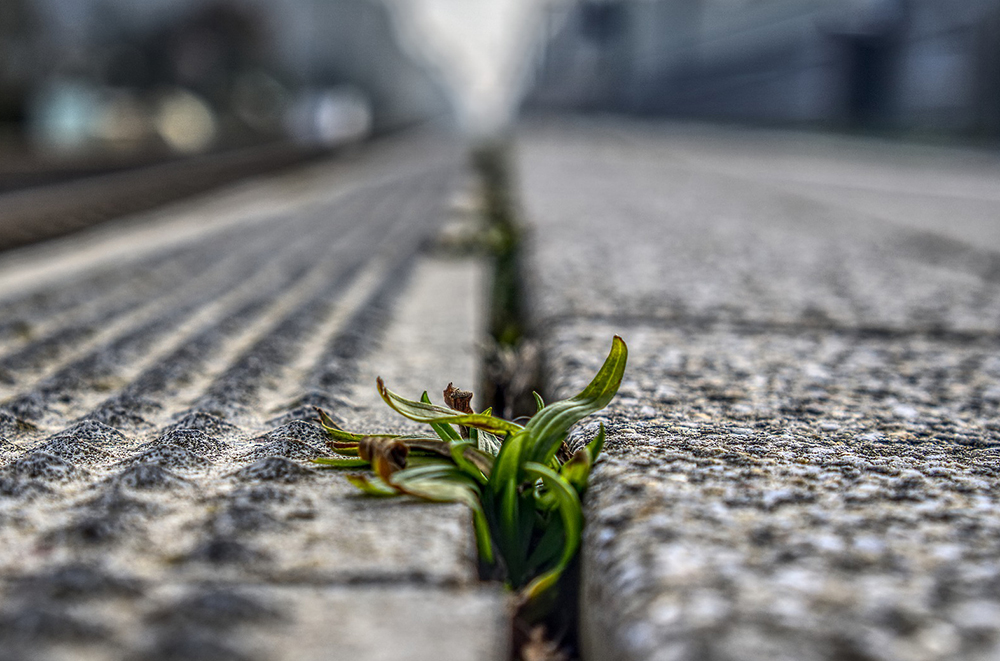
Österreich wird zubetoniert. Foto: Markus Distelrath - Pixabay

Österreich wird zubetoniert. Foto: Markus Distelrath - Pixabay

Eine Bau-Diät empfiehlt Wolfgang Fischer, Experte für nachhaltiges Flächenmanagement

Land der Äcker, zukunftsreich? Von wegen. Österreich wird täglich im Ausmaß mehrerer Fußballfelder zubetoniert. „Die Lage ist lokal ohne Zweifel dramatisch“, bestätigt Wolfgang Fischer vom Institut für Geografie und Raumforschung der Universität Graz. Dabei würden die bestehenden Gesetze durchaus genügen, um den Flächenfraß einzudämmen. Wäre da nur nicht der Faktor Mensch mit seinen unzähligen, individuellen Interessen. Und dennoch ist der Forscher zufrieden. Nicht weil Österreich wegen seines enormen Bodenverbrauchs seit Jahren im EU-Spitzenfeld zu finden ist. Vielmehr über die öffentliche Aufmerksamkeit, die das Thema derzeit genießt. Denn ohne verstärkte Bewusstseinsbildung wird man der extremen Zersiedelung nicht Herr werden.

„Die Qualität der natürlichen Lebensgrundlagen ist durch sparsame und sorgsame Verwendung der natürlichen Ressourcen wie Boden, Wasser und Luft zu erhalten und, soweit erforderlich, nachhaltig zu verbessern. So steht es im Raumordnungsgesetz der Steiermark. Also am Gesetz scheitert es nicht, es liegt am Menschen. Die persönliche Betroffenheit reicht meist nicht aus, um etwas zu ändern. Man schaut zwar gerne über den Zaun und in die Nachbargemeinde, kehrt aber nicht vor der eigenen Haustür. Daher muss das Bewusstsein dafür immer und überall geschärft werden. Denn wir können uns Haus mit Pool, Garage und vermutlich bald den Hubschrauberlandeplatz leisten. Nicht leisten dürfen wir uns die steigende Zersiedelung. Diese tritt vor allem in der Umgebung von Städten auf. Dabei könnte die Gemeinden immer planerisch eingreifen.
In Österreich werden 37 Prozent der insgesamt 84.000 Quadratmeter fürs Wohnen und Wirtschaften verwendet. Davon sind 15 Prozent ökologisch nicht mehr zu retten. Das scheint nicht viel. Doch die Lage spitzt sich, wenn man optimale Ackerflächen wie die idealen Braunerde-Böden im Süden von Graz zunehmend zubetoniert. Denn auf der grünen Wiese scheint alles risikoärmer und schneller umsetzbar.
Gesetzlich verankertem Flächenrecycling, als das vorrangige Nützen ehemaliger Standorte, wird mit ökonomischen und gemeindepolitischen Motiven begegnet. Doch es geht auch anders. Graz nutzt etwa verlassene Industriestandorte wie Wagner-Biro und Reininghaus nach. Ausschlagend sind dabei vielfach regional verankerte InvestorInnen, die über eine Identität mit dem Raum verfügen. Denn sie haben die buchstäblich notwendige Bodenhaftung.“
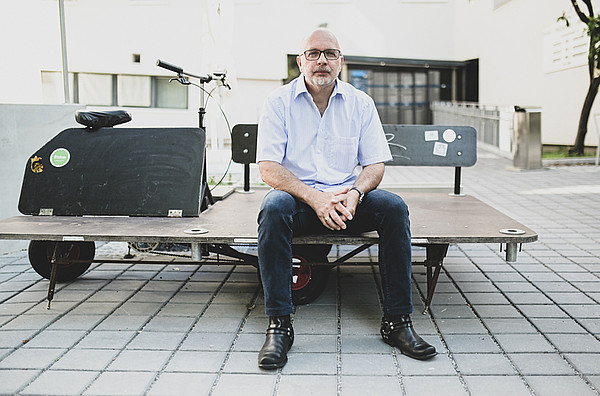

Wolfgang Fischer: „Die persönliche Betroffenheit reicht meist nicht aus, um etwas zu ändern.“ Foto: Uni Graz/Tzivanopoulos
created by Andreas Schweiger

Related news

Getting even hotter: Researchers predict global warming of 1.7 degrees by 2027

While Europe is currently sweltering in the heat, global temperatures are also rising towards concerning record levels. In 2026, Earth’s surface air temperature is expected to reach 1.62 degrees, and in 2027 even 1.71 degrees Celsius above pre-industrial levels. The long-term temperature rise – an average over a 20-year period – is predicted to exceed the 1.5-degree threshold of the Paris Agreement as of 2026 already. For the first time, researchers at the University of Graz have been able to make such a forecast so far in advance. The intensifying El Niño climate event favors forecast skill and thereby facilitates a reliable computation.

Forest fire at Rosenhain: Volunteer fire brigade carried out an evacuation drill at the Jesuit refectory

Thick smoke in the stairwell, flames at the edge of the forest, people missing in the Jesuit refectory at the University of Graz: at Rosenhain, the Graz Volunteer Fire Brigade carried out a drill simulating a scenario that is becoming increasingly realistic given the heat and drought

Full effort in the heat: the Sports Centre was in full swing at the Kleeblattlauf

On 19 June 2026, 2,000 runners and hundreds of supporters made their way to the Rosenhain for a sporting end-of-term event.

Save, invest or guarantee: What Austrians expect from the state

Austria needs to make savings. But where? And what should the Republic actually be spending its money on? The answers are provided by the initial findings of a major study involving the University of Graz. 99 per cent of those surveyed are in favour of the state ensuring healthcare provision. Almost three-quarters would like to see more public funding for education, whilst only around three per cent are in favour of cuts in this sector.

Begin of page section:
Additional information:

University of Graz
Universitaetsplatz 3
8010 Graz
Austria
  • Contact
  • Web Editors
  • Moodle
  • UNIGRAZonline
  • Imprint
  • Data Protection Declaration
  • Accessibility Declaration
Weatherstation
Uni Graz

End of this page section. Go to overview of page sections

End of this page section. Go to overview of page sections

Begin of page section:

End of this page section. Go to overview of page sections


