Begin of page section:
Page sections:

  • Go to contents (Accesskey 1)
  • Go to position marker (Accesskey 2)
  • Go to main navigation (Accesskey 3)
  • Go to sub navigation (Accesskey 4)
  • Go to additional information (Accesskey 5)
  • Go to page settings (user/language) (Accesskey 8)
  • Go to search (Accesskey 9)

End of this page section. Go to overview of page sections

Begin of page section:
Page settings:

English en
Deutsch de
Search
Login

End of this page section. Go to overview of page sections

Begin of page section:
Search:

Search for details about Uni Graz
Close

End of this page section. Go to overview of page sections


Search

Begin of page section:
Main navigation:

Page navigation:

  • University

    University
    • About the University
    • Organisation
    • Faculties
    • Library
    • Working at University of Graz
    • Campus
    Developing solutions for the world of tomorrow - that is our mission. Our students and our researchers take on the great challenges of society and carry the knowledge out.
  • Research Profile

    Research Profile
    • Our Expertise
    • Research Questions
    • Research Portal
    • Promoting Research
    • Research Transfer
    • Ethics in Research
    • Commission for Scientific Integrity
    Scientific excellence and the courage to break new ground. Research at the University of Graz creates the foundations for making the future worth living.
  • Studies

    Studies
    • Prospective Students
    • Students
  • Community

    Community
    • International
    • Location
    • Research and Business
    • Alumni
    The University of Graz is a hub for international research and brings together scientists and business experts. Moreover, it fosters the exchange and cooperation in study and teaching.
Topics
  • Sustainable University
  • Researchers answer
  • Work for us
Close menu

End of this page section. Go to overview of page sections

Begin of page section:
You are here:

University of Graz News Farbe bekennen

End of this page section. Go to overview of page sections

Wednesday, 09 April 2014

Farbe bekennen

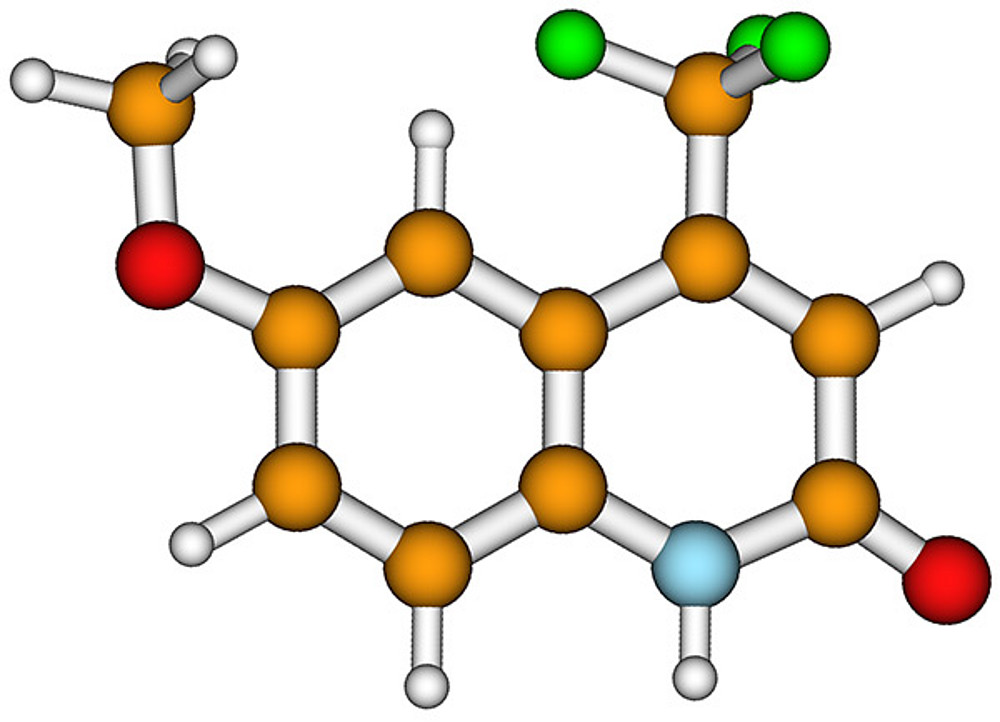
Modell eines Carbostyrils: die Kohlenstoff-Stickstoff-Verbindung ist so manipuliert, dass sie bläulich leuchtet, und wird unter anderem als Laser-Farbstoff eingesetzt.

Modell eines Carbostyrils: die Kohlenstoff-Stickstoff-Verbindung ist so manipuliert, dass sie bläulich leuchtet, und wird unter anderem als Laser-Farbstoff eingesetzt.

ChemikerInnen von Uni und TU Graz forschen gemeinsam an den Grundlagen für neuartige Sensoren und sind damit ein Paradebeispiel für die zehnjährige Erfolgsgeschichte von NAWI Graz

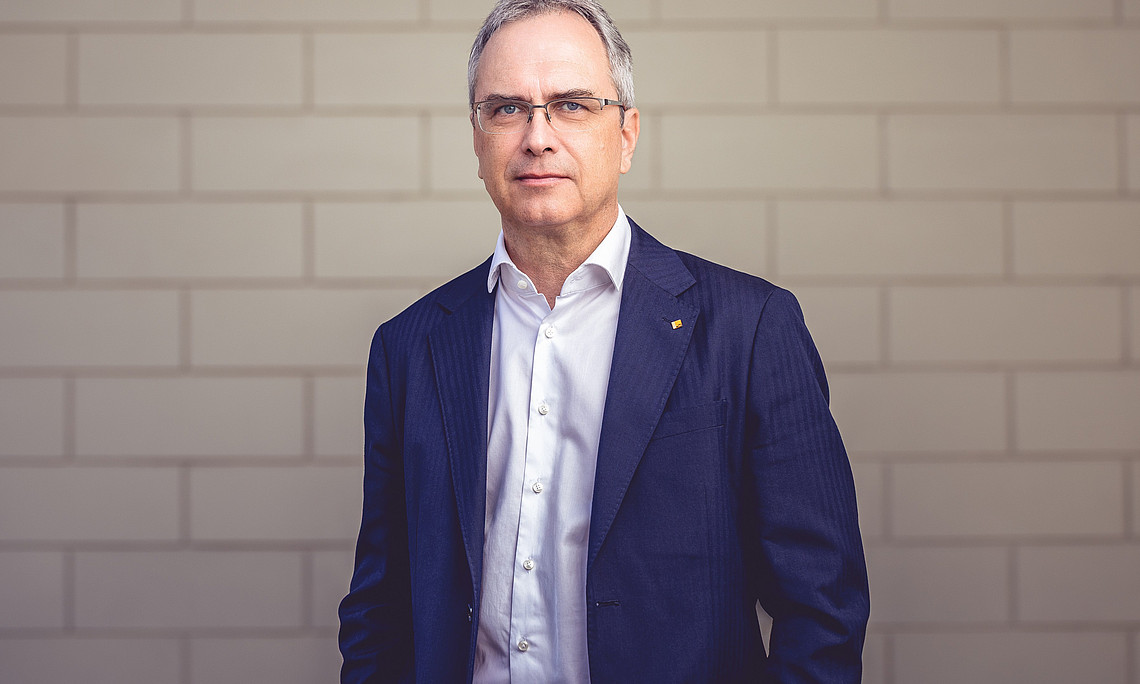
Buntes ist nicht nur in der Mode gefragt. Neuartige Sensoren, die etwa den Sauerstoffgehalt des Blutes oder Schwermetalle im Abwasser anzeigen, leuchten zur einfacheren Erkennung in verschiedenen Farben. Die Grundlagen dafür erforschen Walter Fabian vom Institut für Chemie der Karl-Franzens-Universität und Anne-Marie Kelterer vom Institut für Physikalische und Theoretische Chemie der TU Graz. Die beiden sind ein leuchtendes Beispiel für die Zusammenarbeit der beiden Unis, die vor zehn Jahren mit der Gründung der Zwillingsfakultät NAWI Graz institutionalisiert wurde.

Kelterer und Fabian untersuchen mithilfe von Computermodellen verschiedene Molekül-Gerüste, an die funktionelle Gruppen angehängt werden, um die Farbe oder die Intensität des Leuchtens zu beeinflussen. Mit so genannten quantenchemischen Berechnungen wird jedes einzelne Atom in den Verbindungen genau untersucht und charakterisiert. Auf diese Weise soll die Effektivität jener Stoffe erhöht werden, die für die strahlenden Farben verantwortlich sind. Ziel der Forschungen ist es, verbesserte Sensoren für beliebige Anwendungen zu bauen.

Mehr dazu in der aktuellen Ausgabe der Unizeit

created by Dagmar Eklaude

Related news

What matters in the end: moral theologian takes stock of assisted suicide

Since 1 January 2022, assisted suicide has been legal in Austria under certain conditions. This was made possible by a ruling of the Constitutional Court, which overturned the blanket ban on assisting in suicide. Four years on, it is clear that: “Although the legal framework is in place, many pressing questions remain unanswered when it comes to its practical implementation,” says Johann Platzer, a moral theologian at the University of Graz.

Noise is the signal: new simulation method enables secure communication

Researchers from Graz, Vienna and Munich have developed a new simulation method that makes it possible to calculate quantum light using classical software – a step towards secure quantum communication.

Massacre and Memory: University of Graz addresses the wounds of history

A conference on 12 and 13 June 2026 at the Jesuit Refectory will focus on trauma in Eastern and South-Eastern Europe.

Uni Vibes: An open-air stage for science and street art

At the third Uni Vibes event hosted by the University of Graz, visitors enjoyed science, music and performances on campus. Guided tours focusing on democracy, educational sciences and the Graz Centre of Physics demonstrated how research shapes community life, urban development and culture.

Begin of page section:
Additional information:

University of Graz
Universitaetsplatz 3
8010 Graz
Austria
  • Contact
  • Web Editors
  • Moodle
  • UNIGRAZonline
  • Imprint
  • Data Protection Declaration
  • Accessibility Declaration
Weatherstation
Uni Graz

End of this page section. Go to overview of page sections

End of this page section. Go to overview of page sections

Begin of page section:

End of this page section. Go to overview of page sections