Begin of page section:
Page sections:

  • Go to contents (Accesskey 1)
  • Go to position marker (Accesskey 2)
  • Go to main navigation (Accesskey 3)
  • Go to sub navigation (Accesskey 4)
  • Go to additional information (Accesskey 5)
  • Go to page settings (user/language) (Accesskey 8)
  • Go to search (Accesskey 9)

End of this page section. Go to overview of page sections

Begin of page section:
Page settings:

English en
Deutsch de
Search
Login

End of this page section. Go to overview of page sections

Begin of page section:
Search:

Search for details about Uni Graz
Close

End of this page section. Go to overview of page sections


Search

Begin of page section:
Main navigation:

Page navigation:

  • University

    University
    • About the University
    • Organisation
    • Faculties
    • Library
    • Working at University of Graz
    • Campus
    Developing solutions for the world of tomorrow - that is our mission. Our students and our researchers take on the great challenges of society and carry the knowledge out.
  • Research Profile

    Research Profile
    • Our Expertise
    • Research Questions
    • Research Portal
    • Promoting Research
    • Research Transfer
    • Ethics in Research
    Scientific excellence and the courage to break new ground. Research at the University of Graz creates the foundations for making the future worth living.
  • Studies

    Studies
    • Prospective Students
    • Students
  • Community

    Community
    • International
    • Location
    • Research and Business
    • Alumni
    The University of Graz is a hub for international research and brings together scientists and business experts. Moreover, it fosters the exchange and cooperation in study and teaching.
  • Spotlight
Topics
  • Our digital Advent calendar
  • Sustainable University
  • Researchers answer
  • Work for us
Close menu

End of this page section. Go to overview of page sections

Begin of page section:
You are here:

University of Graz News Fall für zwei

End of this page section. Go to overview of page sections

Tuesday, 09 March 2021

Fall für zwei

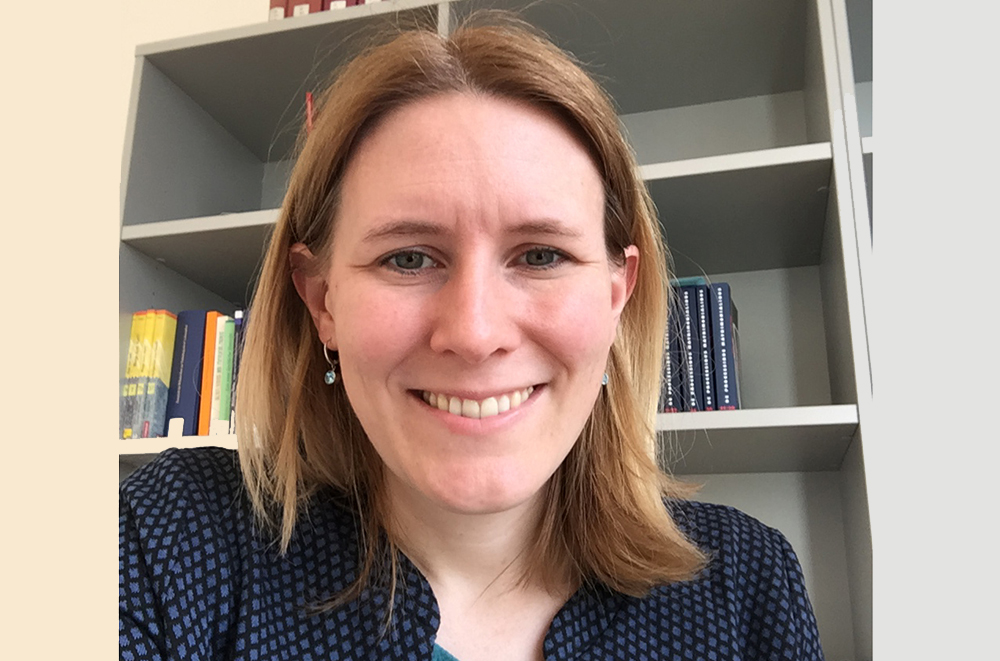
Seit Oktober 2020 forscht und lehrt Sabine Konrad an der Universität Graz.

Seit Oktober 2020 forscht und lehrt Sabine Konrad an der Universität Graz. Foto: Konrad

Die Ehe als Beziehung von Kirche und Staat: Diesem Zusammenspiel widmet sich Sabine Konrad, neue Professorin für Kanonisches Recht 

Für viele ist es der schönste Tag im Leben. Für Sabine Konrad ein zentrales Forschungsthema. Denn wie das Sakrament der Ehe im katholischen Kirchenrecht geregelt ist, damit beschäftigt sich die neue Professorin für Kanonisches Recht. „Wir unterscheiden ja zwischen staatlicher Ehe und dem kirchlich geschlossenen Bund“, präzisiert Konrad. „In anderen Ländern, zum Beispiel in Spanien, Italien und Portugal, wird mit der kirchlichen Trauung zugleich die Zivilehe geschlossen. Im Fall von Konflikten müssen Staat und Kirche eng zusammenarbeiten“, sagt die Expertin für Ehe- und Eheprozessrecht. 

Priesterehe
Unweigerlich drängt sich zu ihrem Schwerpunkt die Frage nach verheirateten Priestern auf. „Den Zölibat kann nur der Papst ändern“, hält Sabine Konrad fest, verweist aber darauf, dass bei den sogenannten unierten katholischen Ostkirchen wie in der Slowakei die Ehe für Pfarrer möglich ist. „Sie müssen allerdings schon vor der Priesterweihe verheiratet sein.“

Nichtigkeitsverfahren
Ein rechtlich definiertes Zusammenspiel von Kirche und Staat gibt es auch in anderen Bereichen. „Eben aktuell, wenn ein verpflichtendes Ethikfach anstelle des Religionsunterrichts diskutiert wird“, schildert Konrad. Ein weiteres Zusammenspiel – jenes von Praxis und Wissenschaft – prägt ihre Arbeit selbst. Sabine Konrad ist auch Richterin am Konsistorium Augsburg, einem kirchlichen Gericht. Diese Tätigkeit fließt automatisch in ihre Forschung ein. Wiederum zum Ehe- und Eheprozessrecht: „Denn es geht vor allem um Verfahren, wann eine Ehe für nichtig erklärt wird. Etwa wenn jemand die Nachkommenschaft ausschließt“, nennt die Professorin einen Grund. 

Gottes Fügung
Seit Oktober 2020 forscht und lehrt Sabine Konrad an der Universität Graz. Zuvor war sie elf Jahre lang Wissenschafterin an der Universität Augsburg. Dass sie den Ruf auf die Professur an der Universität Graz angenommen hat, war für die Theologin eine „Herzensentscheidung“ – und, dass sie schließlich berufen wurde, „Gottes Fügung“. Willkommen fühlte sich die gebürtige Bayerin an der Uni Graz auf jeden Fall: „Das Welcome Center verdient seinen Namen völlig zu Recht, auch die Unterstützung anderer Einrichtungen wie unikid war hervorragend.“

created by Andreas Schweiger

Related news

Semester abroad without barriers: University of Graz wins award for promoting inclusion

The University of Graz has been awarded the Internationalization Award for its new inclusion initiative. Students with fewer opportunities now also receive financial support for their semester abroad outside Europe.

Fair distribution: Researchers determine just greenhouse gas budgets for all EU regions

Ten years ago, on 12 December 2015, the Paris Climate Agreement was signed at the UN Climate Conference. In order to limit global warming to well below two degrees, only a certain amount of CO2 may be emitted worldwide. While the focus was originally on national emission targets, more than 200 subnational regions and almost 300 cities have now adopted their own targets. But how many emissions are they fairly entitled to? Researchers at the University of Graz have now developed transparent criteria for fair distribution at the subnational level for the first time and determined corresponding greenhouse gas budgets for all European regions. The paper was published today in the scientific journal Nature Communications.

Chemical Christmas show at the University of Graz: An explosive evening at the Schauspielh

At the beginning of December, the University of Graz transformed the theater into a laboratory: as part of “Chemical Life,” teacher training students staged a chemical Christmas show for Styrian school classes—complete with ethanol rockets, nitrogen snow, and glowing effects. An evening designed to inspire interest in studying chemistry.

Train by train: Koralm railway accelerates exchange between the Universities

Lectures at the University of Klagenfurt in the morning, seminars at the University of Graz in the afternoon: Austria's longest tunnel and a journey time of around 45 minutes make it easy. The Koralm railway increases the speed of networking between the two university locations. The collaboration builds on existing cooperation - for example in the areas of teacher training, Slavic studies and as employers, the universities are well coordinated.

Begin of page section:
Additional information:

University of Graz
Universitaetsplatz 3
8010 Graz
Austria
  • Contact
  • Web Editors
  • Moodle
  • UNIGRAZonline
  • Imprint
  • Data Protection Declaration
  • Accessibility Declaration
Weatherstation
Uni Graz

End of this page section. Go to overview of page sections

End of this page section. Go to overview of page sections

Begin of page section:

End of this page section. Go to overview of page sections