



Begin of page section:
Page sections:

  • Go to contents (Accesskey 1)
  • Go to position marker (Accesskey 2)
  • Go to main navigation (Accesskey 3)
  • Go to sub navigation (Accesskey 4)
  • Go to additional information (Accesskey 5)
  • Go to page settings (user/language) (Accesskey 8)
  • Go to search (Accesskey 9)

End of this page section. Go to overview of page sections

Begin of page section:
Page settings:

English en
Deutsch de
Search
Login

End of this page section. Go to overview of page sections

Begin of page section:
Search:

Search for details about Uni Graz
Close

End of this page section. Go to overview of page sections


Search

Begin of page section:
Main navigation:

Page navigation:

  • University

    University
    • About the University
    • Organisation
    • Faculties
    • Library
    • Working at University of Graz
    • Campus
    Developing solutions for the world of tomorrow - that is our mission. Our students and our researchers take on the great challenges of society and carry the knowledge out.
  • Research Profile

    Research Profile
    • Our Expertise
    • Research Questions
    • Research Portal
    • Promoting Research
    • Research Transfer
    • Ethics in Research
    • Commission for Scientific Integrity
    Scientific excellence and the courage to break new ground. Research at the University of Graz creates the foundations for making the future worth living.
  • Studies

    Studies
    • Prospective Students
    • Students
    • Welcome Weeks for First Year Students
  • Community

    Community
    • International
    • Location
    • Research and Business
    • Alumni
    The University of Graz is a hub for international research and brings together scientists and business experts. Moreover, it fosters the exchange and cooperation in study and teaching.
Topics
  • Sustainable University
  • Researchers answer
  • Work for us
Close menu

End of this page section. Go to overview of page sections

Begin of page section:
You are here:

University of Graz News Fall für zwei

End of this page section. Go to overview of page sections

Tuesday, 09 March 2021

Fall für zwei

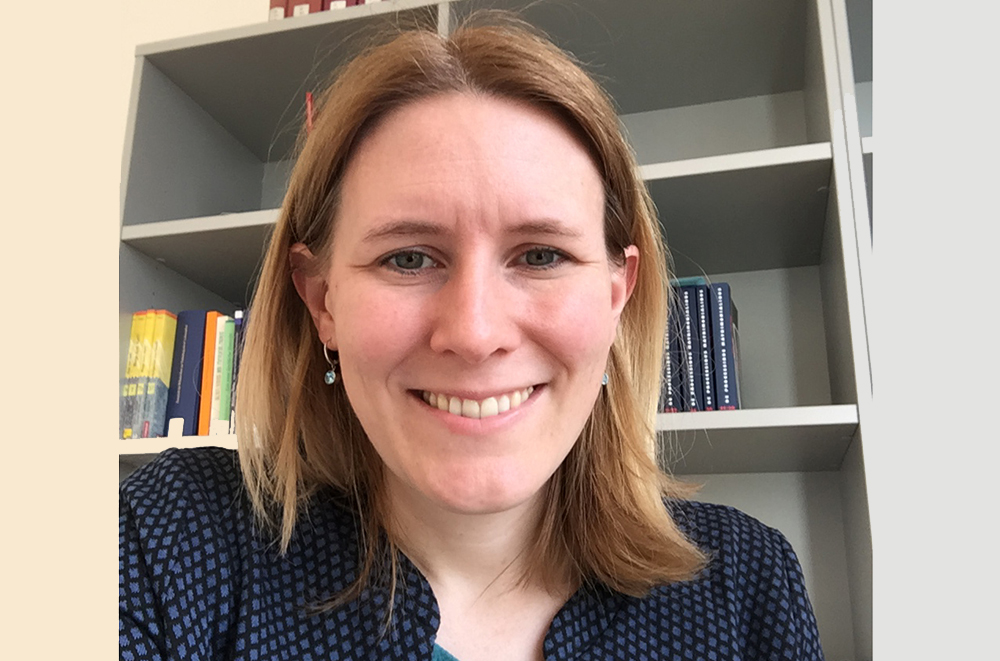
Seit Oktober 2020 forscht und lehrt Sabine Konrad an der Universität Graz.

Seit Oktober 2020 forscht und lehrt Sabine Konrad an der Universität Graz. Foto: Konrad

Die Ehe als Beziehung von Kirche und Staat: Diesem Zusammenspiel widmet sich Sabine Konrad, neue Professorin für Kanonisches Recht 

Für viele ist es der schönste Tag im Leben. Für Sabine Konrad ein zentrales Forschungsthema. Denn wie das Sakrament der Ehe im katholischen Kirchenrecht geregelt ist, damit beschäftigt sich die neue Professorin für Kanonisches Recht. „Wir unterscheiden ja zwischen staatlicher Ehe und dem kirchlich geschlossenen Bund“, präzisiert Konrad. „In anderen Ländern, zum Beispiel in Spanien, Italien und Portugal, wird mit der kirchlichen Trauung zugleich die Zivilehe geschlossen. Im Fall von Konflikten müssen Staat und Kirche eng zusammenarbeiten“, sagt die Expertin für Ehe- und Eheprozessrecht. 

Priesterehe
Unweigerlich drängt sich zu ihrem Schwerpunkt die Frage nach verheirateten Priestern auf. „Den Zölibat kann nur der Papst ändern“, hält Sabine Konrad fest, verweist aber darauf, dass bei den sogenannten unierten katholischen Ostkirchen wie in der Slowakei die Ehe für Pfarrer möglich ist. „Sie müssen allerdings schon vor der Priesterweihe verheiratet sein.“

Nichtigkeitsverfahren
Ein rechtlich definiertes Zusammenspiel von Kirche und Staat gibt es auch in anderen Bereichen. „Eben aktuell, wenn ein verpflichtendes Ethikfach anstelle des Religionsunterrichts diskutiert wird“, schildert Konrad. Ein weiteres Zusammenspiel – jenes von Praxis und Wissenschaft – prägt ihre Arbeit selbst. Sabine Konrad ist auch Richterin am Konsistorium Augsburg, einem kirchlichen Gericht. Diese Tätigkeit fließt automatisch in ihre Forschung ein. Wiederum zum Ehe- und Eheprozessrecht: „Denn es geht vor allem um Verfahren, wann eine Ehe für nichtig erklärt wird. Etwa wenn jemand die Nachkommenschaft ausschließt“, nennt die Professorin einen Grund. 

Gottes Fügung
Seit Oktober 2020 forscht und lehrt Sabine Konrad an der Universität Graz. Zuvor war sie elf Jahre lang Wissenschafterin an der Universität Augsburg. Dass sie den Ruf auf die Professur an der Universität Graz angenommen hat, war für die Theologin eine „Herzensentscheidung“ – und, dass sie schließlich berufen wurde, „Gottes Fügung“. Willkommen fühlte sich die gebürtige Bayerin an der Uni Graz auf jeden Fall: „Das Welcome Center verdient seinen Namen völlig zu Recht, auch die Unterstützung anderer Einrichtungen wie unikid war hervorragend.“

created by Andreas Schweiger

Related news

Electrifying: Researchers film the first moments on the way from light to electricity

Physicists at the University of Graz (Austria), in collaboration with colleagues from Marburg University and Forschungszentrum Jülich (Germany), have achieved a scientific breakthrough. For the first time, the generation of electrical energy from light has been filmed and described theoretically. This work is of far-reaching significance, not least for optimising sustainable energy production from photovoltaics. This is because it provides fundamental building blocks for understanding the physical processes that take place, for example, in organic solar cells. The paper was published in the journal Physical Review X, one of the world’s most prestigious physics journals.

University of Graz: Working together to make Styria a sustainable centre of learning

Round table calls for sustainable funding for the 2028–2030 performance agreement period between the five Styrian universities and the federal government.

How can we teach using YouTube and AI? The University of Graz is strengthening media education in schools

A journey through the blood vessels using VR headsets brings biology lessons to life. An interactive quiz brings physics to life. The YouTube video explains the First World War. Whilst mobile phones are increasingly being banned from the classroom, social media platforms, apps and AI are playing an ever-greater role in knowledge transfer at school. But how can teaching with media be made even more effective? What are the challenges in media-based teaching? At the University of Graz, researchers are discussing these issues at a conference being held in Austria for the first time.

Jurassic Sounds: Biologist reconstructs insect songs from 165 million years ago

It was apparently not just the roars of the dinosaurs that made up the soundscape of the animal world during the Jurassic period. Crickets and grasshoppers communicated through a variety of songs and high-pitched sounds, as Thorin Jonsson from the Institute of Biology at the University of Graz discovered together with colleagues from the universities of Lincoln, Bristol (UK), Beijing (China) and Tempe (USA). The findings on what are so far the oldest traces of sound on Earth have just been published in the journal PNAS.

Begin of page section:
Additional information:

University of Graz
Universitaetsplatz 3
8010 Graz
Austria
  • Contact
  • Web Editors
  • Moodle
  • UNIGRAZonline
  • Imprint
  • Data Protection Declaration
  • Accessibility Declaration
Weatherstation
Uni Graz

End of this page section. Go to overview of page sections

End of this page section. Go to overview of page sections

Begin of page section:

End of this page section. Go to overview of page sections

