Begin of page section:
Page sections:

  • Go to contents (Accesskey 1)
  • Go to position marker (Accesskey 2)
  • Go to main navigation (Accesskey 3)
  • Go to sub navigation (Accesskey 4)
  • Go to additional information (Accesskey 5)
  • Go to page settings (user/language) (Accesskey 8)
  • Go to search (Accesskey 9)

End of this page section. Go to overview of page sections

Begin of page section:
Page settings:

English en
Deutsch de
Search
Login

End of this page section. Go to overview of page sections

Begin of page section:
Search:

Search for details about Uni Graz
Close

End of this page section. Go to overview of page sections


Search

Begin of page section:
Main navigation:

Page navigation:

  • University

    University
    • About the University
    • Organisation
    • Faculties
    • Library
    • Working at University of Graz
    • Campus
    Developing solutions for the world of tomorrow - that is our mission. Our students and our researchers take on the great challenges of society and carry the knowledge out.
  • Research Profile

    Research Profile
    • Our Expertise
    • Research Questions
    • Research Portal
    • Promoting Research
    • Research Transfer
    • Ethics in Research
    Scientific excellence and the courage to break new ground. Research at the University of Graz creates the foundations for making the future worth living.
  • Studies

    Studies
    • Prospective Students
    • Students
  • Community

    Community
    • International
    • Location
    • Research and Business
    • Alumni
    The University of Graz is a hub for international research and brings together scientists and business experts. Moreover, it fosters the exchange and cooperation in study and teaching.
  • Spotlight
Topics
  • Sustainable University
  • Researchers answer
  • Work for us
Close menu

End of this page section. Go to overview of page sections

Begin of page section:
You are here:

University of Graz News Exzellente Ausbildung

End of this page section. Go to overview of page sections

Thursday, 29 January 2015

Exzellente Ausbildung

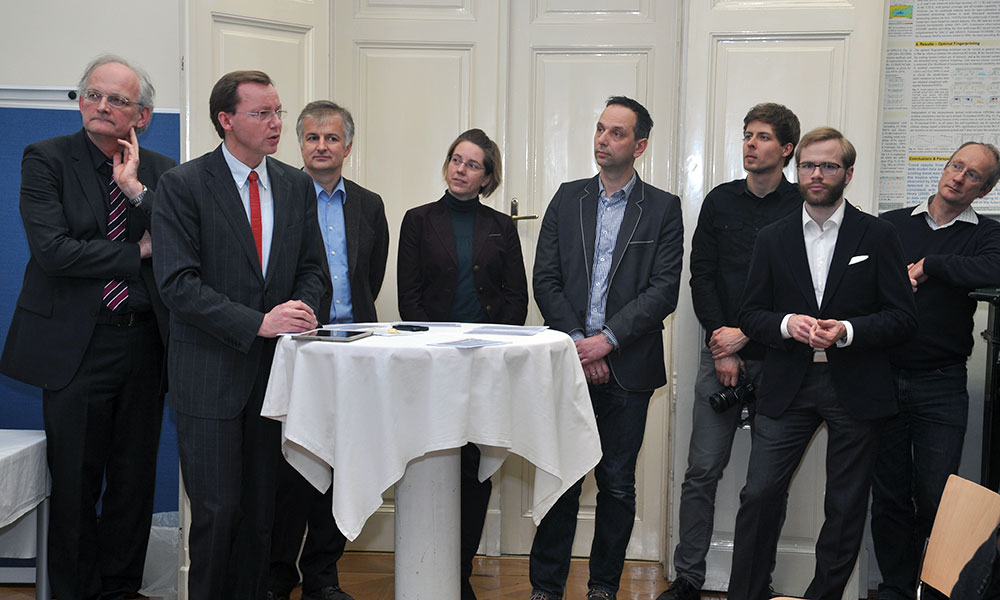
Lehrende im DK: Lukas Meyer, Gottfried Kirchengast, Alfred Posch, Birgit Bednar-Friedl, Steffen Birk, Matthias Damert (Studierender), Johannes Haas (Studierender) und Oliver Sass (v.l.). Fotos: Uni Graz/Pichler

Lehrende im DK: Lukas Meyer, Gottfried Kirchengast, Alfred Posch, Birgit Bednar-Friedl, Steffen Birk, Matthias Damert (Studierender), Johannes Haas (Studierender) und Oliver Sass (v.l.). Fotos: Uni Graz/Pichler

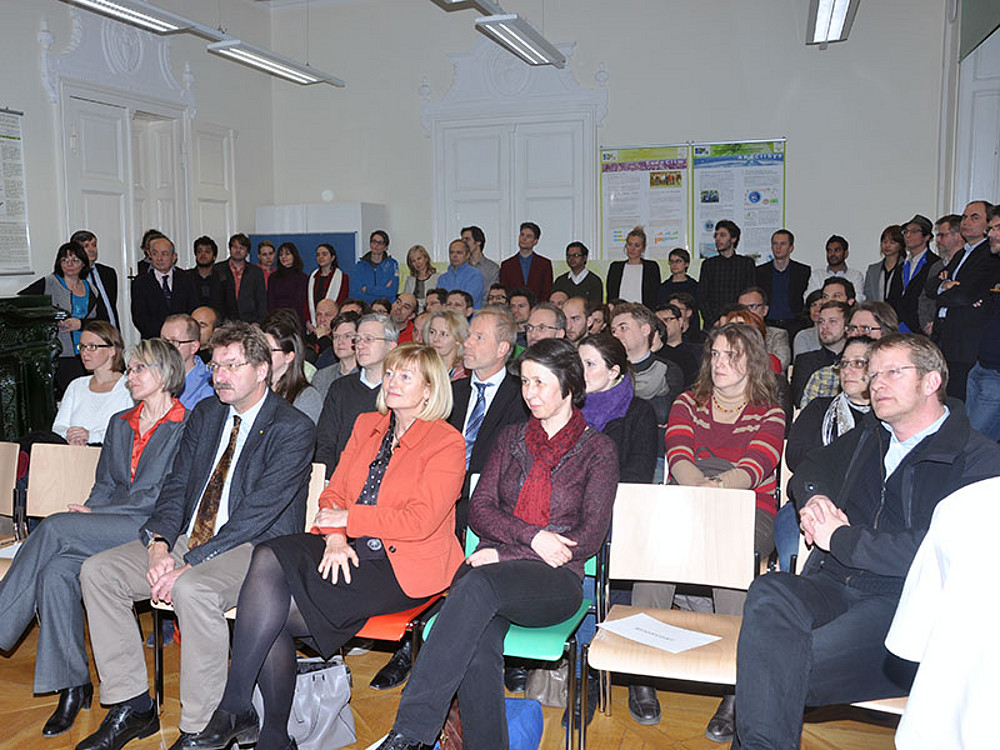
Vizerektor Peter Scherrer, Rektorin Christa Neuper und Dekanin Barbara Gasteiger-Klicpera (Mitte v.l.)

Vizerektor Peter Scherrer, Rektorin Christa Neuper und Dekanin Barbara Gasteiger-Klicpera (Mitte v.l.)

Studierende im DK: Matthias Damert, Sungmin O, Kian Mintz-Woo (v.l.). Für weitere Fotos auf Bild und Rechtspfeil klicken ...

Studierende im DK: Matthias Damert, Sungmin O, Kian Mintz-Woo (v.l.). Für weitere Fotos auf Bild und Rechtspfeil klicken ...

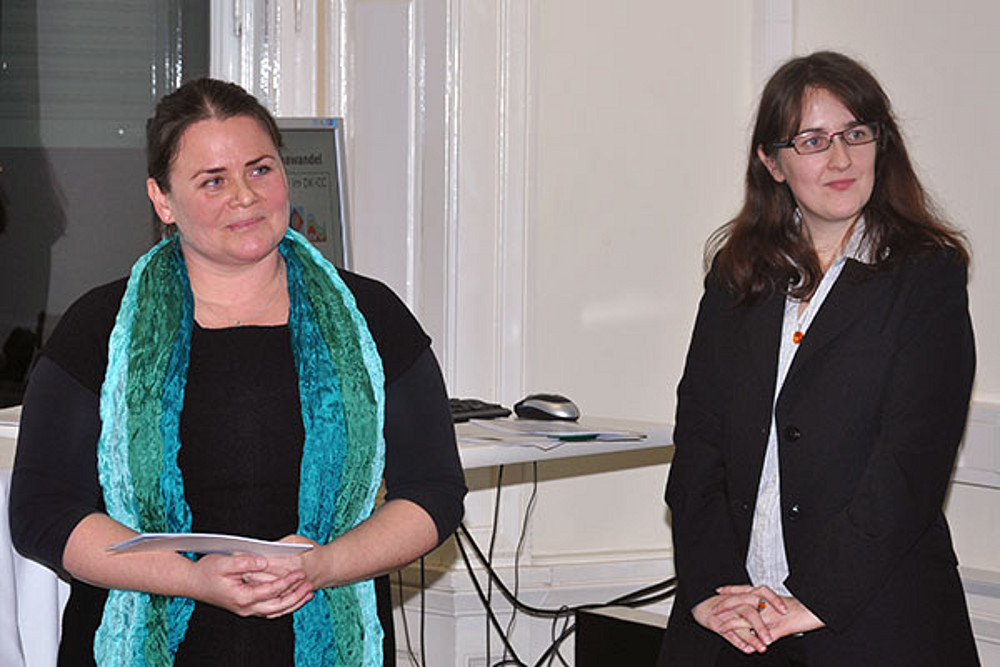
DK-Koordinatorin Bettina Lackner und DK-Managerin Regina Brunnhofer (v.l.)

DK-Koordinatorin Bettina Lackner und DK-Managerin Regina Brunnhofer (v.l.)

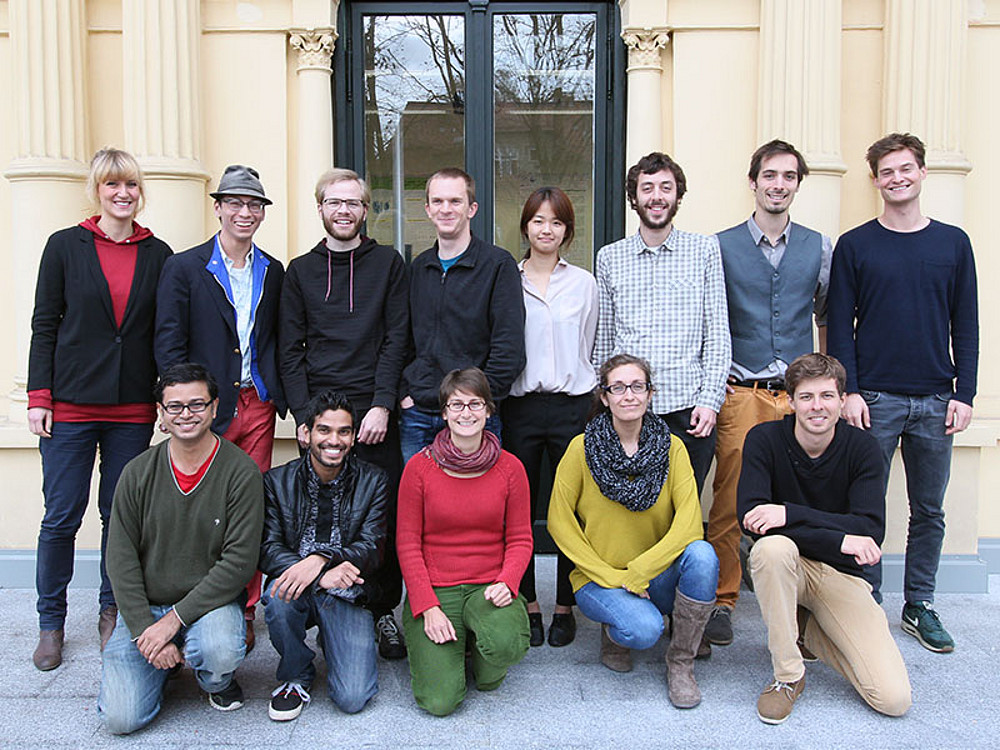
13 Studierende aus sieben Ländern sind aktuell im DK Klimawandel angestellt.

13 Studierende aus sieben Ländern sind aktuell im DK Klimawandel angestellt.

Das Doktoratskolleg Klimawandel lud zur Eröffnungsfeier ins Wegener Center

Ob Natur, Wirtschaft oder Gesellschaft, der Klimawandel bringt in vielen Bereichen Veränderungen mit sich. Die vielschichtigen möglichen Konsequenzen besser zu verstehen sowie Gegenmaßnahmen und Strategien zur Anpassung an die Klimafolgen zu entwickeln, ist Ziel des Doktoratskollegs (DK), das am 28. Jänner 2015 im Wegener Center feierlich eröffnet wurde.


„Die erfolgreiche Einwerbung dieses Doktoratskollegs ist ein wesentlicher Meilenstein für den Forschungsschwerpunkt ,Umwelt und Globaler Wandel’“, betonte Rektorin Christa Neuper die Bedeutung des vom Österreichischen Wissenschaftsfonds FWF geförderten Programms für die Uni Graz. „Gleichzeitig ist das DK ein Best-Practice-Modell für interdisziplinäre Zusammenarbeit und internationale Nachwuchsförderung“, so Neuper.

„Das Doktoratskolleg kann sich als international wettbewerbsfähig auf höchstem Niveau verstehen“, unterstrich FWF-Vizepräsident Alan Scott in seinen Grußworten, die er krankheitsbedingt leider nicht persönlich überbringen konnte.

DK-Sprecher Lukas Meyer, Lehrende und Studierende gaben anlässlich der Eröffnungsfeier Einblicke in die Entwicklung, Inhalte und Themen der Ausbildung, unter der Moderation von DK-Koordinatorin Bettina Lackner.


13 junge ForscherInnen aus sieben Ländern arbeiten derzeit im Rahmen des Doktoratskollegs „Klimawandel – Unsicherheiten, Schwellenwerte und Strategien“ an ihrer Dissertation. Sie kommen aus Philosophie, Systemwissenschaften, Ökonomie, Geowissenschaften, Meteorologie und Klimaforschung. Das DK bietet ihnen die Chance, in einem hochqualitativen Forschungsumfeld und mit adäquater Bezahlung ihre wissenschaftliche Karriere voranzutreiben.

>> mehr Informationen

created by Gudrun Pichler

Related news

Diversity buddies at the University of Graz: Support on equal terms

The University of Graz is strengthening its commitment to equal opportunities with its new Diversity Buddies. University members can find easily accessible contact persons here for questions relating to equality and diversity. All employees can get involved and take action.

When parents find it difficult to have a say

In her dissertation, translation scholar Marie Tschurtschenthaler examines how communication between compulsory schools and parents whose first language is not German works – and what role professional language mediation plays in this. Initial insights show that it is not just about language, but also about resources, responsibilities and the institutional framework.

AI in schools: Maria Bertel drafts legal guidelines for teachers

The legal expert and her team analysed the legal situation regarding the use of artificial intelligence in education as part of an EU project and answered open questions from practice.

Cosmetics in the environment: University of Graz proves danger to ants

Titanium dioxide, which is found in cosmetics, for example, is increasingly entering the environment in the form of nanoparticles. This could also put insects at risk. If ants ingest the substance in combination with the pesticide glyphosate, it disturbs the development of their offspring. Scientists at the University of Graz are drawing attention to the negative consequences of this toxic cocktail.

Begin of page section:
Additional information:

University of Graz
Universitaetsplatz 3
8010 Graz
Austria
  • Contact
  • Web Editors
  • Moodle
  • UNIGRAZonline
  • Imprint
  • Data Protection Declaration
  • Accessibility Declaration
Weatherstation
Uni Graz

End of this page section. Go to overview of page sections

End of this page section. Go to overview of page sections

Begin of page section:

End of this page section. Go to overview of page sections