Begin of page section:
Page sections:

  • Go to contents (Accesskey 1)
  • Go to position marker (Accesskey 2)
  • Go to main navigation (Accesskey 3)
  • Go to sub navigation (Accesskey 4)
  • Go to additional information (Accesskey 5)
  • Go to page settings (user/language) (Accesskey 8)
  • Go to search (Accesskey 9)

End of this page section. Go to overview of page sections

Begin of page section:
Page settings:

English en
Deutsch de
Search
Login

End of this page section. Go to overview of page sections

Begin of page section:
Search:

Search for details about Uni Graz
Close

End of this page section. Go to overview of page sections


Search

Begin of page section:
Main navigation:

Page navigation:

  • University

    University
    • About the University
    • Organisation
    • Faculties
    • Library
    • Working at University of Graz
    • Campus
    Developing solutions for the world of tomorrow - that is our mission. Our students and our researchers take on the great challenges of society and carry the knowledge out.
  • Research Profile

    Research Profile
    • Our Expertise
    • Research Questions
    • Research Portal
    • Promoting Research
    • Research Transfer
    • Ethics in Research
    • Commission for Scientific Integrity
    Scientific excellence and the courage to break new ground. Research at the University of Graz creates the foundations for making the future worth living.
  • Studies

    Studies
    • Prospective Students
    • Students
    • Post-registration Law
  • Community

    Community
    • International
    • Location
    • Research and Business
    • Alumni
    The University of Graz is a hub for international research and brings together scientists and business experts. Moreover, it fosters the exchange and cooperation in study and teaching.
Topics
  • Sustainable University
  • Researchers answer
  • Work for us
Close menu

End of this page section. Go to overview of page sections

Begin of page section:
You are here:

University of Graz News Extreme heat affects child mortality in Africa

End of this page section. Go to overview of page sections

Friday, 23 August 2024

Extreme heat affects child mortality in Africa

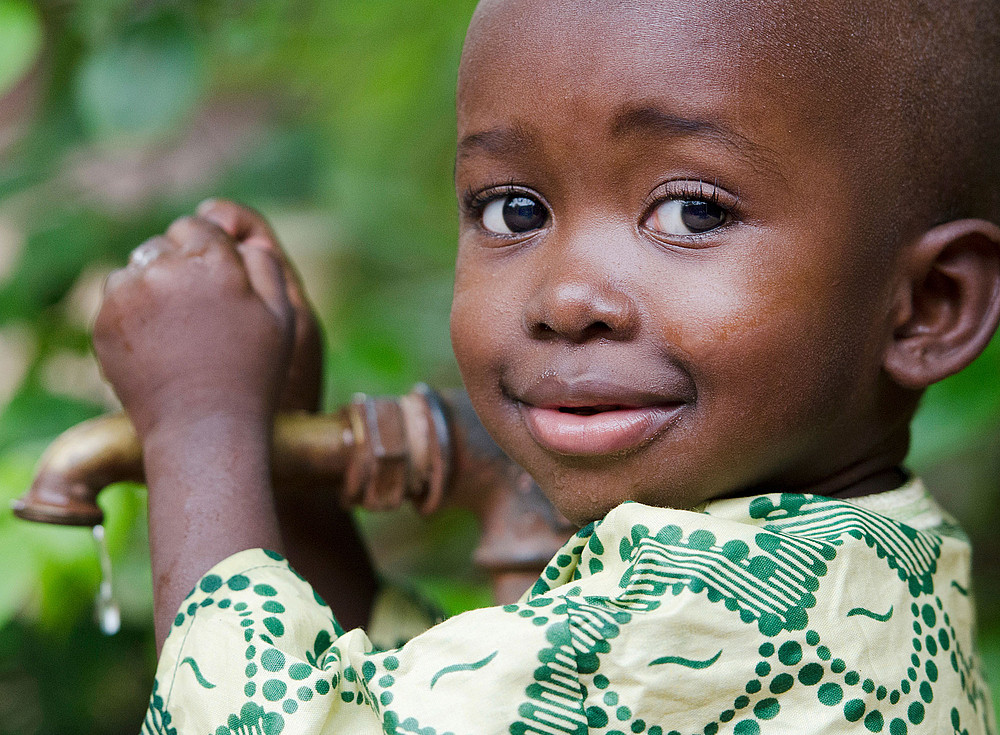
Little African boy clutches a tap ©Mayer Riccardo - stock.adobe.com

In view of the increase in extreme heat, preventive protection and adaptation measures are necessary to further reduce child mortality in Africa. Photo: Riccardo Niels Mayer - stock.adobe.com

It is a sustainable development goal of the United Nations to reduce child mortality to 25 deaths per 1000 livebirths in children younger than five years by 2030. The mortality rate is influenced by various factors. The role played by malnutrition and diseases such as HIV or malaria is well known. However, little is known about the connection with very high temperatures. An international study involving the University of Graz now shows that the influence of extreme heat on the risk of death in children under the age of five in Africa varies depending on age group, climate region and season. Each country must therefore take its own preventive measures tailored to the respective conditions and target groups.

"For example, while in East Africa, Senegal and The Gambia the risk of death was significantly increased for all children up to five years of age when exposed to heat, in Ethiopia this was only true for newborns," reports Chloe Brimicombe, first author of a current study, which was recently published in The Lancet Planetary Health. "Our surveys of health data and deaths from 13 countries between 1993 and 2016 show that the effects of heat vary depending on climate region, season and age," summarises the climate researcher from Ilona M. Otto's team at the Wegener Center of the University of Graz. Previous studies seem to have overlooked these dependencies.

The aim of the work was to provide a detailed analysis of the consequences of extreme temperatures on the health of newborns, babies aged 28 days to 12 months and children aged between one and five years. Based on these results, researchers and policymakers should now examine whether existing efforts to reduce mortality rates take sufficient account of this risk.
In view of the increase in extreme heat events, protective and preventive adaptation measures are necessary. In addition, Brimicombe points to the need to tackle the root of the problem: "Progress in reducing child mortality could be delayed if we don't do enough to mitigate climate change."

The study is part of the EU research project "Heat Indicators for Global Health (HIGH) Horizons" that hopes to alleviate the impact of heat exposure on pregnant women, newborns, children and health workers through mitigation and adaptation interventions in health facilities, a personalised Early Warning System and policy-oriented work.
HIGH Horizons is funded by the European Union’s Horizon Research and Innovation programme and is also part of the European climate-health cluster.
Project partner London School of Hygiene & Tropical Medicine (LSHTM) is funded by UK Research and Innovation, UKRI Innovate UK.

Publication
Chloe Brimicombe, Katharina Wieser, Tobias Monthaler, Debra Jackson, Jeroen De Bont, Matthew F. Chersich, Ilona M. Otto. Effects of ambient heat exposure on risk of all-cause mortality in children younger than 5 years in Africa: a pooled time-series analysis
The Lancet Planetary Health, 8 August 2024
https://doi.org/10.1016/S2542-5196(24)00160-8


 

created by Gudrun Pichler

Related news

Record of reported species: Styria wins the global City Nature Challenge

Observers in Styria recorded 4,660 different animals, plants and fungi as part of the international City Nature Challenge between 24 and 27 April 2026. This saw the region take first place in the "species" category. Ostrava in the Czech Republic made the most observations, with just under 140,000, whilst the San Francisco Bay Area had the highest number of participants, namely 3,019.

Studying at the University of Graz: How to enrol

Ready for a new chapter in your life with the start of your studies at the University of Graz in the winter semester 2026/27? Here you will find information on deadlines, admission procedures, registration, and everything else you need to successfully start your studies in the fall.

Europe Day: Strengthening international expertise with Arqus

On 9 May, the spotlight will be on Europe. At the University of Graz, European cooperation is also a tangible part of everyday student life – not least through the Arqus university alliance. Master’s and PhD students can currently register for the Arqus micro-credential in ‘Advanced Creative Thinking and Communication’.

A substantial community: the key role of soil crusts in the earth system

They are often overshadowed by the plant world: lichens, fungi, mosses and bacteria, which form unique communities on rocks and trees or as soil crusts. Bettina Weber from the University of Graz is bringing this biological alliance into the research spotlight. Her research shows that these communities form an essential part of the Earth’s critical zone and play a key role in the interactions between land and atmosphere. Bettina Weber was honoured by the European Geosciences Union for her groundbreaking research at the beginning of May.

Begin of page section:
Additional information:

University of Graz
Universitaetsplatz 3
8010 Graz
Austria
  • Contact
  • Web Editors
  • Moodle
  • UNIGRAZonline
  • Imprint
  • Data Protection Declaration
  • Accessibility Declaration
Weatherstation
Uni Graz

End of this page section. Go to overview of page sections

End of this page section. Go to overview of page sections

Begin of page section:

End of this page section. Go to overview of page sections