




Begin of page section:
Page sections:

  • Go to contents (Accesskey 1)
  • Go to position marker (Accesskey 2)
  • Go to main navigation (Accesskey 3)
  • Go to sub navigation (Accesskey 4)
  • Go to additional information (Accesskey 5)
  • Go to page settings (user/language) (Accesskey 8)
  • Go to search (Accesskey 9)

End of this page section. Go to overview of page sections

Begin of page section:
Page settings:

English en
Deutsch de
Search
Login

End of this page section. Go to overview of page sections

Begin of page section:
Search:

Search for details about Uni Graz
Close

End of this page section. Go to overview of page sections


Search

Begin of page section:
Main navigation:

Page navigation:

  • University

    University
    • About the University
    • Organisation
    • Faculties
    • Library
    • Working at University of Graz
    • Campus
    Developing solutions for the world of tomorrow - that is our mission. Our students and our researchers take on the great challenges of society and carry the knowledge out.
  • Research Profile

    Research Profile
    • Our Expertise
    • Research Questions
    • Research Portal
    • Promoting Research
    • Research Transfer
    • Ethics in Research
    • Commission for Scientific Integrity
    Scientific excellence and the courage to break new ground. Research at the University of Graz creates the foundations for making the future worth living.
  • Studies

    Studies
    • Prospective Students
    • Students
  • Community

    Community
    • International
    • Location
    • Research and Business
    • Alumni
    The University of Graz is a hub for international research and brings together scientists and business experts. Moreover, it fosters the exchange and cooperation in study and teaching.
  • Spotlight
Topics
  • Sustainable University
  • Researchers answer
  • Work for us
Close menu

End of this page section. Go to overview of page sections

Begin of page section:
You are here:

University of Graz News Eins A

End of this page section. Go to overview of page sections

Friday, 06 December 2013

Eins A

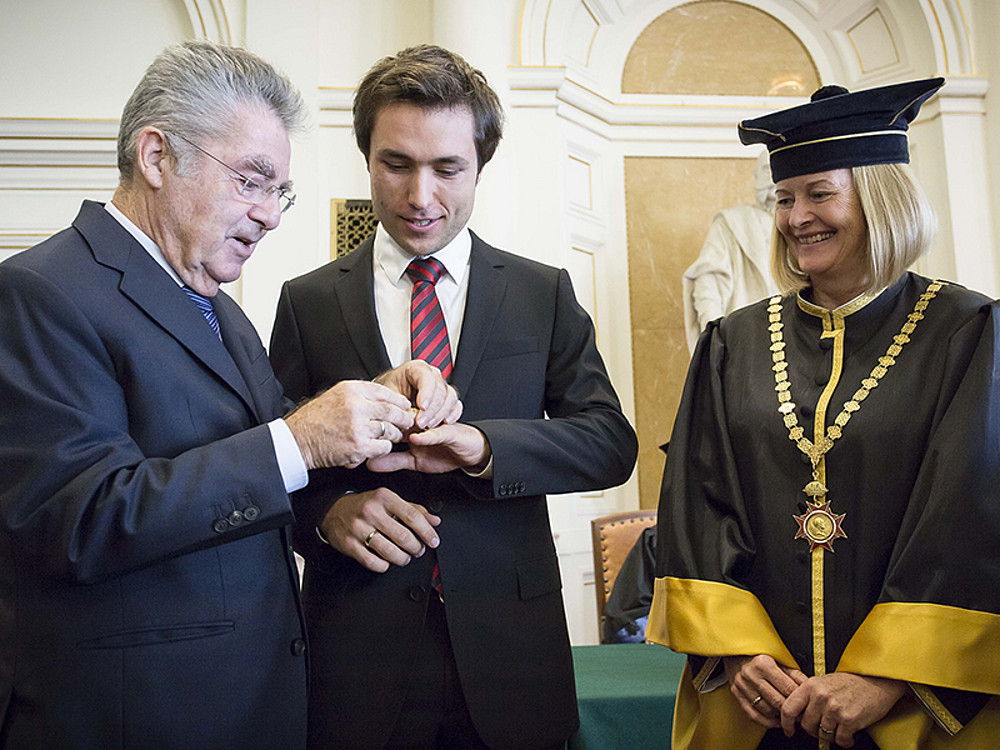
Ausgezeichnete Spitzenleistung: Bundespräsident Heinz Fischer, sub-auspiciis-Doktor Martin Holler und Rektorin Christa Neuper (v.l.) Fotos: Kanizaj

Ausgezeichnete Spitzenleistung: Bundespräsident Heinz Fischer, sub-auspiciis-Doktor Martin Holler und Rektorin Christa Neuper (v.l.) Fotos: Kanizaj

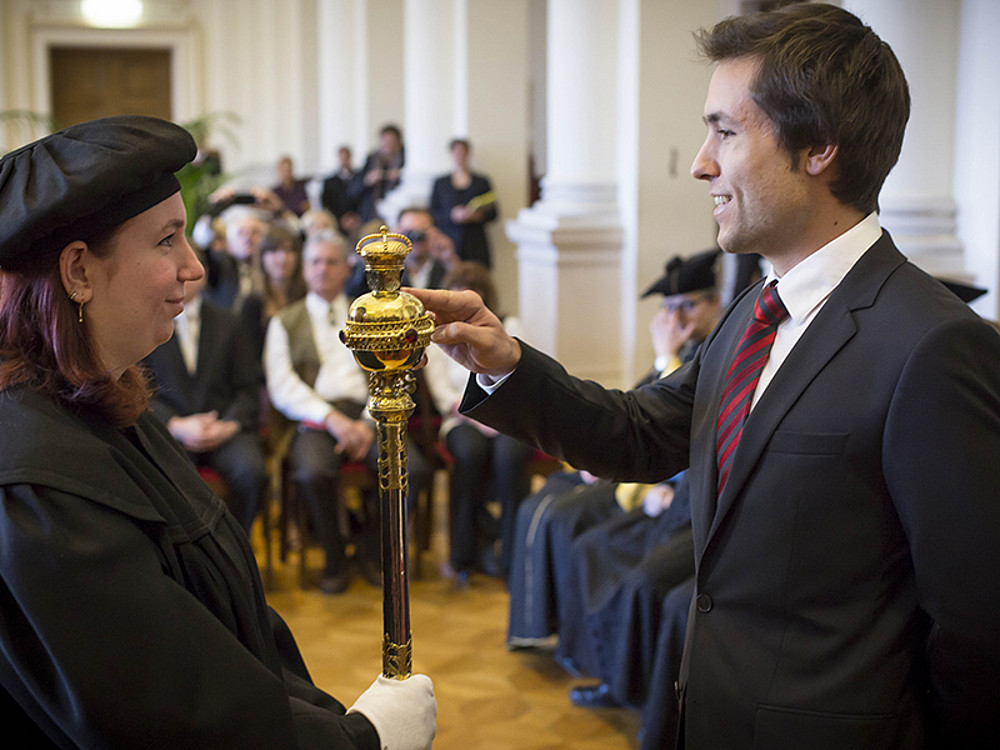
Holler gelobte weitere Verbundenheit mit seiner Alma Mater

Holler gelobte weitere Verbundenheit mit seiner Alma Mater

Bundespräsident Fischer gratulierte

Bundespräsident Fischer gratulierte

Mathematiker Martin Holler promovierte sub auspiciis an der Uni Graz

Ausgezeichneter Erfolg in Schule und Studium, herausragende Dissertation: Wenn man eins und eins zusammenzählt, sind die Leistungen des Mathematikers Martin Holler „Eins A“. Der 27-jährige Forscher promovierte heute, am 6. Dezember 2013, an der Karl-Franzens-Universität sub auspiciis – in Anwesenheit von Bundespräsident Heinz Fischer.

„Diese außergewöhnliche Leistung ist ein Beispiel für Exzellenz und erstklassige Forschung, die zu den Kernaufgaben der Karl-Franzens-Universität zählen“, gratulierte Rektorin Christa Neuper dem Promovenden. Die Förderung des wissenschaftlichen Nachwuchses sei ein Auftrag, den die Uni Graz für die gesamte Gesellschaft erfülle.

Bundespräsident Heinz Fischer überreichte den Ehrenring der Republik und würdigte die ausdauernde Spitzenleitung: „Unsere Gesellschaft benötigt eine große Anzahl höchst ausgebildeter AbsolventInnen. Es ist daher wichtig, Vorbilder aufs Podium zu stellen.“

Besonders schwer getan hat er sich nie, gesteht Martin Holler. Das Lernen sei ihm stets leicht gefallen – im Besonderen die Mathematik.
„Mir gefällt der formale Aufbau der Mathematik. Auf Basis eindeutiger Definitionen werden Aussagen mit logischen Schlüssen bewiesen“, schildert Holler, aufgewachsen in Kaindorf an der Sulm.

Trotz aller notwendigen Formeln, Beweise und abstrakten Modelle ist dem Nachwuchsforscher, der am Institut für Mathematik und wissenschaftliches Rechnen der Uni Graz tätig ist, immer ein Aspekt wichtig: „Ich möchte auch konkrete Anwendungen aufzeigen.“ Und die standen in seiner – mit sehr gut benoteten – Doktorarbeit im Fokus.

Wer kennt das Problem nicht: Digitale Fotos, die „pixeln“ oder über eine minderwertige Auflösung verfügen. Holler hat in seiner Dissertation unter anderem eine Methode entwickelt, die es erlaubt, JPG-komprimierte Bilder zu rekonstruieren und verbessert darzustellen. „Die Rekonstruktion wird als Lösung eines mathematischen Minimierungsproblems gefunden, die durch ein Computerprogramm berechnet wird“, erklärt der frischgebackene Doktor. Ein Patentverfahren läuft. Derzeit ist er auch auf der Suche nach einem interessierten Unternehmen, das die Idee verwertet.


In der Forschung will Martin Holler auch weiterhin bleiben und beweisen, dass „seine Disziplin mehr als nur etwas für Exzentriker ist“. Diesem Klischee widerspricht der Sohn einer Mathematiklehrerin und eines Lokführers ohnehin: Denn neben viel Sport – etwa Laufen – entspannt sich der frisch verheiratete Steirer beim Kochen und auf seinen Reisen mit dem Motorrad.

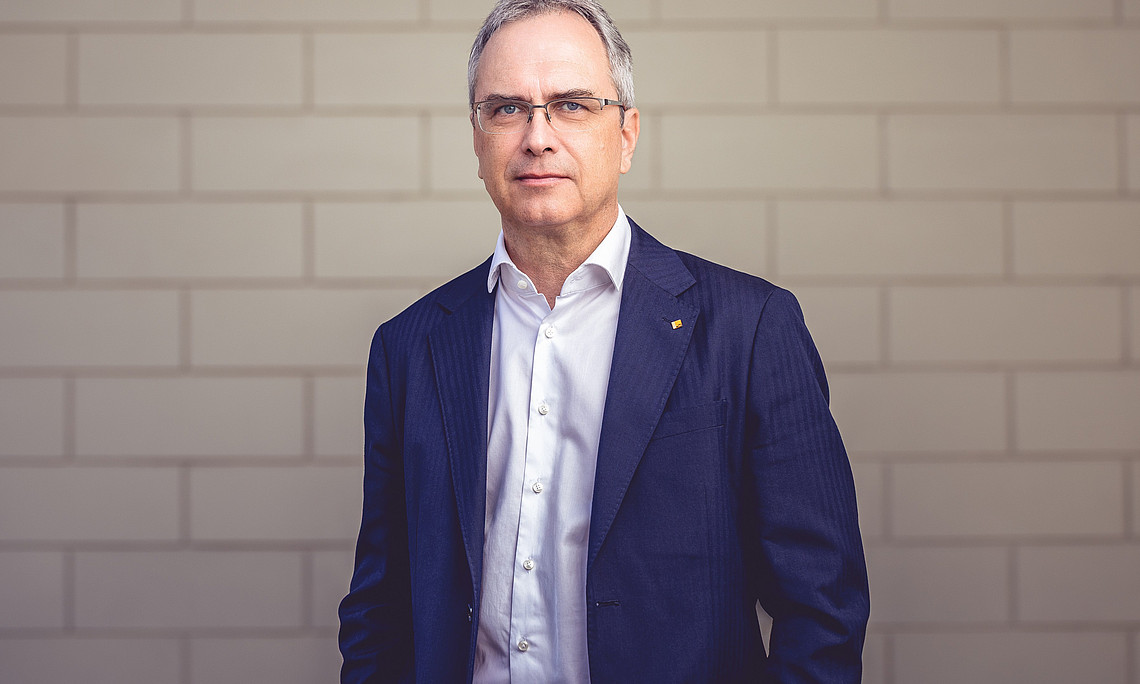
created by Andreas Schweiger

Related news

Higher Education Strategy 2040: Austria’s universities on course for the future

Austria has 77 higher education institutions, which is above the EU average – but does this really make sense? The new Higher Education Strategy 2040 focuses on cooperation rather than mergers. As one of the six largest universities in Austria, the University of Graz plays a central role in this.

Climate research in Greenland: Old data provides new insights

The polar explorer and University of Graz professor Alfred Wegener left behind a unique collection of climate data from Greenland. A research team from the University of Graz is now analysing this 100-year-old treasure trove of data and comparing it with current measurements.

Diversity in nature and science: How we talk about plants and each other

Ginkgo, kiwi, hemp: they exist as male and female plants. Anyone who paid attention in biology class will confirm this. But is this categorisation, established by Carl von Linné almost 300 years ago, still valid today? An interdisciplinary team at the University of Graz is questioning these attributions and using this as a starting point to provide food for thought for gender-sensitive interaction between students, scientific and teaching staff.

Around the world in eight stops: the Long Night of Research at the University of Graz

On 24 April from 5 pm, you can take a short trip around the globe at the University of Graz, discovering pecularities of foreign countries or new local features in the entrance hall of the University Library. The itinerary takes you through introduced animal species, political attitudes and the omnipotence of algorithms. There will also be a programme in the historic reading hall, as well as at the UniGraz@Museum and the University Archive.

Begin of page section:
Additional information:

University of Graz
Universitaetsplatz 3
8010 Graz
Austria
  • Contact
  • Web Editors
  • Moodle
  • UNIGRAZonline
  • Imprint
  • Data Protection Declaration
  • Accessibility Declaration
Weatherstation
Uni Graz

End of this page section. Go to overview of page sections

End of this page section. Go to overview of page sections

Begin of page section:

End of this page section. Go to overview of page sections

