Begin of page section:
Page sections:

  • Go to contents (Accesskey 1)
  • Go to position marker (Accesskey 2)
  • Go to main navigation (Accesskey 3)
  • Go to sub navigation (Accesskey 4)
  • Go to additional information (Accesskey 5)
  • Go to page settings (user/language) (Accesskey 8)
  • Go to search (Accesskey 9)

End of this page section. Go to overview of page sections

Begin of page section:
Page settings:

English en
Deutsch de
Search
Login

End of this page section. Go to overview of page sections

Begin of page section:
Search:

Search for details about Uni Graz
Close

End of this page section. Go to overview of page sections


Search

Begin of page section:
Main navigation:

Page navigation:

  • University

    University
    • About the University
    • Organisation
    • Faculties
    • Library
    • Working at University of Graz
    • Campus
    Developing solutions for the world of tomorrow - that is our mission. Our students and our researchers take on the great challenges of society and carry the knowledge out.
  • Research Profile

    Research Profile
    • Our Expertise
    • Research Questions
    • Research Portal
    • Promoting Research
    • Research Transfer
    • Ethics in Research
    Scientific excellence and the courage to break new ground. Research at the University of Graz creates the foundations for making the future worth living.
  • Studies

    Studies
    • Prospective Students
    • Students
  • Community

    Community
    • International
    • Location
    • Research and Business
    • Alumni
    The University of Graz is a hub for international research and brings together scientists and business experts. Moreover, it fosters the exchange and cooperation in study and teaching.
  • Spotlight
Topics
  • Sustainable University
  • Researchers answer
  • Work for us
Close menu

End of this page section. Go to overview of page sections

Begin of page section:
You are here:

University of Graz News Drama, Baby!

End of this page section. Go to overview of page sections

Friday, 15 April 2022

Drama, Baby!

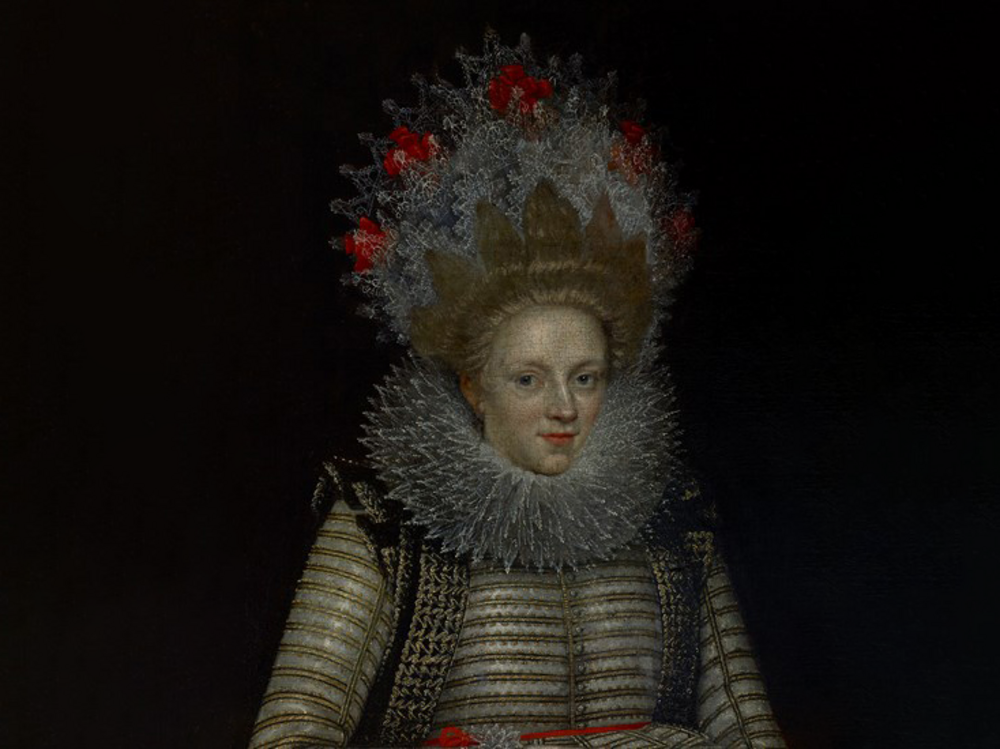
Elizabeth Cary (1585–1639) beschrieb in einem ihrer Dramen eheliche Konflikte aus weiblicher Sicht – zur damaligen Zeit ein absolutes No-Go. Foto: CC0, commons.wikimedia.org

Elizabeth Cary (1585–1639) beschrieb in einem ihrer Dramen eheliche Konflikte aus weiblicher Sicht – zur damaligen Zeit ein absolutes No-Go. Foto: CC0, commons.wikimedia.org

In klassischen englischen Dramen fehlen meist starke Frauenfiguren. Die wenigen Ausnahmen erforscht die Anglistin Christine Schwanecke

„Die ganze Welt ist eine Bühne und alle Frauen und Männer bloß Spieler, sie treten auf und gehen wieder ab.“ Shakespeare hat dieses bekannte Zitat im 16. Jahrhundert formuliert, die Anglistin Christine Schwanecke will seine Bedeutung heute wieder ins Bewusstsein rufen. Sie erklärt: „Dramen führen uns vor Augen, was Menschen motiviert, bewegt oder verängstigt. Sie zeigen uns auch, „dass manche Ungerechtigkeiten, die uns heute bewegen, schon früher ein Thema waren, etwa Ausländerfeindlichkeit oder patriarchale Strukturen.“ Schwanecke ist seit Oktober 2021 Professorin für Englische Literatur- und Kulturwissenschaft an der Uni Graz. Wie Dramen Kultur erzählen und Kultur verändern, ist in der Forschung eines ihrer Lieblingsthemen. Nun will sie dieses um eine feministische Sichtweise erweitern.  

 „Im klassischen englischen Literaturkanon fehlen Dramen aus der Frühen Neuzeit, also aus dem 16. und 17. Jahrhundert, mit starken Frauenfiguren im Zentrum“, erzählt die Anglistin. Die wenigen Ausnahmen sind heute nur ExpertInnen bekannt. Thomas Middleton (1580–1627) etwa, ein Zeitgenosse Shakespeares, lässt die Figur der Moll in „The Roaring Girl“ offen Geschlechterrollen hinterfragen. „Sie trägt Hosen und will nicht heiraten. Ihre Umwelt nimmt ihr das denkbar übel. Das ändert sich bis zum Schluss nicht“, schildert Schwanecke, die derartige Stücke bekannter machen möchte. Auch den Werken von Elizabeth Cary (1585–1639) will die Forscherin zu mehr Popularität verhelfen. „Cary war die erste Frau, von der man weiß, dass sie ein Theaterstück auf Englisch schrieb und es veröffentlichen ließ. In einem ihrer Dramen beschreibt sie eheliche Konflikte aus weiblicher Sicht – zur damaligen Zeit ein absolutes No-Go“, erklärt Schwanecke.

Die Anglistin war während ihres Studiums in Heidelberg selbst begeisterte Hobby-Schauspielerin. Erschreckend fand sie, dass Literatur, Kunst und Kultur während der Corona-Pandemie von der Politik offensichtlich als weniger wichtig empfunden wurden und kaum Unterstützung erhielten. „Dabei brauchen wir gerade in Krisenzeiten dieses Medium, das uns zeigt, wie wir ticken, was möglich ist und wie wir unsere Zukunft besser gestalten können.“

Die Universität Graz kennt die gebürtige Deutsche seit ihrer Dissertationsphase: „Meine erste wissenschaftliche Konferenz habe ich hier besucht. Und die Arbeiten aus dem Institut für Anglistik haben mich sowieso schon während meines Studiums sehr geprägt.“ Umso mehr freut sich Schwanecke, die auch in London studierte und von der Universität Mannheim in die Steiermark kam, nun selbst an diesem Institut zu lehren und zu forschen.

Die Anglistin Christine Schwanecke erforscht Dramen des klassischen englischen Literaturkanon aus weiblicher Perspektive. Foto: Borchard, Heidelberg.
created by Gerhild Leljak

Related news

Cosmetics in the environment: University of Graz proves danger to ants

Titanium dioxide, which is found in cosmetics, for example, is increasingly entering the environment in the form of nanoparticles. This could also put insects at risk. If ants ingest the substance in combination with the pesticide glyphosate, it disturbs the development of their offspring. Scientists at the University of Graz are drawing attention to the negative consequences of this toxic cocktail.

How are tech companies changing democracy? Uni Graz designs exhibition for schools

Filtered information, conspiracy theories, fake news – certain groups and corporations are using social media and algorithms to try to influence public opinion in their favour. Their goal: to weaken fundamental rights and diversity of opinion and seize power. In a new exhibition, researchers at the University of Graz are working with pupils to explore the impact of social media and AI on democracy. In accompanying workshops, the scientists want to encourage young people to develop their own ideas for a socially and ecologically viable future and to actively help shape it. The exhibition, designed as a travelling exhibition for schools, will open on 9 March 2026 at the Dreihackengasse Gymnasium in Graz.

Step by step: What motivates Mireille van Poppel as a scientist and vice-rector

Improving people's health and eliminating inequalities: Mireille van Poppel pursues these goals both as a public health researcher and as vice-rector for Internationalisation and Equality. In both roles, she pays particular attention to individual needs.

Master's degree in psychotherapy in Graz: registration opens in March

Graz is becoming a hotspot for psychotherapy: from 2026, the University of Graz and the Medical University of Graz will jointly offer the new master's programme. Registration for the admission procedure for the 140 study places will start in March.

Begin of page section:
Additional information:

University of Graz
Universitaetsplatz 3
8010 Graz
Austria
  • Contact
  • Web Editors
  • Moodle
  • UNIGRAZonline
  • Imprint
  • Data Protection Declaration
  • Accessibility Declaration
Weatherstation
Uni Graz

End of this page section. Go to overview of page sections

End of this page section. Go to overview of page sections

Begin of page section:

End of this page section. Go to overview of page sections