Begin of page section:
Page sections:

  • Go to contents (Accesskey 1)
  • Go to position marker (Accesskey 2)
  • Go to main navigation (Accesskey 3)
  • Go to sub navigation (Accesskey 4)
  • Go to additional information (Accesskey 5)
  • Go to page settings (user/language) (Accesskey 8)
  • Go to search (Accesskey 9)

End of this page section. Go to overview of page sections

Begin of page section:
Page settings:

English en
Deutsch de
Search
Login

End of this page section. Go to overview of page sections

Begin of page section:
Search:

Search for details about Uni Graz
Close

End of this page section. Go to overview of page sections


Search

Begin of page section:
Main navigation:

Page navigation:

  • University

    University
    • About the University
    • Organisation
    • Faculties
    • Library
    • Working at University of Graz
    • Campus
    Developing solutions for the world of tomorrow - that is our mission. Our students and our researchers take on the great challenges of society and carry the knowledge out.
  • Research Profile

    Research Profile
    • Our Expertise
    • Research Questions
    • Research Portal
    • Promoting Research
    • Research Transfer
    • Ethics in Research
    • Commission for Scientific Integrity
    Scientific excellence and the courage to break new ground. Research at the University of Graz creates the foundations for making the future worth living.
  • Studies

    Studies
    • Prospective Students
    • Students
  • Community

    Community
    • International
    • Location
    • Research and Business
    • Alumni
    The University of Graz is a hub for international research and brings together scientists and business experts. Moreover, it fosters the exchange and cooperation in study and teaching.
Topics
  • Sustainable University
  • Researchers answer
  • Work for us
Close menu

End of this page section. Go to overview of page sections

Begin of page section:
You are here:

University of Graz News Discrimination? The Working Group for Equal Opportunities is here to help

End of this page section. Go to overview of page sections

Tuesday, 04 November 2025

Discrimination? The Working Group for Equal Opportunities is here to help

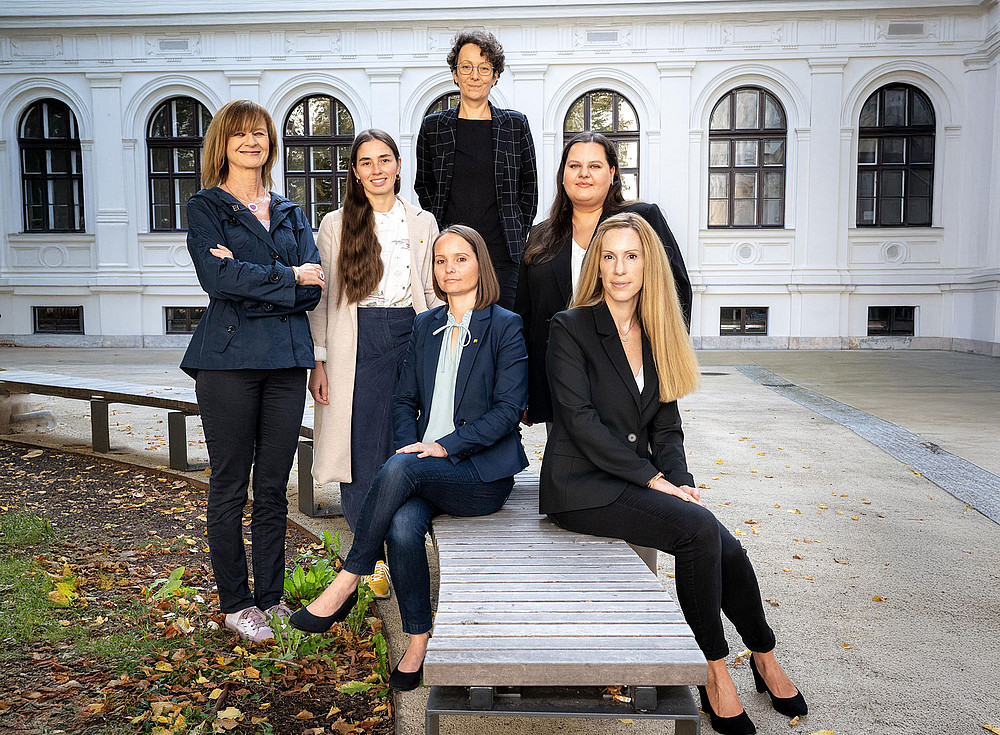
AKGL chairwoman Maria Elisabeth Aigner (left) and the AKGL Office team: Magdalena Halb, Ulrike Schustaczek, Carmen Klasicka (standing, from left), Johanna Kerschbaumer and Barbara Luttenberger (seated on a wooden bench, from left), in the courtyard of the main building of the University of Graz ©Alexandra Neubauer

AKGL chairwoman Maria Elisabeth Aigner (left) and the AKGL Office team: Magdalena Halb, Ulrike Schustaczek, Carmen Klasicka (standing, from left), Johanna Kerschbaumer and Barbara Luttenberger (seated, from left) Photo: Alexandra Neubauer

The University of Graz is a place of vibrant diversity and aims to offer all its staff and students an environment in which they can develop their skills. Gender, age, ethnicity, sexual orientation or religion must not be grounds for discrimination or harassment. Nor should disabilities or family care responsibilities. If members of the university nevertheless experience discrimination of any kind, the Working Group for Equal Opportunities (AKGL) offers help. “It is a central concern of ours to recognise injustices, make them visible and fight against them,” says AKGL chairwoman Maria Elisabeth Aigner. The working group was founded almost 35 years ago and has since been enforcing the legally established regulations on equal treatment and opportunities at the university.


An employee is bullied because of his sexual orientation, a female student is treated in a derogatory manner by a lecturer, a woman is not taken seriously as a supervisor – anyone who has had such or similar experiences at the university and would like to talk about them, or possibly even take action against them, has come to the right place at the AKGL. “The task of our members is to provide accurate factual information and, above all, to build trust by listening carefully, giving sound advice and treating concerns with strict confidentiality,” explains Ulrike Schustaczek, legal expert and head of the AKGL Office.

For those affected, an important first step is to talk about the stressful situation. “Perhaps they want to point out misconduct or gain more clarity for themselves,” says Schustaczek. Legal experts at the AKGL advise on legal options, such as requesting an expert opinion from the Federal Equal Treatment Commission. There are also other ways of help: “On the one hand, depending on the needs, we can recommend various internal and external university services that offer further support free of charge,” says Aigner. “On the other hand, we offer to mediate between the people involved or to contact the University Management Team,” says the AKGL chairwoman.

What gives the AKGL team hope is that those affected by discrimination are increasingly willing to talk about their experiences. “This is the only way to improve the situation. Seeking advice and help is an act of self-empowerment that also benefits others – ultimately the organisation as a whole,” emphasises Aigner, adding: “It is important that those working and studying at the university are able to grow and mature – in their professional activities, their career commitment and personally. That is what the Working Group for Equal Opportunities is there for.”


Information on support services and behavioural suggestions on the topic of harassment and stress in the work and study environment

created by Gudrun Pichler

Related news

Massacre and Memory: University of Graz addresses the wounds of history

A conference on 12 and 13 June 2026 at the Jesuit Refectory will focus on trauma in Eastern and South-Eastern Europe.

Uni Vibes: An open-air stage for science and street art

At the third Uni Vibes event hosted by the University of Graz, visitors enjoyed science, music and performances on campus. Guided tours focusing on democracy, educational sciences and the Graz Centre of Physics demonstrated how research shapes community life, urban development and culture.

Protest against budget cuts: universities send a united message in Graz

On 28 May, thousands of students, researchers and staff from all Styrian universities demonstrated in Graz against the announced budget cuts. University management and student representatives warned of severe consequences for research, teaching and the region’s standing as a centre of academic excellence.

Overcoming boundaries: Can we manage without prisons and camps?

The US immigration agency ICE has sparked fear and horror. Not only are migrants criminalised and brutally persecuted, but earlier this year, ICE officers killed two US citizens in Minneapolis. Against the backdrop of these dramatic events, the University of Graz is shedding light on the role of deportation and detention centres as part of the international conference ‘Camps, Belonging, and Abolition Democracy’. Researchers aim to develop scenarios for how a future without prisons and the death penalty can become a reality.

Begin of page section:
Additional information:

University of Graz
Universitaetsplatz 3
8010 Graz
Austria
  • Contact
  • Web Editors
  • Moodle
  • UNIGRAZonline
  • Imprint
  • Data Protection Declaration
  • Accessibility Declaration
Weatherstation
Uni Graz

End of this page section. Go to overview of page sections

End of this page section. Go to overview of page sections

Begin of page section:

End of this page section. Go to overview of page sections