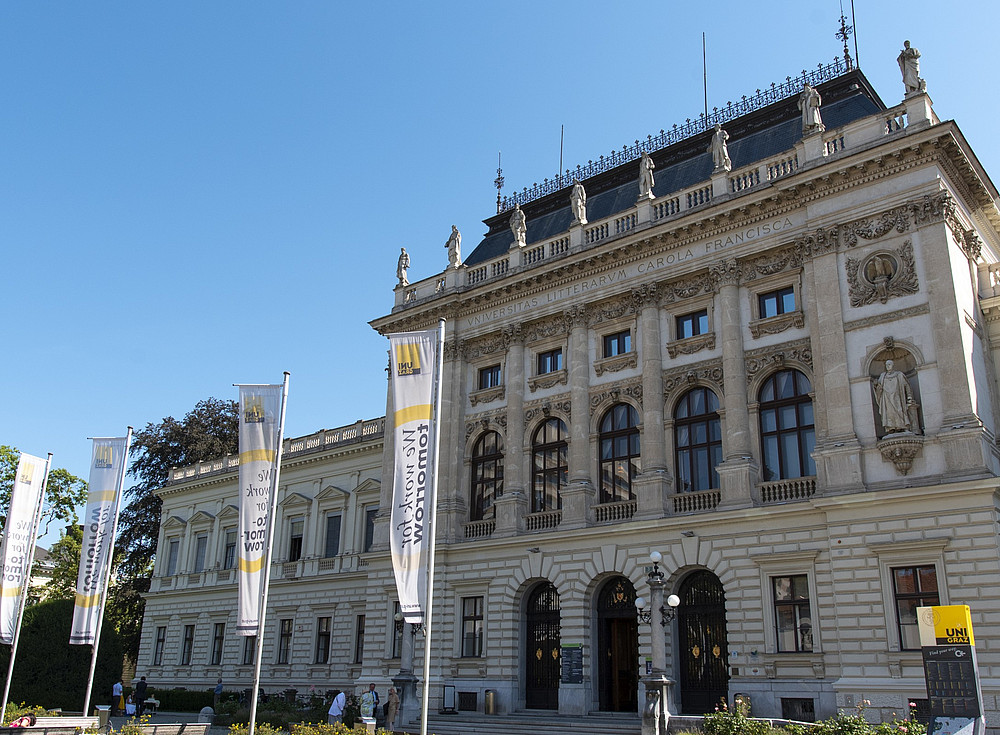
“How is artificial intelligence changing your scientific discipline?” was the question posed for the Austrian Academy of Sciences’ (ÖAW) latest prize competition. Researchers from all disciplines were invited to submit an essay. With 170 entries, the 2026 prize competition attracted a great deal of interest.
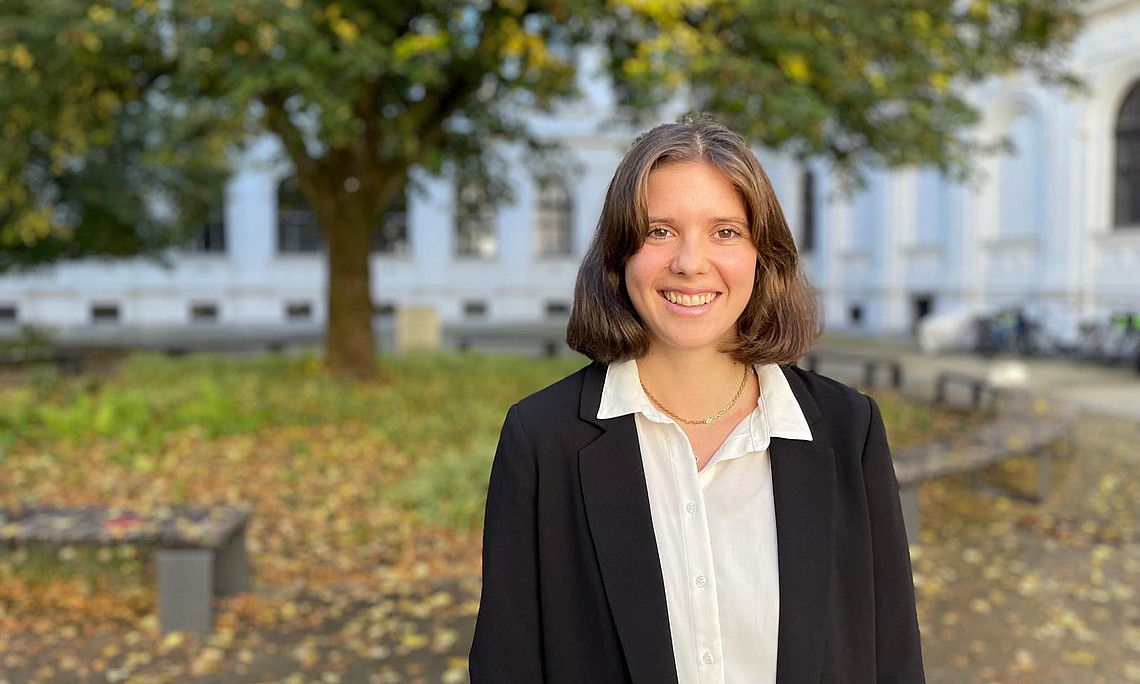
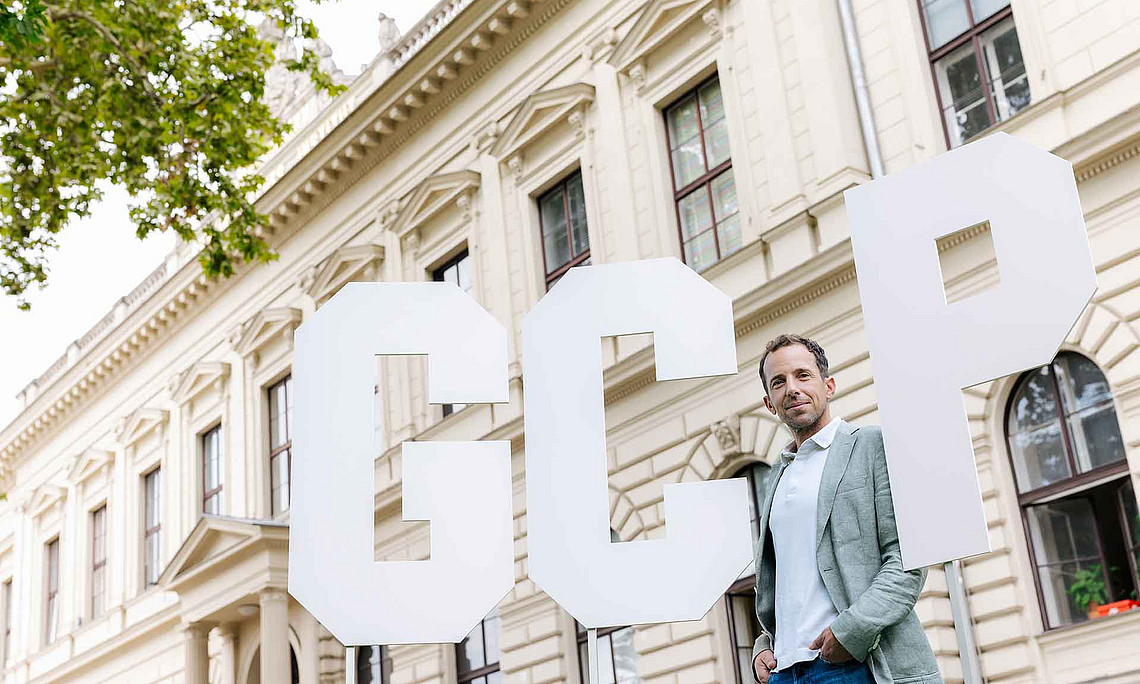
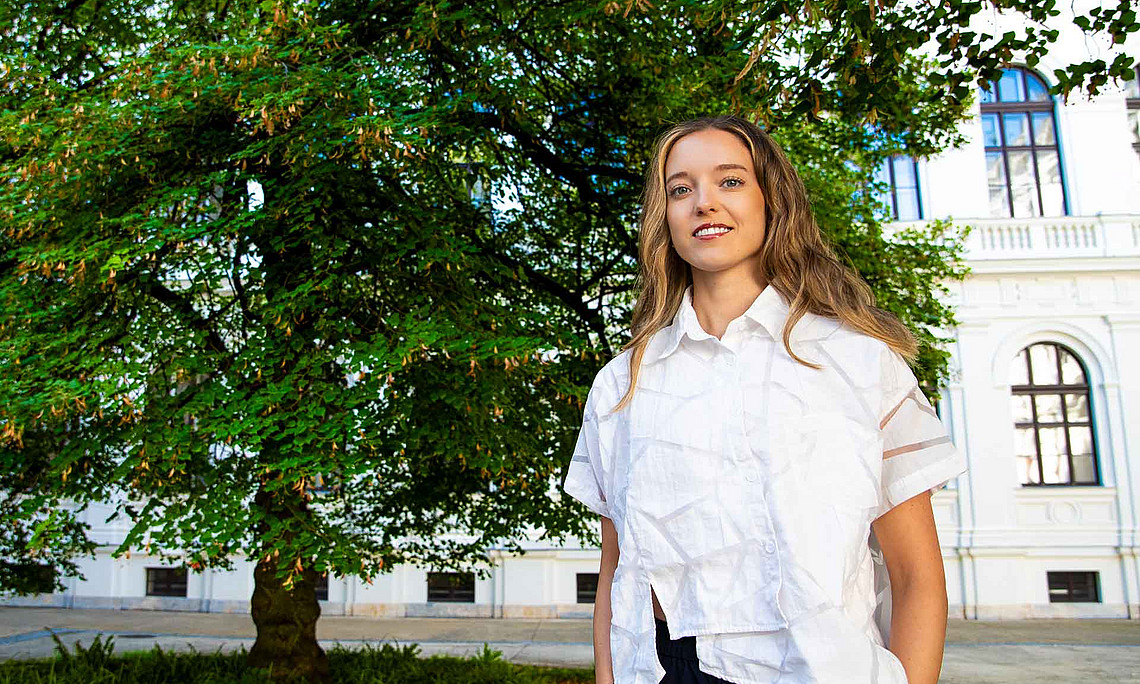
The submitted essays demonstrated that, from structural biology to history and particle physics, hardly any discipline remains untouched by artificial intelligence. The interdisciplinary jury, comprising researchers, science journalists and members of the ÖAW Presidium, selected four prize-winners on the basis of the anonymised submissions: First place, with a prize of 8,000 euros, goes to Christian C. Gruber and Mario Müller, who co-authored their entry. Second place, with a prize of 6,000 euros, goes to Zsófia Turóczy, whilst third place is shared by Christoph Gleich and Claudius Krause, who each receive prize money of 1,000 euros.
ÖAW President Heinz Faßmann says: “The strong response to our competition shows that we have struck a chord with this topic. AI is bringing about massive changes to science and research in many areas. It is up to us to shape this transformation positively for the benefit of science and society. I offer my warmest congratulations to all the winners of the competition.”
From observational to design-oriented science
In the winning essay “Molecular Architects”, Christian C. Gruber (Innophore GmbH) and Mario Müller (Research Management at University of Graz) describe how AI systems such as AlphaFold are transforming structural biology from an observational discipline into a “predictive and design-oriented discipline”. This is made possible by so-called ‘catalophores’ – AI-identified patterns in protein cavities that reveal where chemical reactions take place. Gruber and Müller compare this process to a Google search for enzymes. The authors write that this does not render the laboratory superfluous, but rather allows it to take on the task of validating computer-generated hypotheses. At the same time, they urge caution: as pure pattern recognition can also generate physically impossible molecules, there is a need for ‘physics-based AI’ that firmly incorporates the laws of nature into the models – otherwise there is a risk of ‘black-box science’ without a genuine understanding of biochemistry.
The winning essay is also a successful example of human-machine collaboration: the authors disclose that they used several AI models for research and to produce an initial draft. Every single statement was checked by the researchers for accuracy and source references. The concept, arguments and bibliography are, in any case, the work of Gruber and Müller themselves.
The algorithmic marginalisation of knowledge
Zsófia Turóczy, who came second and is a historian at the Institute of History at the University of Graz, describes in her essay an AI-generated image of Lenin alongside the young Tito – two men who never actually met. She demonstrates how easily deceptively authentic historical sources can be generated today – and how contentious this is, particularly for South-Eastern Europe, where archives are fragmented or politically contested. AI learns from existing but unevenly distributed data. According to Turóczy, this threatens to lead to an “algorithmic marginalisation” of historical knowledge: whatever is under-represented in the data also disappears from the AI’s responses. As a result, the core competence of historians is shifting away from the possession of information towards the ability to tolerate uncertainty and to ask questions “where AI is already producing answers” .
Other prize winners
In his article ‘The machine that doesn’t lie. Or does it?’, Christoph Gleich, a freelance journalist, radio producer and cultural historian based in Vienna, makes a pointed and critical argument: AI is exacerbating an already problematic trend in academia towards pure output. Under pressure to publish, AI is being used not as a supervisory body, but as a ‘production accelerator’. The result: “Better versions of bad research. Faster. Smoother.” Added to this is the fact that four US corporations control the AI infrastructure on which global science is built. Gleich therefore advocates for scientific sovereignty in Europe, as well as mandatory transparency regarding the models used. His conclusion: AI is forcing science to ask itself what it actually wants to be.
Claudius Krause from the Marietta Blau Institute for Particle Physics at the Austrian Academy of Sciences (ÖAW) describes in his essay ‘Machine Learning revolutionised Particle Physics twice – the third time is happening as I’m typing these lines’ three successive ‘waves’ of machine learning in his field: from boosted decision trees surrounding the discovery of the Higgs boson, through deep neural networks, to the agent-based AI systems currently emerging, which plan autonomous analysis workflows. Physicists counter the ‘black box’ criticism with error bars and interpretability analyses: “As physicists, we know how to open and study black boxes.” His conclusion is optimistic: machine learning has not replaced theory, but has forged a closer link between theory and data – much like a telescope that extends the scope of physical inquiry without replacing the scientists themselves.
Read the full-text entries
The entries by the prize winners, as well as other selected submissions which, in the jury’s view, make a valuable contribution to the topic, are published on the ÖAW website: