



Begin of page section:
Page sections:

  • Go to contents (Accesskey 1)
  • Go to position marker (Accesskey 2)
  • Go to main navigation (Accesskey 3)
  • Go to sub navigation (Accesskey 4)
  • Go to additional information (Accesskey 5)
  • Go to page settings (user/language) (Accesskey 8)
  • Go to search (Accesskey 9)

End of this page section. Go to overview of page sections

Begin of page section:
Page settings:

English en
Deutsch de
Search
Login

End of this page section. Go to overview of page sections

Begin of page section:
Search:

Search for details about Uni Graz
Close

End of this page section. Go to overview of page sections


Search

Begin of page section:
Main navigation:

Page navigation:

  • University

    University
    • About the University
    • Organisation
    • Faculties
    • Library
    • Working at University of Graz
    • Campus
    Developing solutions for the world of tomorrow - that is our mission. Our students and our researchers take on the great challenges of society and carry the knowledge out.
  • Research Profile

    Research Profile
    • Our Expertise
    • Research Questions
    • Research Portal
    • Promoting Research
    • Research Transfer
    • Ethics in Research
    • Commission for Scientific Integrity
    Scientific excellence and the courage to break new ground. Research at the University of Graz creates the foundations for making the future worth living.
  • Studies

    Studies
    • Prospective Students
    • Students
    • Post-registration Law
  • Community

    Community
    • International
    • Location
    • Research and Business
    • Alumni
    The University of Graz is a hub for international research and brings together scientists and business experts. Moreover, it fosters the exchange and cooperation in study and teaching.
Topics
  • Sustainable University
  • Researchers answer
  • Work for us
Close menu

End of this page section. Go to overview of page sections

Begin of page section:
You are here:

University of Graz News Der Selbstmord von Venedig

End of this page section. Go to overview of page sections

Tuesday, 24 October 2017

Der Selbstmord von Venedig

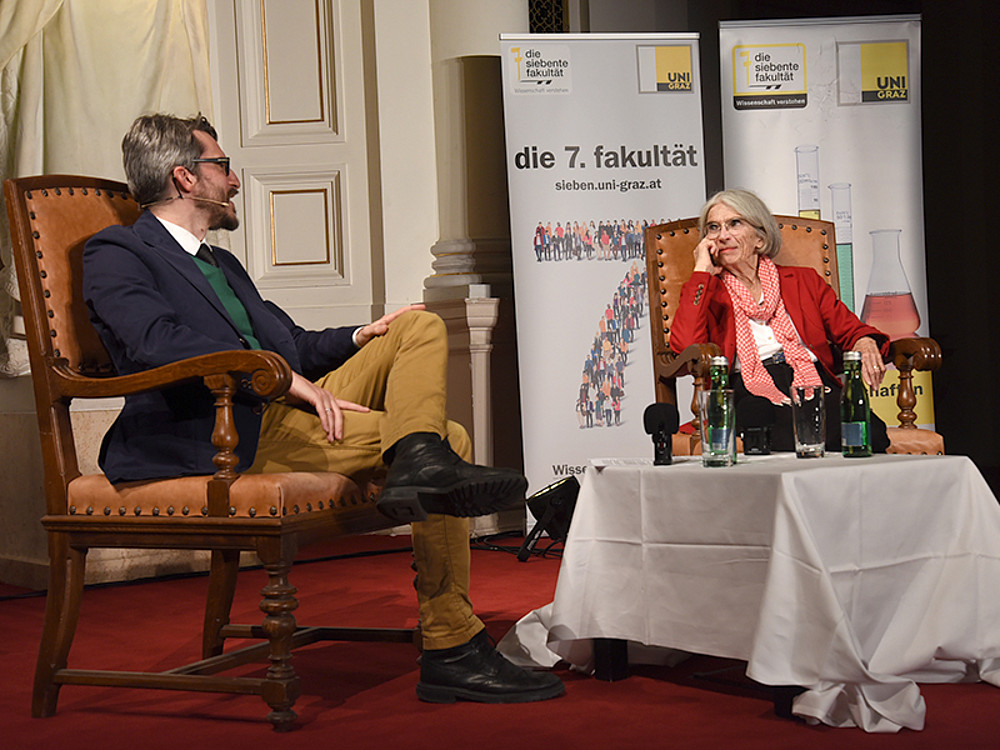
Donna Leon und Romedio Schmitz-Esser beleuchteten die Facetten des Morbiden und des Mordens. ©Uni Graz/Schweiger

Donna Leon und Romedio Schmitz-Esser beleuchteten die Facetten des Morbiden und des Mordens. Fotos: Uni Graz/Schweiger

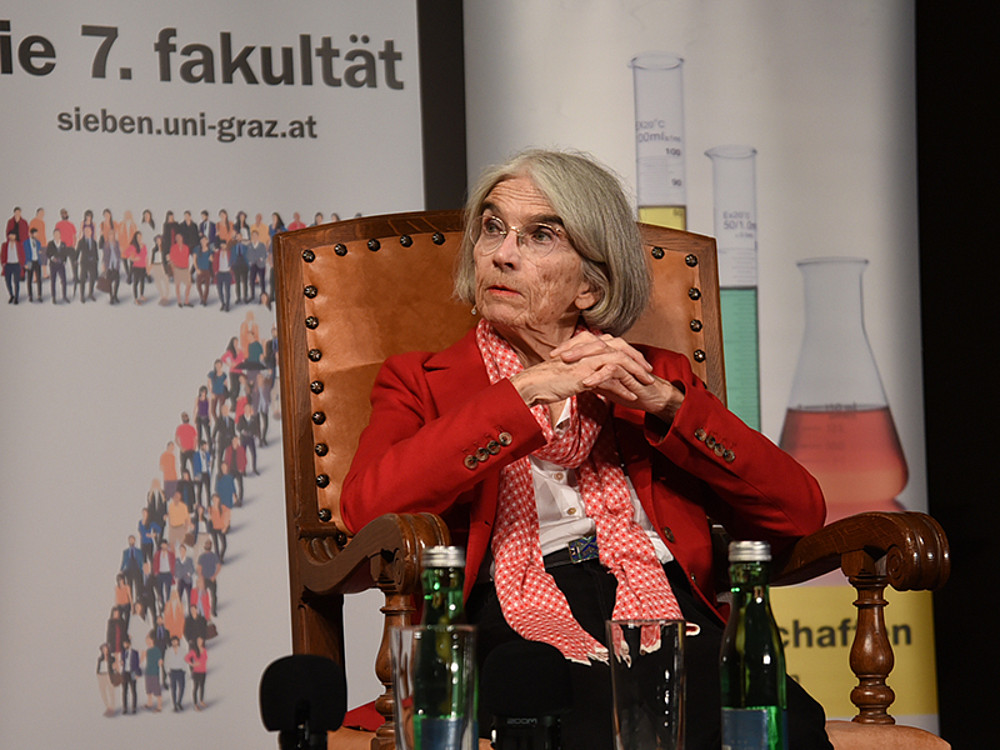
Pointiert, eloquent und belesen: Donna Leon sorgte für eine ausgebuchte Aula. ©Uni Graz/Schweiger

Pointiert, eloquent und belesen: Donna Leon sorgte für eine ausgebuchte Aula.

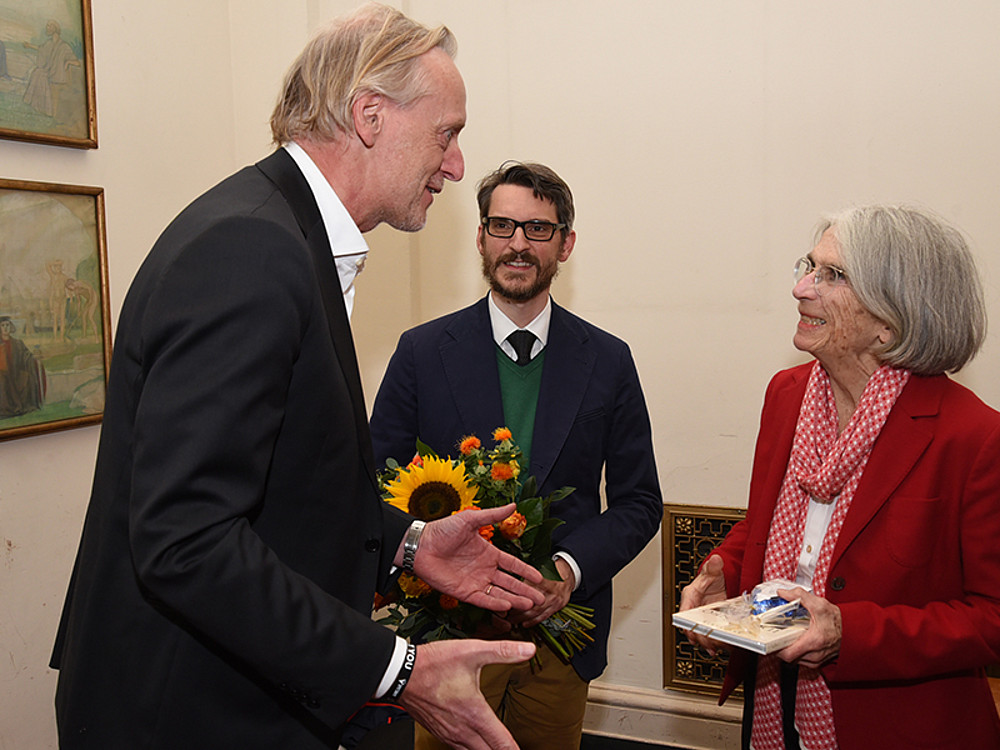
Stadtrat Günter Riegler überreichte ein Gastgeschenk der Stadt Graz und plauderte mit Romedio Schmitz-Esser und Donna Leon (v.l.) ©Uni Graz/Schweiger

Stadtrat Günter Riegler überreichte ein Gastgeschenk der Stadt Graz und plauderte mit Romedio Schmitz-Esser und Donna Leon (v.l.)

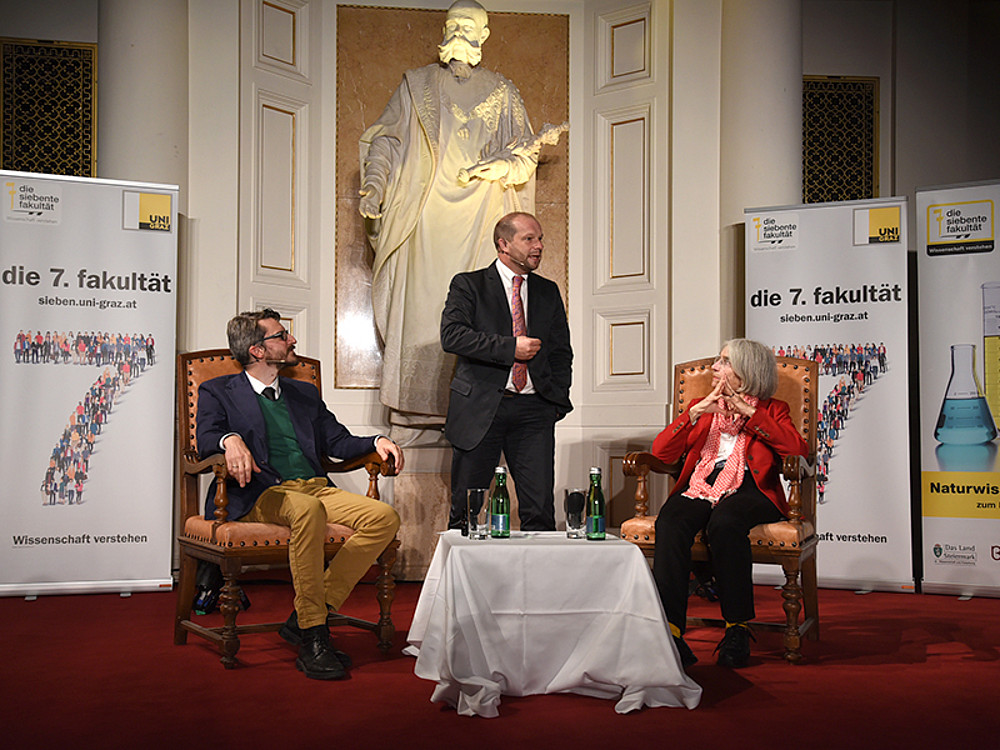
Romedio Schmitz-Esser, Hannes Gießauf und Donna Leon (v.l.) ©Uni Graz/Schweiger

Romedio Schmitz-Esser, Hannes Gießauf und Donna Leon (v.l.)

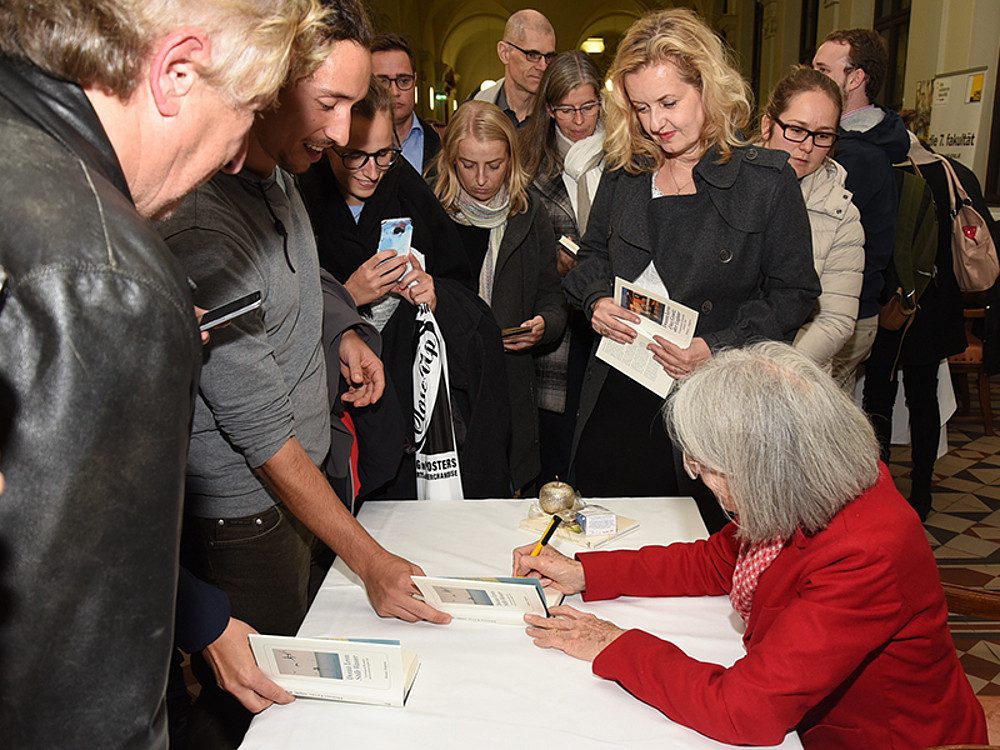
Ansturm der Brunetti-Fans: Donna Leon signierte im Anschluss an die Diskussion geduldig Bücher. ©Uni Graz/Schweiger

Ansturm der Brunetti-Fans: Donna Leon signierte im Anschluss an die Diskussion geduldig Bücher.

Donna Leon und Romedio Schmitz-Esser über das Sterben im Mittelalter und in Romanen

Leichen pflastern buchstäblich ihre Wege: Romedio Schmitz-Esser, Forscher über Totenkult im Mittelalter, und Donna Leon, Schöpferin des Commissario Brunetti, begaben sich am 23. Oktober 2017 in der Aula der Karl-Franzens-Universität Graz auf eine kulturgeschichtliche Spurensuche rund um das Thema Sterben. 400 BesucherInnen folgten dem spannenden und zugleich unterhaltsamen Podiumsgespräch – eingeleitet und zusammengefasst von Historiker Hannes Gießauf.

„Venedig ist dabei zu sterben“, erklärte die erfolgreiche Schriftstellerin den morbiden Schauplatz ihrer Bestseller. Die Touristenmassen treiben aber die Stadt in den „Selbstmord“.
Der Umgang mit den Toten folge nach wie vor dem Konzept aus dem Mittelalter, so Schmitz-Esser, Professor für Mittelalterliche Geschichte an der Uni Graz. „Es lässt sich noch immer schwer sagen, ob Leichname noch dem Diesseits oder einer anderen Welt angehören. Daher versuchen die Menschen etwas zu konstruieren.“ Im Unterschied zum Heute fehlte im Mittelalter die Furcht vor den Verstorbenen, sie bildeten mit den Lebenden vielmehr eine Gemeinschaft.

Donna Leon sah den Tod eng mit Respekt verbunden. Dem versuche sie auch in ihren Romanen Rechnung zu tragen. „Mich fasziniert weniger das Gewalttätige, sondern warum der Mord passierte. Ich kann es nicht verstehen, warum jemand einem anderen das Leben nimmt.“

Die Veranstaltung fand im Rahmen der 7. fakultät, des Zentrums für Wissen, Gesellschaft und Kommunikation der Uni Graz, statt.

created by Andreas Schweiger

Related news

Record of reported species: Styria wins the global City Nature Challenge

Observers in Styria recorded 4,660 different animals, plants and fungi as part of the international City Nature Challenge between 24 and 27 April 2026. This saw the region take first place in the "species" category. Ostrava in the Czech Republic made the most observations, with just under 140,000, whilst the San Francisco Bay Area had the highest number of participants, namely 3,019.

Studying at the University of Graz: How to enrol

Ready for a new chapter in your life with the start of your studies at the University of Graz in the winter semester 2026/27? Here you will find information on deadlines, admission procedures, registration, and everything else you need to successfully start your studies in the fall.

Europe Day: Strengthening international expertise with Arqus

On 9 May, the spotlight will be on Europe. At the University of Graz, European cooperation is also a tangible part of everyday student life – not least through the Arqus university alliance. Master’s and PhD students can currently register for the Arqus micro-credential in ‘Advanced Creative Thinking and Communication’.

A substantial community: the key role of soil crusts in the earth system

They are often overshadowed by the plant world: lichens, fungi, mosses and bacteria, which form unique communities on rocks and trees or as soil crusts. Bettina Weber from the University of Graz is bringing this biological alliance into the research spotlight. Her research shows that these communities form an essential part of the Earth’s critical zone and play a key role in the interactions between land and atmosphere. Bettina Weber was honoured by the European Geosciences Union for her groundbreaking research at the beginning of May.

Begin of page section:
Additional information:

University of Graz
Universitaetsplatz 3
8010 Graz
Austria
  • Contact
  • Web Editors
  • Moodle
  • UNIGRAZonline
  • Imprint
  • Data Protection Declaration
  • Accessibility Declaration
Weatherstation
Uni Graz

End of this page section. Go to overview of page sections

End of this page section. Go to overview of page sections

Begin of page section:

End of this page section. Go to overview of page sections

