Begin of page section:
Page sections:

  • Go to contents (Accesskey 1)
  • Go to position marker (Accesskey 2)
  • Go to main navigation (Accesskey 3)
  • Go to sub navigation (Accesskey 4)
  • Go to additional information (Accesskey 5)
  • Go to page settings (user/language) (Accesskey 8)
  • Go to search (Accesskey 9)

End of this page section. Go to overview of page sections

Begin of page section:
Page settings:

English en
Deutsch de
Search
Login

End of this page section. Go to overview of page sections

Begin of page section:
Search:

Search for details about Uni Graz
Close

End of this page section. Go to overview of page sections


Search

Begin of page section:
Main navigation:

Page navigation:

  • University

    University
    • About the University
    • Organisation
    • Faculties
    • Library
    • Working at University of Graz
    • Campus
    Developing solutions for the world of tomorrow - that is our mission. Our students and our researchers take on the great challenges of society and carry the knowledge out.
  • Research Profile

    Research Profile
    • Our Expertise
    • Research Questions
    • Research Portal
    • Promoting Research
    • Research Transfer
    • Ethics in Research
    • Commission for Scientific Integrity
    Scientific excellence and the courage to break new ground. Research at the University of Graz creates the foundations for making the future worth living.
  • Studies

    Studies
    • Prospective Students
    • Students
    • Registration for Study Programme (Winter semester 2026/27)
  • Community

    Community
    • International
    • Location
    • Research and Business
    • Alumni
    The University of Graz is a hub for international research and brings together scientists and business experts. Moreover, it fosters the exchange and cooperation in study and teaching.
Topics
  • Sustainable University
  • Researchers answer
  • Work for us
Close menu

End of this page section. Go to overview of page sections

Begin of page section:
You are here:

University of Graz News University remains red

End of this page section. Go to overview of page sections

Wednesday, 28 April 2021

University remains red

The current regulations concerning home office and teaching continue in force. Classes in blocks as well as certain exams can be attended in presence from 26 April on.

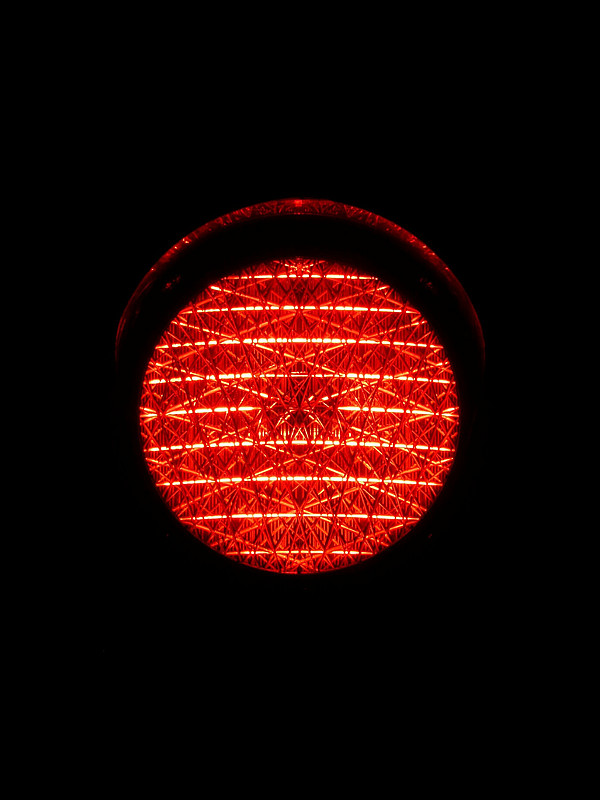
The colour of the corona traffic light at the University of Graz remains red until further notice. The current regulations concerning home office and teaching online thus remain in force. Classes are to be held in distance except for laboratory, excursions and practical exercises. Exams can take place in presence. There is a general obligation to wear a mask in teaching rooms as well as on the corridors. It is recommended to wear FFP2 masks and to keep a distance of two meters.

Classes in blocks and in small groups as well as certain exams can be attended in presence from 26 April on, even if the Corona traffic light of the University of Graz is still red. A necessary precondition is that all participants present a valid Covid test or a certificate confirming that they have overcome the disease.

Corona Virus Traffic Light System Teaching

Courses are held in distance, except for a few cases (excursions, laboratory or other practical exercises). Exams may still take place on campus. You have to wear a FFP2-protection everywhere, also in lecture rooms. Offices, however, only open on appointment.

Positive testing results have to be reported to the hotline if the concerned person was present on campus within the 48 hours preceding the test or the appearance of first symptoms. Please fill out the questionnaire and send it to covid-19(at)uni-graz.at. For further questions please contact the hotline +43 316 380 2000.

ince 26 April classes in blocks and small groups as well as certain exams can be held in presence – inspite of the Corona traffic light being still red. To guarantee utmost safety for everybody the rectorate has developed new guidelines stipulating Covid tests before attending a class or exam. Students and lecturers have to present a negative antigen test (not older than 48 hours), a negative PCR test (not older than 72 hours), a confirmation that they have overcome the disease within the last six months (medical certificate or quarantine notification) or a Covid-19 antibodies detection test (not older than three months).

Online registration tool and e-mail notification
To facilitate the organisation of the Covid testing the University of Graz has installed an electronic registration tool. Employees and students of all universities in Graz can make appointments on the website https://www.etermin.net/unitestet. At the test row you have to show the confirmation of your registration either in print or on your smartphone as well as your staff or student ID card. The test result will be delivered via e-mail after about fifteen minutes and remains valid for 48 hours.


Second test row starting on 3 May
From May on the University of Graz will double the tests to 400 a day. A second test row will be installed in the study zone “ZMB Lounge” at the Centre of Molecular Biosciences in Humboldtstraße 48. Appointments can be made on the website https://www.etermin.net/unitestet from 30 April on.

The test rows on the campus are a free service of the University of Graz to guarantee save classes and exams during the pandemic. Due to the limited capacities the University encourages you to make use of other free public offers – above all for private reasons. Such include for instance close contact services or leisure activities as visiting sports sites, bars and restaurants and attending cultural events.

You find further up-to-date information and the regulations in detail on the website http://covid-19.uni-graz.at.


created by Konstantin Tzivanopoulos

Related news

Complying with the norm: Why Do Standards Shape Our Lives, Elisabeth Staudegger?

Standards determine whether a sheet of paper fits in a printer or whether a charging plug can power multiple devices. These standards shape our everyday lives. But who actually sets these standards? Where are the weaknesses, and how could science help to improve them? Elisabeth Staudegger, Head of the ‘Law and IT’ Department at the Institute for Legal Foundations at the University of Graz, host the Academic Standards Day on 16 June. Here she relays how sciences can contribute to the topic of standardisation and reveals her personal favourite standard.

More body awareness than a culture war

In Italy, sex education lessons will in future only be permitted with parental consent, and will be banned entirely in nurseries and primary schools. At the same time, Pride Month highlights why knowledge about the body, relationships, boundaries and diversity is important for young people. A study by the University of Graz shows how important knowledge about the body, contraception, relationship skills and protection against violence is

Will Austria win the World Cup? Mathematician reveals calculation method

Michael Fischer uses the football tournament as a practical example for highschool lessons.

Survival strategies: How plants respond to drought

According to Geosphere Austria, this spring was the driest in Austria since records began around 170 years ago. The low rainfall put particular pressure on the agricultural sector. And climate change is set to make the situation even worse in the coming decades. We asked Johannes Liesche, a professor at the Department of Biology at the University of Graz, how plants react to water shortages and how they survive periods of drought.

Begin of page section:
Additional information:

University of Graz
Universitaetsplatz 3
8010 Graz
Austria
  • Contact
  • Web Editors
  • Moodle
  • UNIGRAZonline
  • Imprint
  • Data Protection Declaration
  • Accessibility Declaration
Weatherstation
Uni Graz

End of this page section. Go to overview of page sections

End of this page section. Go to overview of page sections

Begin of page section:

End of this page section. Go to overview of page sections