Begin of page section:
Page sections:

  • Go to contents (Accesskey 1)
  • Go to position marker (Accesskey 2)
  • Go to main navigation (Accesskey 3)
  • Go to sub navigation (Accesskey 4)
  • Go to additional information (Accesskey 5)
  • Go to page settings (user/language) (Accesskey 8)
  • Go to search (Accesskey 9)

End of this page section. Go to overview of page sections

Begin of page section:
Page settings:

English en
Deutsch de
Search
Login

End of this page section. Go to overview of page sections

Begin of page section:
Search:

Search for details about Uni Graz
Close

End of this page section. Go to overview of page sections


Search

Begin of page section:
Main navigation:

Page navigation:

  • University

    University
    • About the University
    • Organisation
    • Faculties
    • Library
    • Working at University of Graz
    • Campus
    Developing solutions for the world of tomorrow - that is our mission. Our students and our researchers take on the great challenges of society and carry the knowledge out.
  • Research Profile

    Research Profile
    • Our Expertise
    • Research Questions
    • Research Portal
    • Promoting Research
    • Research Transfer
    • Ethics in Research
    • Commission for Scientific Integrity
    Scientific excellence and the courage to break new ground. Research at the University of Graz creates the foundations for making the future worth living.
  • Studies

    Studies
    • Prospective Students
    • Students
    • Welcome Weeks for First Year Students
  • Community

    Community
    • International
    • Location
    • Research and Business
    • Alumni
    The University of Graz is a hub for international research and brings together scientists and business experts. Moreover, it fosters the exchange and cooperation in study and teaching.
Topics
  • Sustainable University
  • Researchers answer
  • Work for us
Close menu

End of this page section. Go to overview of page sections

Begin of page section:
You are here:

University of Graz News Café Fotter in Not

End of this page section. Go to overview of page sections

Friday, 14 August 2015

Café Fotter in Not

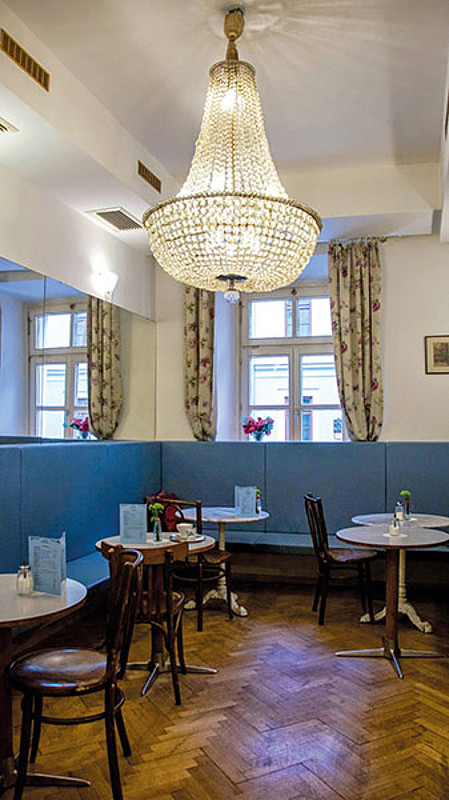
Der Spiegelsalon des Café Fotter beeindruckt durch einen großen Korbluster, dessen geschliffene Glasperlen eine funkelnde Atmosphäre schaffen. Alle Fotos: Café Fotter, Corinna Unterkofler. ©Café Fotter, Corinna Unterkofler
©Café Fotter, Corinna Unterkofler

Der Spiegelsalon des Café Fotter beeindruckt durch einen großen Korbluster, dessen geschliffene Glasperlen eine funkelnde Atmosphäre schaffen. Alle Fotos: Café Fotter, Corinna Unterkofler.

 ©Café Fotter, Corinna Unterkofler
©Café Fotter, Corinna Unterkofler

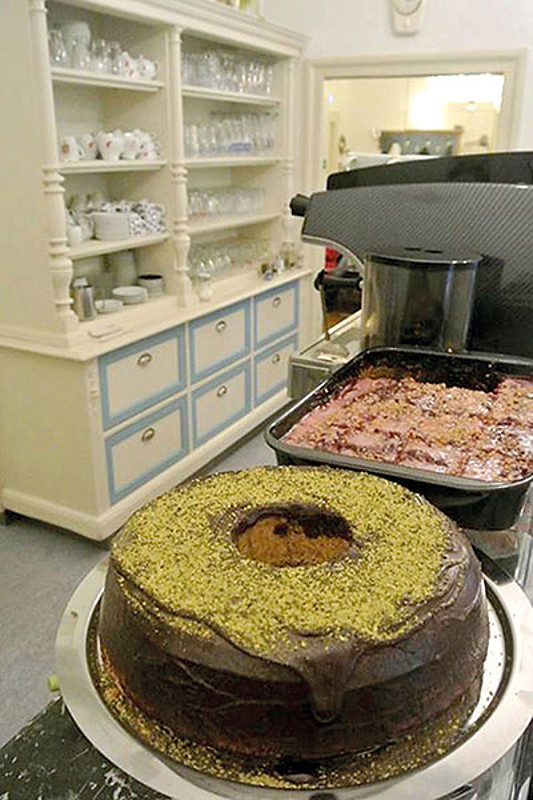
Mit viel Liebe selbst gemachte Kuchen und Mehlspeisen sowie der feine Kaffee entführen BesucherInnen in vergangene Zeiten voller Gemütlichkeit und Langsamkeit.

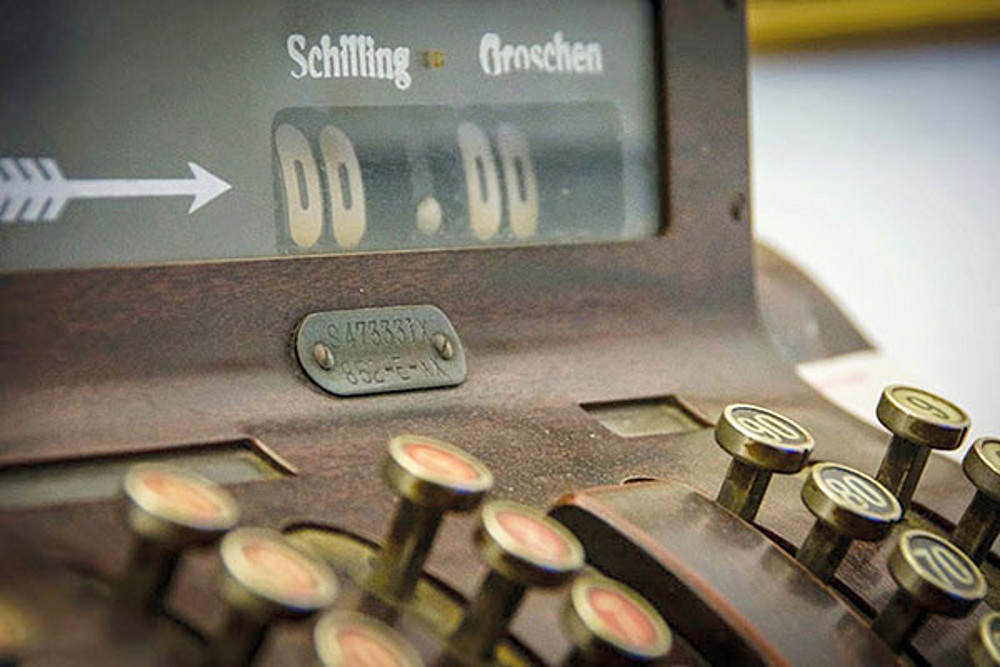
Die Registrierkasse aus den 1930er Jahren zeigt noch Schilling und Groschen an. ©Café Fotter, Corinna Unterkofler
©Café Fotter, Corinna Unterkofler

Die Registrierkasse aus den 1930er Jahren zeigt noch Schilling und Groschen an.

Kunstgeschichte-Studierende gestalten Info-Folder zum traditionellen Kaffeehaus, um auf dessen prekäre Lage aufmerksam zu machen

Es ist für den duftenden Rosengarten berühmt, für sein geschmackvolles Interieur aus den 1930er Jahren, die selbst gemachten Mehlspeisen und für die gemütliche Atmosphäre aus der Frühgründerzeit: Das Café Fotter. Beliebt ist das traditionelle Grazer Kaffeehaus in der Attemsgasse nicht nur bei MitarbeiterInnen und Studierenden der Karl-Franzens-Universität.
Dennoch muss das ursprünglich als Bäckerei geführte Café in seinem 79. Jahr wieder ein Mal harte Zeiten durchleben: Finanziell gesehen stehen Beatrix Frodl und Jördis Waldhuber-Orac, die das Kultcafé 2012 von Gertraud Fotter übernommen hatten, vor großen Problemen – enorme Kosten für aufwändige Möbelrenovierungen und notwendige Adaptierungen des Cafés, ohne die ein Weiterführen nicht möglich gewesen wäre, sowie das Ausbleiben der StammkundInnen während der großen Glacis-Baustelle im vergangenen Sommer trugen unter anderem zur aktuell prekären Lage bei.

Kunstgeschichte-Studierende der Uni Graz machten auf diese schwierige Situation mit einem Informationsfolder zum Café aufmerksam. Die Initiative geht auf die Forschungsstelle Kunstgeschichte Steiermark, geleitet von Ao.Univ.-Prof. Dr. Margit Stadlober, zurück. Der achtseitige Wickelfalz-Folder zeichnet die Geschichte des Hauses übersichtlich nach – vom Bau im Jahr 1844 durch Georg Lindner über die Jahre als Bäckerei Koschuh bis zur Gründung der Bäckerei Fotter 1936, die 1972 um das Café erweitert wurde.
Der ursprüngliche Charme eines klassischen Kaffeehauses aus vergangenen Zeiten blieb über die Jahre erhalten. Der Folder widmet sich den einzelnen Räumen – Verkaufsraum, Spiegelsalon und Zirbenstube – und bietet auch Informationen über den Bezirk Geidorf und die Attemsgasse.

„Das Fotter ist nicht nur kulturhistorisch gesehen eine sehr wertvolle Einrichtung, die unbedingt bewahrt werden muss“, macht sich Margit Stadlober für den Erhalt des Cafés stark. Derzeit sind die Betreiberinnen Beatrix Frodl und Mag. Jördis Waldhuber-Orac auf NachfolgerInnensuche. Sollte sich bis Jahresende niemand finden, ist die Zukunft wohl eher ungewiss …


 

>> Klicken Sie hier, um den Folder herunterzuladen

created by Gerhild Kastrun

Related news

Jurassic Sounds: Biologist reconstructs insect songs from 165 million years ago

It was apparently not just the roars of the dinosaurs that made up the soundscape of the animal world during the Jurassic period. Crickets and grasshoppers communicated through a variety of songs and high-pitched sounds, as Thorin Jonsson from the Institute of Biology at the University of Graz discovered together with colleagues from the universities of Lincoln, Bristol (UK), Beijing (China) and Tempe (USA). The findings on what are so far the oldest traces of sound on Earth have just been published in the journal PNAS.

EU funding boosts international exchange between universities

The University of Graz is further expanding its international study opportunities through the European university alliance Arqus and is taking the lead in two key projects. In future, students will benefit from even more joint degree programmes and from simplified recognition of academic achievements through the Joint European Degree Label.

Rescue and risks: Researchers have surveyed public perceptions of AI

The use of artificial intelligence has had to be made transparent since 2 August 2026. The EU’s AI Act, which has been in force since then, also sets out how risky an application is and which security measures apply as a result. However, the assessment of risks by the legislation differs in some cases significantly from the perceptions of the Austrian public. This is the finding of a representative study carried out by data scientist Stefan Thalmann from the University of Graz and his team.

The Healing Sea: Researchers discover new approaches to treating chronic inflammation in sponges

Chronic inflammation plays a key role in many diseases, ranging from metabolic disorders and cardiovascular diseases to tissue damage following injuries or infections. “Normally, the body is able to resolve inflammation on its own. If this process becomes unbalanced, immune cells remain permanently active and continue to drive negative changes in the tissue,” explains Andreas Koeberle, a pharmacist at the University of Graz.

Begin of page section:
Additional information:

University of Graz
Universitaetsplatz 3
8010 Graz
Austria
  • Contact
  • Web Editors
  • Moodle
  • UNIGRAZonline
  • Imprint
  • Data Protection Declaration
  • Accessibility Declaration
Weatherstation
Uni Graz

End of this page section. Go to overview of page sections

End of this page section. Go to overview of page sections

Begin of page section:

End of this page section. Go to overview of page sections