




Begin of page section:
Page sections:

  • Go to contents (Accesskey 1)
  • Go to position marker (Accesskey 2)
  • Go to main navigation (Accesskey 3)
  • Go to sub navigation (Accesskey 4)
  • Go to additional information (Accesskey 5)
  • Go to page settings (user/language) (Accesskey 8)
  • Go to search (Accesskey 9)

End of this page section. Go to overview of page sections

Begin of page section:
Page settings:

English en
Deutsch de
Search
Login

End of this page section. Go to overview of page sections

Begin of page section:
Search:

Search for details about Uni Graz
Close

End of this page section. Go to overview of page sections


Search

Begin of page section:
Main navigation:

Page navigation:

  • University

    University
    • About the University
    • Organisation
    • Faculties
    • Library
    • Working at University of Graz
    • Campus
    Developing solutions for the world of tomorrow - that is our mission. Our students and our researchers take on the great challenges of society and carry the knowledge out.
  • Research Profile

    Research Profile
    • Our Expertise
    • Research Questions
    • Research Portal
    • Promoting Research
    • Research Transfer
    • Ethics in Research
    • Commission for Scientific Integrity
    Scientific excellence and the courage to break new ground. Research at the University of Graz creates the foundations for making the future worth living.
  • Studies

    Studies
    • Prospective Students
    • Students
  • Community

    Community
    • International
    • Location
    • Research and Business
    • Alumni
    The University of Graz is a hub for international research and brings together scientists and business experts. Moreover, it fosters the exchange and cooperation in study and teaching.
  • Spotlight
Topics
  • Sustainable University
  • Researchers answer
  • Work for us
Close menu

End of this page section. Go to overview of page sections

Begin of page section:
You are here:

University of Graz News Bürgerbeteiligung in der EU

End of this page section. Go to overview of page sections

Friday, 14 March 2014

Bürgerbeteiligung in der EU

Der Europäische Unionsvertrag fordert Maßnahmen zur Bürgerbeteiligung. Bild: Viktor Mildenberger/pixelio.de

Der Europäische Unionsvertrag fordert Maßnahmen zur Bürgerbeteiligung. Bild: Viktor Mildenberger/pixelio.de

Team der Uni Graz reicht Konzept für Online-Plattform ein

In seinen Bestimmungen über die demokratischen Grundsätze der EU unterstreicht der Europäische Unionsvertrag die Bedeutung der Bürgerbeteiligung. Artikel 11, Absatz 1 hält fest: „Die Organe geben den Bürgerinnen und Bürgern und den repräsentativen Verbänden in geeigneter Weise die Möglichkeit, ihre Ansichten in allen Bereichen des Handelns der Union öffentlich bekannt zu geben und auszutauschen.“

Unter Federführung eines Teams um Univ.-Prof. Dr. Johannes Pichler und Projektmanager DI Robert Link an der Rechtswissenschaftlichen Fakultät der Uni Graz wurde nun gemeinsam mit Partnern und Partnerinnen aus acht weiteren europäischen Ländern ein Konzept zur Entwicklung einer Online-Plattform erarbeitet, die allen Mitgliedern der Gesellschaft ein Forum zur Beteiligung bieten soll. Ein Antrag zur Förderung des Projekts wird demnächst bei der Europäischen Kommission eingereicht. Anfang dieser Woche trafen sich Angehörige des Projektteams zu einem Workshop an der Uni Graz, um gemeinsam einen Entwurf des Antrags zu erarbeiten.

„Der ,European Citizens Open Senate Online‘, wie wir ihn nennen, soll die größte europäische Plattform werden, die alle zivilgesellschaftlichen Gruppen und Debatten – auch lokale und regionale– auffängt. Die Teilnehmer und Teilnehmerinnen können Themen – „issues“ – einbringen und bekommen zu diesen Quasi-Parlamentssitze angeboten“, erklärt Johannes Pichler. „Auf diese Weise könnte eine europäische Bürgerschaft aufgebaut werden“, ist der Leiter des Instituts für Österreichische Rechtsgeschichte und Europäische Rechtsentwicklung überzeugt.

Das Projekt trägt den Titel „Eleven One“ mit Bezug auf Artikel 11(1) des EU-Vertrags. Neben der Uni Graz sind die Alma Mater Studiorum Universita di Bologna, die Universität Koblenz-Landau, Die Wirtschaftsuni Wien sowie die Brunel Universität London beteiligt. Ebenfalls an Bord sind die Fachhochschule Bern, zwei portugiesische Betriebe, ein weltweit tätiges französisches Forschungsunternehmen sowie mehrere Jugendorganisationen. Das Projekt bringt somit Forscher und Forscherinnen aus den unterschiedlichsten Disziplinen sowie Experten und Expertinnen aus Technik und Praxis zusammen. Begleitet wird es von einem hochkarätigen Beratergremium unter dem Vorsitz von Prof. Beth Noveck (New York University), ehemals Chief Technology Officer von Präsident Barack Obama sowie Gründerin der „US Open Government Initiative“ und derzeit Chief Executive Officer des britischen Premierministers David Cameron zur Erstellung eines Open Government UK.
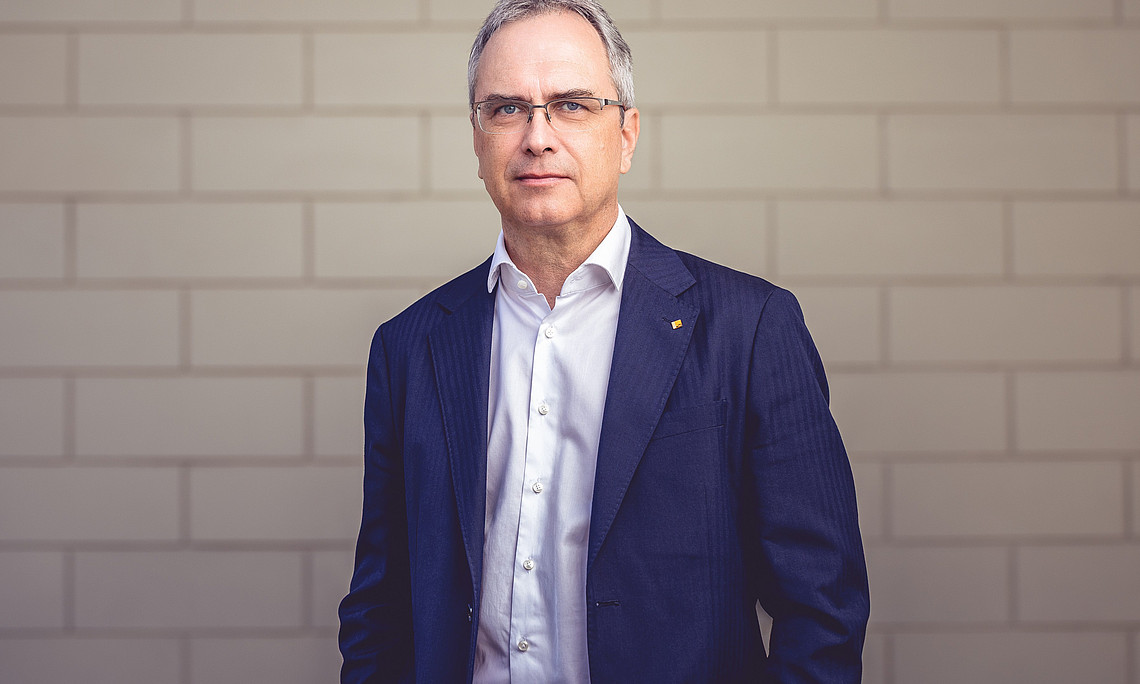
created by Gudrun Pichler

Related news

Higher Education Strategy 2040: Austria’s universities on course for the future

Austria has 77 higher education institutions, which is above the EU average – but does this really make sense? The new Higher Education Strategy 2040 focuses on cooperation rather than mergers. As one of the six largest universities in Austria, the University of Graz plays a central role in this.

Climate research in Greenland: Old data provides new insights

The polar explorer and University of Graz professor Alfred Wegener left behind a unique collection of climate data from Greenland. A research team from the University of Graz is now analysing this 100-year-old treasure trove of data and comparing it with current measurements.

Diversity in nature and science: How we talk about plants and each other

Ginkgo, kiwi, hemp: they exist as male and female plants. Anyone who paid attention in biology class will confirm this. But is this categorisation, established by Carl von Linné almost 300 years ago, still valid today? An interdisciplinary team at the University of Graz is questioning these attributions and using this as a starting point to provide food for thought for gender-sensitive interaction between students, scientific and teaching staff.

Around the world in eight stops: the Long Night of Research at the University of Graz

On 24 April from 5 pm, you can take a short trip around the globe at the University of Graz, discovering pecularities of foreign countries or new local features in the entrance hall of the University Library. The itinerary takes you through introduced animal species, political attitudes and the omnipotence of algorithms. There will also be a programme in the historic reading hall, as well as at the UniGraz@Museum and the University Archive.

Begin of page section:
Additional information:

University of Graz
Universitaetsplatz 3
8010 Graz
Austria
  • Contact
  • Web Editors
  • Moodle
  • UNIGRAZonline
  • Imprint
  • Data Protection Declaration
  • Accessibility Declaration
Weatherstation
Uni Graz

End of this page section. Go to overview of page sections

End of this page section. Go to overview of page sections

Begin of page section:

End of this page section. Go to overview of page sections

