



Begin of page section:
Page sections:

  • Go to contents (Accesskey 1)
  • Go to position marker (Accesskey 2)
  • Go to main navigation (Accesskey 3)
  • Go to sub navigation (Accesskey 4)
  • Go to additional information (Accesskey 5)
  • Go to page settings (user/language) (Accesskey 8)
  • Go to search (Accesskey 9)

End of this page section. Go to overview of page sections

Begin of page section:
Page settings:

English en
Deutsch de
Search
Login

End of this page section. Go to overview of page sections

Begin of page section:
Search:

Search for details about Uni Graz
Close

End of this page section. Go to overview of page sections


Search

Begin of page section:
Main navigation:

Page navigation:

  • University

    University
    • About the University
    • Organisation
    • Faculties
    • Library
    • Working at University of Graz
    • Campus
    Developing solutions for the world of tomorrow - that is our mission. Our students and our researchers take on the great challenges of society and carry the knowledge out.
  • Research Profile

    Research Profile
    • Our Expertise
    • Research Questions
    • Research Portal
    • Promoting Research
    • Research Transfer
    • Ethics in Research
    • Commission for Scientific Integrity
    Scientific excellence and the courage to break new ground. Research at the University of Graz creates the foundations for making the future worth living.
  • Studies

    Studies
    • Prospective Students
    • Students
    • Registration for Study Programme (Winter semester 2026/27)
    • Welcome Weeks for First Year Students
  • Community

    Community
    • International
    • Location
    • Research and Business
    • Alumni
    The University of Graz is a hub for international research and brings together scientists and business experts. Moreover, it fosters the exchange and cooperation in study and teaching.
Topics
  • Sustainable University
  • Researchers answer
  • Work for us
Close menu

End of this page section. Go to overview of page sections

Begin of page section:
You are here:

University of Graz News Bildungsdebatte

End of this page section. Go to overview of page sections

Thursday, 15 May 2014

Bildungsdebatte

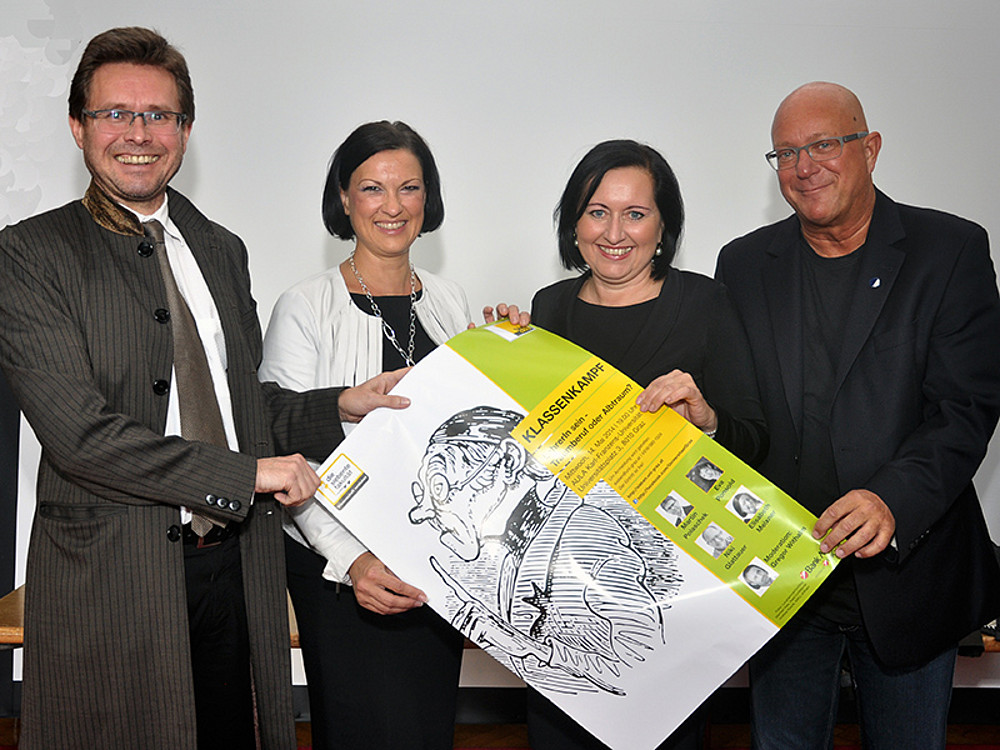
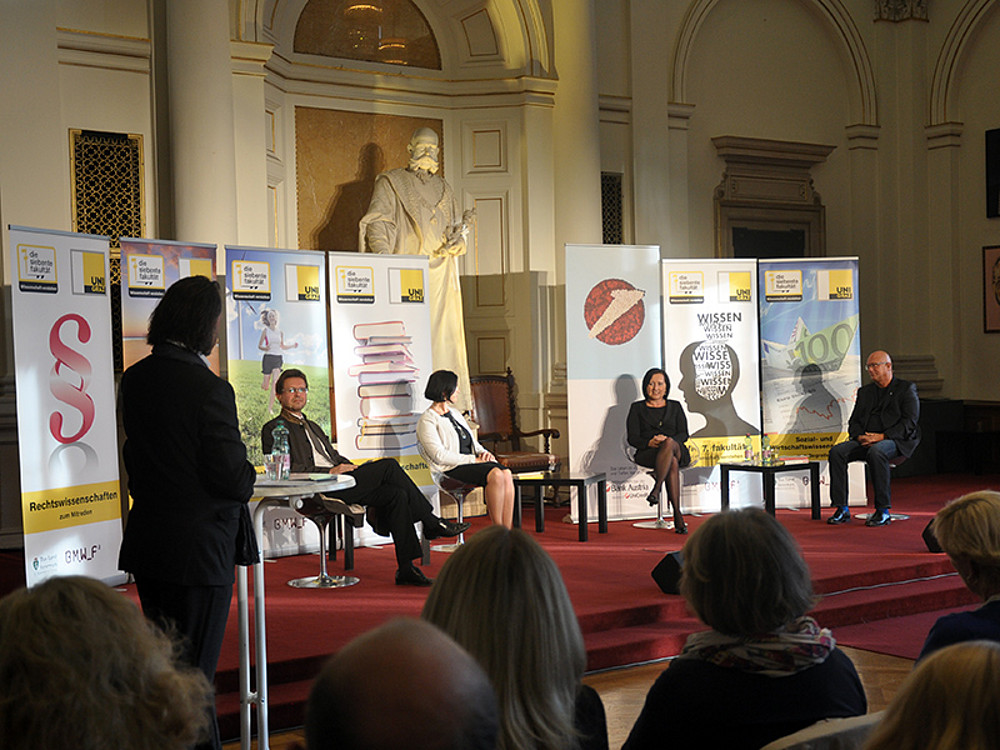
Podiumsgäste: Polaschek, Ponsold, Meixner und Glattauer (v.l.)

Podiumsgäste: Polaschek, Ponsold, Meixner und Glattauer (v.l.)

Moderator Withalm führte durch die Diskussion

Moderator Withalm führte durch die Diskussion

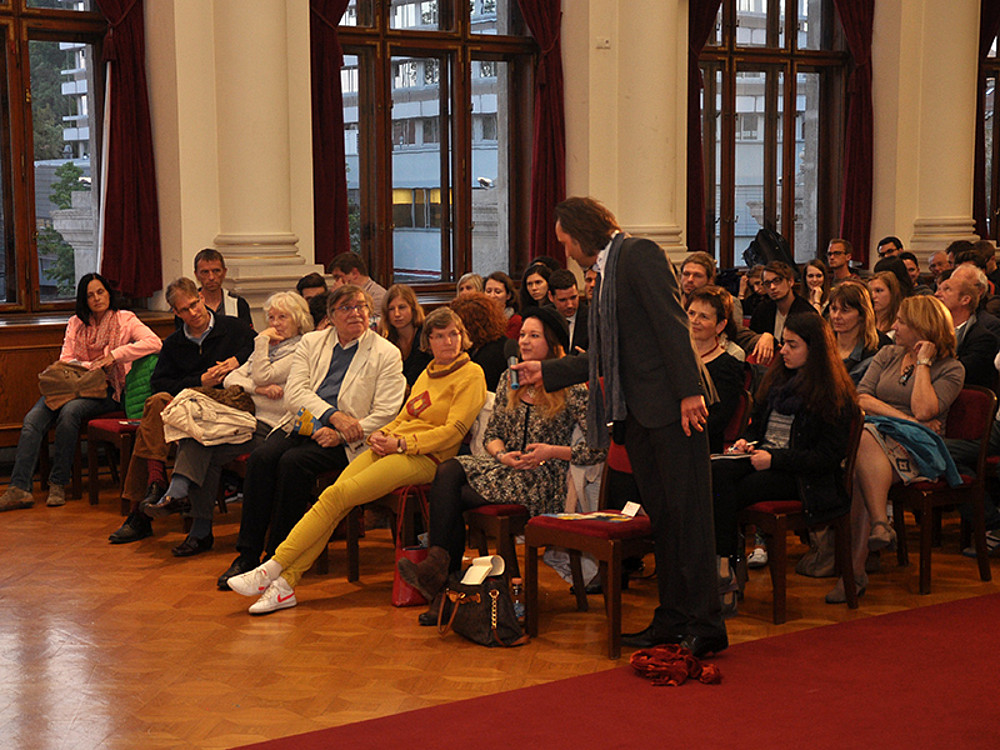
Das Publikum beteiligte sich rege an der brisanten Debatte

Das Publikum beteiligte sich rege an der brisanten Debatte

Knapp 300 BesucherInnen bei Podiumsdiskussion über Traumberuf oder Albtraum LehrerIn

Der LehrerInnen-Beruf ist in der aktuellen Bildungsdebatte in Österreich ein heißes Eisen – dementsprechend groß war das Interesse bei der Podiums- und Publikumsdiskussion „Klassenkampf. LehrerIn sein – Traumberuf oder Albtraum“ am 14. Mai 2014. Knapp 300 BesucherInnen kamen in die Aula der Uni Graz.

Unter der Moderation von Gregor Withalm diskutierten prominente sowie fachkundige Podiumsgäste: Niki Glattauer, Lehrer, Buchautor, Kolumnist im Kurier und Gastkommentator für den Standard; Elisabeth Meixner, Amtsführende Präsidentin des Landesschulrats für Steiermark; Martin Polaschek, Vizerektor für Studium und Lehre an der Karl-Franzens-Universität Graz und Mitglied der ExpertInnengruppe zur Zukunft der LehrerInnenbildung, sowie Eva Ponsold, Direktorin des Wirtschaftskundlichen BRG Graz.

„Das Engagement der LehrerInnen ist überbordend, die mediale Berichterstattung hingegen oft negativ“, konstatierte Direktorin Ponsold. Auch die Grundhaltung der Eltern werde zunehmend fordernder.
Autor und Lehrer Glattauer brach eine Lanze für die PädagogInnen: „Der Eindruck, dass die LehrerInnen reformresistent sind, stimmt nicht, aber sie stehen mit dem Rücken zur Wand, weil nur kosmetische Reförmchen seitens der Politik erfolgen. Die Feinde sind nicht die Schüler, nicht die Eltern, sondern ist das System.“
Vizerektor Polaschek ortete eine große gesellschaftliche Relevanz des Themas, allerdings mit einem Nachteil: „Österreich hat acht Millionen Fußball Nationaltrainer und acht Millionen Unterrichtsminister.“ Er stellte das österreichweite Pilotprojekt im Rahmen der PädagogInnenbildung Neu vor: „Ziel von Universitäten und Pädagogischen Hochschulen ist es, ein gemeinsames Angebot für gesamte Sekundarstufe zu entwickeln und damit die besten Ausbildungsschienen aus jeweils beiden Bereichen zu vereinen.“
Landessschulratspräsidentin Meixner unterstrich das gute Klima in der Steiermark, wobei sich der Landessschulrat als pädagogisch-administratives Kompetenzzentrum positioniere. „Lehrerin zu sein ist ein Traumberuf, die Bedingungen sind manchmal albtraumhaft“, forderte Ponsold mehr Schulautonomie.


Die Podiumsdiskussion war eine Veranstaltung der 7. fakultät, des Zentrums für Gesellschaft, Wissen und Kommunikation, und wurde von der Bank Austria unterstützt.

created by Andreas Schweiger

Related news

Commissioned by NATO: University of Graz tests high-tech textiles

As part of an international project, antimicrobial and fire-resistant fabrics with UV protection are being developed in Zagreb. Pharmacists from the University of Graz are ensuring that these fabrics are skin-friendly.

The Arctic up close: ORF special feature on the University of Graz’s research station in S

Students from the University of Graz are spending two weeks conducting research at the Univerisity of Graz research station at the Sermilik Fjord in Greenland, which has been operational for three years. They are measuring glacial runoff, tracking ice melt in real time and installing weather stations. ORF is following the expedition and will be reporting on the special feature ‘Arctic Adventure’ across its various channels from 20 July.

Medicine for ants: Caffeine prolongs the life of infected insects

Black coffee stimulates us and acts against bacteria. So, can caffeine also be good for insects? Yes, confirm biologists of the University of Graz. When ants suffer from a fungal disease, they consume more caffeine and remain active for longer.

How formulas are making medicine more personalised

When Federica Caforio talks about the heart, it doesn’t sound like an operating theatre, but rather like equations, parameters and simulations. Yet this is precisely where the medical promise of her research lies: one day, clinical data will be used to create a digital twin of the heart – a virtual model that will enable a better understanding of diseases and allow for more personalised treatment plans. She will be presenting her research at the ‘ECMTB 2026’ mathematics conference.

Begin of page section:
Additional information:

University of Graz
Universitaetsplatz 3
8010 Graz
Austria
  • Contact
  • Web Editors
  • Moodle
  • UNIGRAZonline
  • Imprint
  • Data Protection Declaration
  • Accessibility Declaration
Weatherstation
Uni Graz

End of this page section. Go to overview of page sections

End of this page section. Go to overview of page sections

Begin of page section:

End of this page section. Go to overview of page sections

