Begin of page section:
Page sections:

  • Go to contents (Accesskey 1)
  • Go to position marker (Accesskey 2)
  • Go to main navigation (Accesskey 3)
  • Go to sub navigation (Accesskey 4)
  • Go to additional information (Accesskey 5)
  • Go to page settings (user/language) (Accesskey 8)
  • Go to search (Accesskey 9)

End of this page section. Go to overview of page sections

Begin of page section:
Page settings:

English en
Deutsch de
Search
Login

End of this page section. Go to overview of page sections

Begin of page section:
Search:

Search for details about Uni Graz
Close

End of this page section. Go to overview of page sections


Search

Begin of page section:
Main navigation:

Page navigation:

  • University

    University
    • About the University
    • Organisation
    • Faculties
    • Library
    • Working at University of Graz
    • Campus
    Developing solutions for the world of tomorrow - that is our mission. Our students and our researchers take on the great challenges of society and carry the knowledge out.
  • Research Profile

    Research Profile
    • Our Expertise
    • Research Questions
    • Research Portal
    • Promoting Research
    • Research Transfer
    • Ethics in Research
    • Commission for Scientific Integrity
    Scientific excellence and the courage to break new ground. Research at the University of Graz creates the foundations for making the future worth living.
  • Studies

    Studies
    • Prospective Students
    • Students
    • Post-registration Law
  • Community

    Community
    • International
    • Location
    • Research and Business
    • Alumni
    The University of Graz is a hub for international research and brings together scientists and business experts. Moreover, it fosters the exchange and cooperation in study and teaching.
Topics
  • Sustainable University
  • Researchers answer
  • Work for us
Close menu

End of this page section. Go to overview of page sections

Begin of page section:
You are here:

University of Graz News Bienen-Booster

End of this page section. Go to overview of page sections

Thursday, 28 April 2022

Bienen-Booster

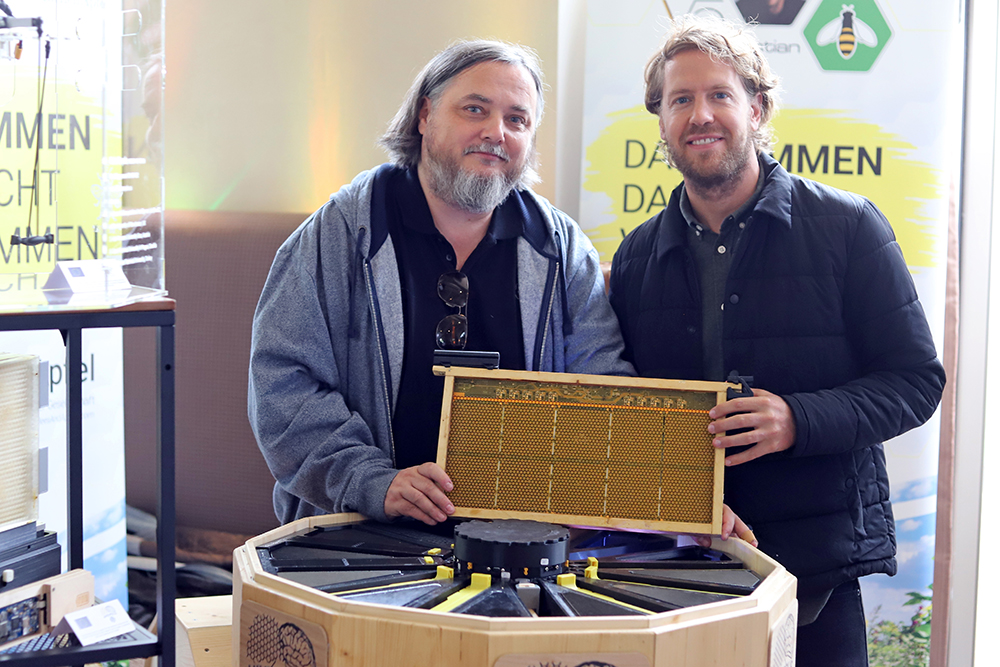
Hightech auch für die Natur: Biologe Thomas Schmickl (l.) zeigt Formel-1-Weltmeister Sebastian Vettel den Bienenstock der Zukunft. Foto: EU FET Projekt Hiveopolis

Hightech auch für die Natur: Biologe Thomas Schmickl (l.) zeigt Formel-1-Weltmeister Sebastian Vettel den Bienenstock der Zukunft. Foto: EU FET Projekt Hiveopolis

Mit Vollgas für den Naturschutz: Sebastian Vettel greift der Bienenforschung unter die Flügel

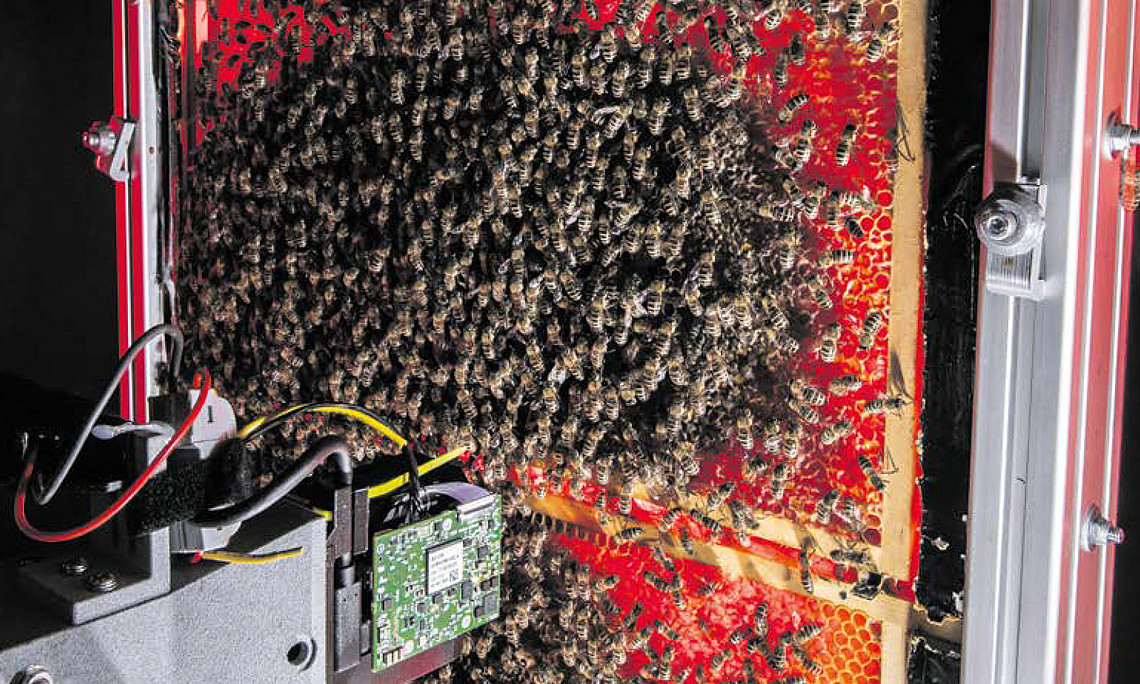
Mini-Roboter mischen sich unters Volk und schützen es vor schlechten Einflüssen, elektronische Sensoren warnen vor Krankheiten. Das geht im Bienenstock der Zukunft, der am 27. April präsentiert wurde. Uni-Graz-Biologe Thomas Schmickl führte Sebastian Vettel in den neuesten Stand der Forschung ein. Der Formel-1-Weltmeister unterstützt gemeinsam mit Dominic Thiem, Lizz Görgl, Franco Foda und anderen das europaweite Projekt BioBienenApfel. Unter dem Motto "Give Bees a Chance" will es allein in Österreich in den nächsten fünf Jahren Lebensraum für eine Milliarde Bienen schaffen. Details dazu im Video vom Event.

>> mehr zur Bienenforschung an der Uni Graz und zum Bienenstock der Zukunft

created by Dagmar Eklaude

Related news

Studying at the University of Graz: How to enrol

Ready for a new chapter in your life with the start of your studies at the University of Graz in the winter semester 2026/27? Here you will find information on deadlines, admission procedures, registration, and everything else you need to successfully start your studies in the fall.

Europe Day: Strengthening international expertise with Arqus

On 9 May, the spotlight will be on Europe. At the University of Graz, European cooperation is also a tangible part of everyday student life – not least through the Arqus university alliance. Master’s and PhD students can currently register for the Arqus micro-credential in ‘Advanced Creative Thinking and Communication’.

A substantial community: the key role of soil crusts in the earth system

They are often overshadowed by the plant world: lichens, fungi, mosses and bacteria, which form unique communities on rocks and trees or as soil crusts. Bettina Weber from the University of Graz is bringing this biological alliance into the research spotlight. Her research shows that these communities form an essential part of the Earth’s critical zone and play a key role in the interactions between land and atmosphere. Bettina Weber was honoured by the European Geosciences Union for her groundbreaking research at the beginning of May.

Of mice and machines: zoologist Thomas Schmickl researches how robots can save nature

Machines that interact with animals and learn their social behaviour could save biodiversity. Thomas Schmickl and his team from the Artificial Life Lab have recently published several scientific articles on this topic.

Begin of page section:
Additional information:

University of Graz
Universitaetsplatz 3
8010 Graz
Austria
  • Contact
  • Web Editors
  • Moodle
  • UNIGRAZonline
  • Imprint
  • Data Protection Declaration
  • Accessibility Declaration
Weatherstation
Uni Graz

End of this page section. Go to overview of page sections

End of this page section. Go to overview of page sections

Begin of page section:

End of this page section. Go to overview of page sections